| A.M.
Costa Rica Your daily English-language news source Monday through Friday |
||
 |
 |
 |
|
|
 |
|
|
|||||||||||||||||||||||||||||
|
||||||||||||||||||||||||||||||
 |
||||||||||||||||||||||||||||||
 |
||||||||||||||||||||||||||||||
|
||||||||||||||||||||||||||||||
|
|
|||||||||||||||||||||||||||||
| What we published this week: | Monday | Tuesday | Wednesday | Thursday | Friday | Earlier |
|
|
|
|
|
|
|
Food |
|
Jo
Stuart |
|
Abstracts and fair use are permitted. Check HERE for more details |
| A.M. Costa Rica's Second news page | |
|
San
José, Costa Rica, Friday, Sept. 27, 2013, Vol. 13, No. 192
|
|
|
|
|
|
|
|
Food |
|
| |
 |
|
Lower-income
families depend
on child-care centers and food By
the A.M. Costa Rica staff
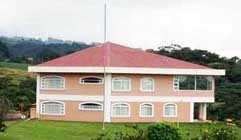
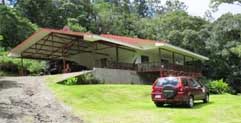
Health ministry officials were in San Rafael de Siquirres Thursday to inaugurate an expanded and remodeled Centro Infantil de Atención Integral. The nationwide program that has nearly 200,000 lower-income children and their parents, is not well-known in the expat community but it is one of the more successful social operations run by the central government. Such centers are being opened every month. Now there are more than 600. This is where child care is provided for working mothers. And there is food for the children. The San Rafael facility, like many others, is open from 6:30 a.m. to 6:30 p.m. weekdays. Child care there is provided for 10 children too young to go to school and some 15 children from 7 to 13, according to the Ministerio de Salud. There also are more than 500 youngsters who benefit from meals or milk or food packages for the family. This center has been in operation since 1985, and the expansion and remodeling cost 146.5 million colons, about $293,000. Because the centers are run by the health ministry, there also are programs of medical attention. All the centers are under the auspices of the Dirección Nacional de Centros de Educación y Nutrición y de Centros Infantiles de Atención Integral.  Ministerio de Gobernación,
Policía y Seguridad Pública photo
Confiscated medicines are put on
displayMedicines and cocaine cargos confiscated near border By
the A.M. Costa Rica staff
Police at the northern border are not just after cocaine smugglers. In La Cruz, Guanacaste, Thursday Fuerza Pública officers stopped a truck that was carrying 173 containers of medicine that were not listed as being approved by the Ministerio de Salud here. So police confiscated the lot, which is presumed to have come from Nicaragua. Wednesday there was a more routine case. The Policía de Control de Drogas managed to find 78 kilos of cocaine at the Peñas Blancas border crossing. The cocaine was in the double floor of a truck cab, they said. The Guatemalan driver was detained. Former lawmakers again seek seats in the next legislature By
the A.M. Costa Rica staff
There will be familiar faces on the ballot for the Partido Acción Ciudadana. The party's presidential candidate, Luis Guillermo Solís, anounced Thursday that Ottón Solís and Epsy Campbell Barr would be on the legislative ticket for San José. Both are former lawmakers and party officials. Solis was the founder of the party after he left the Partido Liberación Nacional. Our reader's opinion
Water bottle preferredover those hydration vests Dear A.M. Costa Rica: While I am all in favor of supporting the police, I think the citizen deserves to get the most bang for his tax dollar. The U.S. military is just as at fault with this as the Costa Rican police force. The culprit is the hydration vest. I found them online for no less than $45. The cost of a refillable plastic water bottle in bulk: 45 cents. The cost of a refillable aluminum water bottle: around $2.50 in bulk. The cost of a back pack: $20 and under (retail). For under $25, you can have a back pack which you can carry several items and a water bottle, or for twice as much you can have a hydration vest that you can carry only water, which is being heated by your body heat. If politicians were spending their own money, which should they buy? Dan
Jackson
Calhnan, Colorado
|
|||||||||||||||||||||||||||||||||||||||||||||||||||
 |
||||||||||||||||||||||||||||||||||||||||||||||||||||
|
|
|
|
|
|
|
Food |
|
| What we published this week: | Monday | Tuesday | Wednesday | Thursday | Friday | Earlier |
| The contents of this page and this Web site are copyrighted by Consultantes Río Colorado S.A. 2013 and may not be reproduced anywhere without permission. Abstracts and fair use are permitted. Check HERE for details | ||||||
 |
A.M. Costa Rica Third News Page |
A.M.
Costa Rica advertising reaches from 12,000 to 14,000 unique visitors every weekday in up to 90 countries. |
| San José, Costa Rica, Friday, Sept. 27, 2013, Vol. 13, No. 192 | |
|
|
|
|
|
|
|
Food |
|
| Luis Milanes saga will continue with
court hearing Tuesday |
|
|
By
the A.M. Costa Rica staff
The continuing saga of Luis Milanes, his Savings Unlimited and investors who are about $200 million lighter goes back to court Tuesday. The session is a hearing and not a trial. One major issue is the status of the agreement Milanes made with some of his victims in order to avoid a trial. Some of the individuals say that Milanes, operator of a handful of casinos in the Central Valley, is behind by some $560,000. He had promised to make monthly payments to a trust that would be used for the benefit of the creditors. He also surrendered real estate. The biggest piece is the downtown Hotel Europa, that trustees have been trying to sell for $10 million. Creditors want a new appraisal because they think that figure is too much. Appraisers in Costa Rica generally rely on square footage. A business like the hotel could more correctly be valued on its cash flow, but the agreement with Milanes does not seem to allow creditors access to the hotel books even though they technically own the structure now. One buyer prospect already backed out because the books were not available. A complicating factor is that one of the casinos operated by Milanes is a tenant of the hotel. |
Some other property that has been
turned over to the trust have liens that Milanes will be asked next
week to clear, a creditor said. A judicial worker said that time has been allocated from Tuesday to Oct. 28 for the hearing. Milanes has shown that he is very competent in defending himself. He fled the country as his operation in Centro Colón collapsed. He seems to have made a deal with prosecutors to let him return. He did so in June 2009, and investors continue to be unhappy that he served just a day in jail before he posted property to make bail. Savings Unlimited was one of a handful of high interest borrowing operations. Unlike Luis Enrique Villalobos, who still is a fugitive, Milanes was open to his creditors on the use he would put their money. He told them the cash would develop casinos. For some reason, however, the casinos are not now involved in the court case. The high interest operations appear to have been negatively affected by strict money laundering rules put in force by the United States and other governments after the terrorist attacks Sept. 11, 2001. Villalobos suspended operations in October 2002, and Milanes left in November. |
| With fog and Internet outage, Costa Rica really is a small
island |
|||
| Tuesday
of this week my Internet went down, and so did my TV connection.
Until I opened my balcony door, my apartment was soundless. Once
I did open the door, the sounds of the city had changed. They
were all muted. The hum of traffic and overhead wires were
subdued and the nearby thumps and rattles of life were muffled. I
thought that if this had been Victorian times, it would be similar to
the effect of all the horses having stayed in their stables. And
yet, this was not actually a transportation shut down. It was a
communication outage. Even though I was looking forward to the happenings at the United Nations, I was glad for the silence . . . for a short while. Then I decided to go through remnants of my collection of favorite singers. Most of my friends would have their radio stations on 95.5, the jazz station by now, but I wanted voices. I had very little left of the voices of the 60’s and 70’s, so I played everything from Nat King Cole to Andrea Bocelli. The only songs I played over and over were those of Barbra Streisand. I decided that if I had to settle for one singer on that mythical, and probably crowded, desert island, it would be Barbra Streisand. Streisand sings every song as if she had written it, and it becomes not just a story, but an adventure of emotions with every note and nuance effortless and exactly as it is meant to be as she sings it and you feel it. Unlike the charming Beatles, (exuberant with young manhood who really wanted to hold more than your hand in most of their songs), each of her songs is different and range from “Free Again,” (my favorite) to “Sam, you made the pants too long.” I was surprised to discover that she dedicated the album “Higher Ground” to Virginia Kelly, President Clinton’s mother who died in 1994, and whom she described as a “professional spitfire and precious friend” who was “unafraid to show unconditional love, kindness and appreciation to everyone she met.” This week I spent some precious and too little time with two |
women who are like Virginia Kelly, and I might add, generous to a fault. Joann and Pat are friends of my neighbor and mutual friend, Doug, and they came to Costa Rica for a week, visiting many of the sights and pleasures of the country they had missed on their other visits. They both are older than I but with much more energy. They went on more excursions in a week than I could handle in a month. They truly demonstrate that age is just a number. The two have been friends for many years, good friends. Both are widows and live in the same town in Florida, and they share their evening meals most nights of the week. They say they eat more healthily and enjoy a glass of wine when they share a meal, besides they both are good cooks. They also enjoy playing games, like Scrabble and cards. (“Playing” and “games” are two words that should never be dropped from our vocabularies, or our lives, no matter how old we are.) Interestingly, following the communication shutdown, one day I awoke to a fogged in San José. Maybe it was Victorian times, and I was in London Town after all. The fog lasted most of the day and into the evening. I was suspended in a cloud and could not see the stadium a few streets away or even the houses across the street. I could hear the roar of the crowd in the stadium in the evening. They obviously were not going to miss a fútbol game because of a little weather. It has been an interesting week. First, cut off from communication with the outside world and then visually isolated from it. It was as if I were indeed, temporarily, on a desert island. |
||
 |
| You need to see Costa Rican tourism information HERE! |
|
|
|
|
|
|
|
Food |
|
| What we published this week: | Monday | Tuesday | Wednesday | Thursday | Friday | Earlier |
| The contents of this page and this Web site are copyrighted by Consultantes Río Colorado S.A. 2013 and may not be reproduced anywhere without permission. Abstracts and fair use are permitted. Check HERE for details | ||||||
 |
|
||||
| A.M. Costa Rica's Fourth News page | |||||
| San José, Costa Rica, Friday, Sept. 27, 2013, Vol. 13, No. 192 | |||||
|
|
|
|
|
|
|
Food |
|
| Scientists make inroads in diagnosis of dangerous citrus
bacterial disease |
|
|
By
the University of California at Davis news staff
The devastating disease huanglongbing, or citrus greening, looms darkly over the United States, threatening to wipe out the nation's citrus industry, whose fresh fruit alone was valued at more than $3.4 billion in 2012. This is the disease that has Costa Rican producers on edge after the government declared an alert in 2009. Recently, however, a research team led by a University of California, Davis, plant scientist used DNA sequencing technologies to paint a broad picture of how citrus greening impacts trees before they even show signs of infection, offering hope for developing diagnostic tests and treatments for the currently incurable disease. "Florida is seemingly in the death grip of citrus greening, and many experts believe it is just a matter of time before the disease appears full force in California," said plant molecular biologist Abhaya Dandekar, lead author on the study. The new findings indicate that the bacterial disease interferes with starch and sugar metabolism in young and mature leaves and fruit, while also wreaking havoc with hormonal networks that are key to the trees' ability to fend off infections. Study results are reported in the journal PLOS ONE. "Because the disease has a long latent phase during which there are no symptoms of infection and the bacteria are resistant to being grown in the laboratory, the only option for halting transmission of citrus greening has been to apply chemical pesticides to control the insect that spreads the bacteria," Dandekar said. HLB, or citrus greening, is the most destructive citrus disease worldwide. It is caused by three species of the Candidatus Liberibacter bacteria, including Candidatus Liberibacter asiaticus, which is known by the abbreviation CaLas. These bacteria are carried from tree to tree by two species of the citrus psyllid, a winged insect that is about one-eighth of an inch long and attaches itself to the underside of the trees' leaves. As the citrus psyllid feeds on a leaf, it can pick up the bacteria from a diseased tree and introduce the bacteria to a non-infected tree. These disease-causing bacteria reside in the tree's phloem — the vascular tissue that carries vital nutrients throughout the tree. The disease affects most citrus species, causing yellowing of shoots, blotchy and mottled leaves, lopsided and poorly colored fruit and loss of viable seeds. The fruit of diseased trees is hard, misshapen and bitter, and the infected trees die within a few years. Other than one infected backyard tree found in 2012 in the Southern California community of Hacienda Heights, the disease has not been detected in California. However the citrus psyllid that transmits the bacteria was first found in California in 2008 and has since been identified in San Diego, Imperial, Riverside, San Bernardino, Orange, Los Angeles, Ventura, Santa Barbara, Kern and Tulare counties, resulting in quarantines and restricted areas. In this new study, the researchers studied four categories of healthy and diseased citrus trees, with the goal of better understanding how HLB affects trees physiologically during the very early stages of infection. "Earlier sequencing of the CaLas bacteria genome showed that there were no toxins or enzymes that would destroy plant cell walls, or specialized secretion systems associated with citrus HLB," Dandekar said. |
 University of California at Davis photo
Findings indicate the bacterial
disease interferes with starch and sugar metabolism in young and
matures leaves and fruit. "Because these factors, which normally accompany plant diseases, were not present, we suspected that the disease was causing metabolic imbalances or interfering with nutrient transport in the infected trees," he said. The researchers used gene sequencing technology to study the "transcriptome," which is the collection of RNA found in the tree leaves and fruit. Their analysis confirmed that in infected trees, HLB disease caused starch to accumulate in the leaves, blocking nutrient transport through the phloem and decreasing photosynthesis. They also found that normal metabolism of sucrose, a sugar also key to photosynthesis, was disrupted. Furthermore, the researchers discovered that HLB interfered with the regulation of hormones such as salicylic acid, jasmonic acid and ethylene, which are the backbone of the plant innate immune response. And they found that infected trees also had changes in the metabolism of important amino acids that serve as a reservoir for organic nitrogen in many plants. The nitrogen is required to stimulate the plant immune response. The researchers anticipate that these discoveries will lead the way to new tests for detecting the bacteria and thus the presence of HLB in orchard trees. They also suggest that it may be possible to develop several short-term treatments for infected trees. Such therapeutic procedures might rely on using hormones and other small molecules to restore the infected tree's normal metabolism or boosting the tree's innate immune response to effectively fight the infection. |
|
|||||||||||||||||||||||||||||||
|
|||||||||||||||||||||||||||||||
|
|
|
|
|
|
|
Food |
|
| What we published this week: | Monday | Tuesday | Wednesday | Thursday | Friday | Earlier |
| The contents of this page and this Web site are copyrighted by Consultantes Río Colorado S.A. 2013 and may not be reproduced anywhere without permission. Abstracts and fair use are permitted. Check HERE for details | ||||||
| A.M. Costa Rica's Fifth news page |
 |
||||
| San José, Costa Rica, Friday, Sept. 27, 2013, Vol. 13, No. 192 | |||||
|
|
|
|
|
|
|
Food |
|
|
|
|
U.S. Senate to
work weekend
on emergency funding bill By
the A.M. Costa Rica wire services
The U.S. Senate is expected to work on an emergency funding bill this weekend to keep the government operating after its spending authority runs out Tuesday. The bill would still require approval from the Republican-led House of Representatives, which earlier this week agreed to fund the government only if none of the funds are used to implement President Barack Obama’s signature health care law. But even if lawmakers succeed in averting a costly shutdown, some say the U.S. economy already is paying the price. It’s down to the wire again as Washington wrestles with another fiscal deadline. But even if lawmakers succeed in defusing the latest crisis, the uncertainty carries a hefty price tag. One study suggests that since the last budget impasse in 2011 the market volatility, hiring delays and reduced consumer demand have shaved about $150 billion from the country’s gross domestic output. Testifying in Congress this week, economist Mark Zandi said that’s equivalent to more than one million jobs. “If political uncertainty had not risen to the degree that it has, the unemployment rate today would still be high, uncomfortably high, but at 6.6 percent that would make a meaningful difference to our economy’s performance.” The current rate is 7.3 percent. Washington’s political situation was evident this week when a freshman Republican senator, Ted Cruz, railed for 21 hours against the health care law to delay a procedural vote. As part of his speech, he read excerpts from a children's book. Fiscal reform advocate Robert Bixby said that’s not a winning formula for Republicans. "If their position is they would not increase the debt ceiling or indeed pass any appropriations bills unless Obamacare is repealed or defunded, that I think would be viewed by the public as an unreasonable demand and I think they would hold Republicans responsible.” Likely to be even more contentious is the coming debate on the debt ceiling. Failure to raise the debt limit will mean the U.S. government could run out of money to pay its debts by Oct. 17, the consequences of which Zandi says “would be cataclysmic. It would mean higher mortgage rates, higher borrowing costs for businesses, lower stock prices, lower house prices, a full blown recession and there would be no reasonable policy response to it.” But another leading economist says those claims are greatly exaggerated. Alan Meltzer says the budget debates are necessary and more likely to lead to a compromise. “There will be consequences, but the consequences will depend upon how long the default goes on. It isn’t going to go on forever and it probably will arouse enough reaction from the public that will, if we don’t get the agreement before, we’ll get it after,” said Meltzer. The domestic wrangling is a big worry for U.S. trading partners. Many countries, especially those in emerging markets are dependent on American consumer demand for their exports. Another political stalemate could erode the world's confidence in the U.S. economy, which had been showing modest but steady signs of recovery. If a government shutdown occurs, many popular tourist spots would close. At the National Zoo only essential zookeepers would be allowed in, to feed and take care of the animals. The National Zoo is part of the world’s largest museum complex, the Smithsonian Institution, which is funded by the government. Entry is free, but the Smithsonian relies on concessions for extra money, and they and the museums will be closed during a shutdown. Like the shutdown in the mid 1990s, work would continue on national security, air traffic control, food safety, in banking and prisons. But no visa or passport applications would be processed. There would be no new clinical research. The national parks would close, and millions of tourists would be shut out. The nation is still recovering from budget cuts called sequestration, when half of all government employees were furloughed for up to six days. Somalis in Minnesota reject effort to recruit by terrorists By
the A.M. Costa Rica wire services
Somali-Americans in Minnesota expressed anger and frustration Wednesday after unconfirmed reports that people from their local community may have been involved in the attack on a Kenyan shopping mall that killed at least 67 people. The ability of a Somalia-based Islamic militant group to recruit young Americans has been a long-standing concern. Ka Joog, a Somali-American youth group, called a news conference in Minneapolis to condemn the al-Shabab terrorist group for its attack on Nairobi's Westgate Mall and the killing of innocent civilians. Reports that some of the attackers were from Minnesota have not been confirmed. But since 2007, between 20 and 40 ethnic Somali-Americans have joined al-Shabab in Somalia, some of them dying there, according to U.S. authorities. Ka Joog leader Mohammed Farah said the vast majority of Somalis in Minnesota and around the world do not support terrorism. “Every community has their own bad apples in it. And so, but you know we got to make sure we don't torture the image of the great Somalis that reside across the globe,” he said. Abdirizak Bihi, director of a Somali advocacy center in Minneapolis, said his nephew Burhan Hassan was recruited by al-Shabab in a local mosque in 2008. “He was one of the young men that has been brainwashed, radicalized and then helped to leave the country to join al Shabaab,” Bihi explained, adding that the group targets vulnerable Somalis who feel marginalized in U.S. society. Bihi said after his nephew joined, his family alerted authorities to the danger al-Shabab posed. “We shocked al-Shabab by standing up to them and organizing all other families and continued to make a case to the U.S. government and the international community that there is a big problem over there that followed us here,” Bihi said. Since then, there have been successful efforts to engage young people to counter-terrorist recruitment in the area, he said. But it is too late for Bihi's nephew, who died in Somalia in 2009. Google announces algorithm that is supposed to be smarter By
the A.M. Costa Rica wire services
Google Inc. has overhauled its search algorithm, the foundation of the Internet's dominant search engine, to better cope with the longer, more complex queries it has been getting from Web users. Amit Singhal, senior vice president of search, told reporters Thursday that the company launched its latest Hummingbird algorithm about a month ago and that it currently affects 90 percent of worldwide searches via Google. Google is trying to keep pace with the evolution of Internet usage. As search queries get more complicated, traditional boolean or keyword-based systems begin deteriorating because of the need to match concepts and meanings in addition to words. Hummingbird is the company's effort to match the meaning of queries with that of documents on the Internet, said Singhal from the Menlo Park garage where Google founders Larry Page and Sergey Brin conceived their now-ubiquitous search engine. “Remember what it was like to search in 1998? You'd sit down and boot up your bulky computer, dial up on your squawky modem, type in some keywords, and get 10 blue links to Web sites that had those words,” Singhal wrote in a separate blogpost. “The world has changed so much since then: billions of people have come online, the Web has grown exponentially, and now you can ask any question on the powerful little device in your pocket.” Page and Brin set up shop in the garage of Susan Wojcicki, now a senior Google executive, in September 1998, around the time they incorporated their company. This week marks the 15th anniversary of their collaboration. Some senators plan to draft tighter controls of data fishing By
the A.M. Costa Rica wire services
Leaders of the U.S. Senate Intelligence Committee, meeting amid the outcry over the government's collection of personal communications data, said Thursday they were working on legislation that would tighten oversight of federal electronic eavesdropping programs. Among other things, the new measures would set tighter standards on which telephone and Internet records the National Security Agency can collect and limit the time that records can be held, said Sen. Dianne Feinstein, the committee's chairwoman, at a hearing on changes to the Foreign Intelligence Surveillance Act. Ms. Feinstein described several ways in which intelligence agencies would be required to demonstrate suspicion before obtaining any communications data. The bill also would require that the appointment of the director of the National Security Agency would be subject to confirmation by the U.S. Senate, she said. Support for changing the surveillance programs has been growing since former National Security Agency contractor Edward Snowden leaked information starting in June. Snowden’s leaks showed the government collects far more Internet and telephone data than was previously known. James Clapper, director of national intelligence, General Keith Alexander, director of the NSA, and James Cole, deputy attorney general, who testified at the hearing, said they were open to discussing some changes in the government surveillance programs. In a joint statement, they said they would consider legislation providing for the appointment of an outside advocate for some important cases. Several lawmakers have pressed for an advocate to represent the public in the secret Foreign Intelligence Surveillance Court that oversees the eavesdropping programs. President Barack Obama also said in August he supported the idea. “We understand the concerns that have been raised about the lack of independent views in certain cases, such as cases involving bulk collection, that affect the privacy and civil liberties interests of the American people as a whole,” the intelligence officials said in their statement. Sen. Saxby Chambliss, the top Republican on the intelligence panel, said the committee intended to begin its markup debating the bill next week. Many members of Congress, especially on the intelligence committee, which oversees the confidential programs, staunchly defend the surveillance as an essential defense against terrorist attacks. Carbon nanotubes computer lauded as future of electronics By
the A.M. Costa Rica wire services
Researchers at Stanford University may have found the successor to silicon-based microchips. Using carbon nanotubes, what they call a quirky material, the team of engineers announced they have built a basic computer. They say the breakthrough has the potential to launch a new generation of electronic devices that run faster, while using less energy than those made from silicon chips. The Stanford team says their computer has 178 transistors and performs tasks such as counting and number sorting. It runs a basic operating system that allows it to swap between these processes. Carbon nanotubes are long chains of carbon atoms that are extremely efficient at conducting and controlling electricity. They are so thin – thousands of them could fit side by side in a human hair – that it takes very little energy to switch them off. "People have been talking about a new era of carbon nanotube electronics moving beyond silicon," said Subhasish Mitra, an electrical engineer and computer scientist at Stanford in a statement. "But there have been few demonstrations of complete digital systems using this exciting technology. Here is the proof." Carbon nanotubes have been used as transistors, the on-off switches at the heart of nearly all digital electronic systems, but they have been prone to imperfections, which has made building complex circuits difficult. Over the years, pressure has been placed upon semiconductors to be smaller and faster. That means shrinking the size of each transistor to pack more of them on a chip. But as transistors become tinier, they waste more power and generate more heat – all in a smaller and smaller space, as evidenced by the warmth emanating from the bottom of a laptop. Many researchers believe that this power-wasting phenomenon could spell the end of Moore's Law, named for Intel Corp. co-founder Gordon Moore, who predicted in 1965 that the density of transistors would double roughly every two years, leading to smaller, faster and cheaper electronics. "Energy dissipation of silicon-based systems has been a major concern," said Anantha Chandrakasan, head of electrical engineering and computer science at Massachusetts Institute of Technology and a world leader in chip research. He called the Stanford work a major benchmark in moving carbon nanotubes toward practical use. In theory, this combination of efficient conductivity and low-power switching make carbon nanotubes excellent candidates to serve as electronic transistors, but inherent imperfections have stood in the way of putting this promising material to practical use. First, carbon nanotubes do not necessarily grow in neat parallel lines, as chipmakers would like. Over time, researchers have devised tricks to grow 99.5 percent of carbon nanotubes in straight lines. But with billions of nanotubes on a chip, even a tiny degree of misaligned tubes could cause errors, so that problem remained. Another problem is that a fraction of these carbon nanotubes can end up behaving like metallic wires that always conduct electricity, instead of acting like semiconductors that can be switched off. Since mass production is the eventual goal, researchers had to find ways to deal with misaligned and/or metallic carbon nanotubes without having to hunt for them like needles in a haystack. "We needed a way to design circuits without having to look for imperfections or even know where they were," Mitra said. The Stanford paper describes a two-pronged approach that the authors call an imperfection-immune design. To eliminate the wire-like or metallic nanotubes, the Stanford team switched off all the good carbon nanotubes. Then they pumped the semiconductor circuit full of electricity. All of that electricity concentrated in the metallic nanotubes, which grew so hot that they burned up and literally vaporized into tiny puffs of carbon dioxide. This technique eliminated the metallic carbon nanotubes in the circuit. Bypassing the misaligned nanotubes required another method. The Stanford researchers created a powerful algorithm that maps out a circuit layout that is guaranteed to work no matter whether or where carbon nanotubes might be askew. "This imperfections-immune design makes this discovery truly exemplary," said Sankar Basu, a program director at the National Science Foundation. Despite the breakthrough, researchers say industrial-scale production of carbon nanotubes is still years away. The achievement is reported in an article in the journal Nature. Smartphone app a lifesaver by cheaply measuring oxygen By
the A.M. Costa Rica wire services
A new application, or app, has been developed for smartphones and portable computer tablets that may soon save lives in developing countries. Besides being highly portable, the technology is cheap and easy to use. Of the six billion mobile phone users in the world, experts say about two-thirds live in developing countries where millions of children die each year due to lack of oxygen from pneumonia. The lung infection is highly treatable with antibiotics, but often caregivers are not aware of the critical nature of the child's condition. So, Mark Ansermino, a physician at the University of British Columbia, and his colleagues developed a small, inexpensive device that can be attached to the earphone jack of a smartphone or mobile tablet that measures pulse oximetry. Assessing the level of oxygen in the blood is sometimes called the fifth vital sign along with pulse, temperature, breathing rate and blood pressure measurements. The app, called the Phone Oximeter, gets its data from a clip attached to a fingertip or earlobe. Ansermino, a pediatric anesthesiologist, explains the device shines light of different wavelengths through the skin, taking advantage of a unique characteristic of blood. “When you have got oxygen in your blood, it goes red and when you have not got oxygen in your blood, it goes blue. And that is why we get this tinge around our lips when it is cold because we do not have enough oxygen in the blood around your lips. But also when children get sick ... we see the same blue color. So, what we do really is look at this light shining through the tissue and determine the bounds of this red to blue light, and from that we can tell how much of your blood has oxygen in it and how much does not," said Ansermino. Ansermino says the inexpensive Phone Oximeter, expected to cost between $10 to $40, produces pulse oximetry readings as accurate as those of machines used in Western hospitals, costing thousands more. The app, according to Ansermino, was designed for use at the community level, by minimally trained health workers. “They can actually go and look at these children who perhaps have difficulty breathing or have [a] severe cold and would actually be able to put this device on the child, ask them basic questions and be able to give some judgment or diagnostic advice on what to actually do with that child. And they may even be in the position to administer some antibiotics," he said. The device could also improve the ability to identify pregnant women at risk of developing the life-threatening condition preeclampsia. Writing in the journal Anesthesia and Analgesia, Ansermino says smartphones and tablets have an emerging role as mobile devices that could be used exclusively for medical care. |
|
|||||||||||||||||||||||||||||||||||||||||||||
|
|
|
|
|
|
|
Food |
|
| What we published this week: | Monday | Tuesday | Wednesday | Thursday | Friday | Earlier |
| The contents of this page and this Web site are copyrighted by Consultantes Río Colorado S.A. 2013 and may not be reproduced anywhere without permission. Abstracts and fair use are permitted. Check HERE for details | ||||||
| A.M. Costa
Rica's sixth news page |
|
||||||||
| San José, Costa Rica, Friday, Sept. 27, 2013, Vol. 13, No. 192 | |||||||||
|
|
|
|
|
|
|
Food |
|
||
|
Honduran police confiscate $800 million in drug case By
the A.M. Costa Rica wire services
Bank accounts and assets seized last week from a gang of suspected Honduran drug traffickers wanted by the U.S. government are worth $800 million, a police official said Thursday. “In a first phase, properties, mansions, haciendas and bank accounts worth $800 million have been seized from the organization known as Los Cachiros,” said Juan Bonilla, police chief of Honduras. Authorities said the mass seizures against Los Cachiros included hotels, luxury houses, gas stations and the biggest zoo in Honduras that housed lions, tigers, giraffes and hippos. The gang is accused by the U.S. Treasury Department of trafficking narcotics for organizations including the Sinaloa Cartel, one of the most powerful drug-running outfits in Mexico. The leaders of the group remain at large. Officials said further raids were taking place targeting another criminal gang known as Los Valle with alleged links to the Sinaloa Cartel. The seizures were made under a 2010 law that enables Honduras to confiscate assets believed to be of illicit origin. Suspected traffickers must now prove that the assets were not acquired with criminal proceeds, officials say. Honduras, which had the highest murder rate in the world last year, has become an important staging post for drug gangs seeking to move contraband from South America. 7.0 quake causes damage along southern coast of Perú By
the A.M. Costa Rica wire services
A strong earthquake struck the southern coast of Perú Wednesday, causing mild damage and a handful of injuries. The U.S. Geological Survey says the 7.0 magnitude quake struck about 46 kilometers south of the city of Acari, at a depth of 46 kilometers in the Pacific Ocean. No tsunami warnings were issued. Authorities say the earthquake caused some houses to collapse and triggered landslides that blocked roads. The quake shook buildings as far away as Lima, about 500 kilometers away from the quake's epicenter. |
| Costa Rican News |
AMCostaRicaArchives.com |
Retire NOW in Costa Rica |
CostaRicaReport.com |
|
|
|
|
|
|
|
Food |
|
| What we published this week: | Monday | Tuesday | Wednesday | Thursday | Friday | Earlier |
| The contents of this page and this Web site are copyrighted by Consultantes Río Colorado S.A. 2013 and may not be reproduced anywhere without permission. Abstracts and fair use are permitted. Check HERE for details | ||||||
| A.M. Costa Rica Seventh Newspage Business |
|
|
San
José, Costa Rica, Friday, Sept. 27, 2013, Vol. 13, No. 192
|
|
|
By
the A.M. Costa Rica staff
Fressia Mesén, the operator of Discovery Travel, has been named tourism business person of the year. That was the high point Wednesday night as the Cámera Nacional de Turismo handed out awards in eight other categories to recognize successful firms in the tourism business. The Cámara de Costa Ballena and the Cámaras de Osa were recognized for efforts to promote the southern Pacific. Nature Air was recognized in the airline category. Expotur, the tourism marketplace that is 30 years old this year, was honored, too. Other honorees were: EZ Tours in the travel agency category and the Peruvian restaurant Chancay in that category. Senderos de Costa Rica was honored as a tour operator. Toyota Rent-a-Car was the honoree in that category. The Hotel Wyndham was honored in the hospitality category. William Alvarez of Telenoticias was honored as a communicator. Also announced at the gathering was the tourism chamber's plan to present its vision of the industry for the next 10 years. That will be in October.
|
|
||||||||||||||||||||||||||||||||||||||||||||||||||||||||||||||||||||||||||||||||||||||||||||||||||||||||||||||
| What we published this week: | Monday | Tuesday | Wednesday | Thursday | Friday | Earlier |
| The contents of this page and this Web site are copyrighted by Consultantes Río Colorado S.A. 2013 and may not be reproduced anywhere without permission. Abstracts and fair use are permitted. Check HERE for details | ||||||