|
 |
| A.M.
Costa Rica Your daily English-language news source Monday through Friday |
||
 |
 |
 |
|
|
 |
|
|
||||||||||||||||||||||||
|
|||||||||||||||||||||||||
 |
|||||||||||||||||||||||||
 |
|||||||||||||||||||||||||
|
|
||||||||||||||||||||||||
| What we published this week: | Monday | Tuesday | Wednesday | Thursday | Friday | Earlier |
|
|
|
|
|
|
|
Food |
|
Jo
Stuart |
|
Abstracts and fair use are permitted. Check HERE for more details |
| A.M. Costa Rica's Second news page | |||||||||
|
San
José, Costa Rica,
Thursday, June 13, 2013, Vol. 13, No. 116
|
|||||||||
|
|
|
|
|
|
|
Food |
|
 |
|
 Ministerio de Cultura y Juventud
photo
Example
of the artist's work
Trash is medium
for artist
being featured until July 6 By the A.M. Costa Rica staff
Trash is the foundation for an
artist who is being featured at the Museo de Arte y Diseño
Contemporáneo. He is Carlos Fernández and the show is Eco Contra Lógico, "Eco
Against logic."
He uses discarded materials and organic waste as his medium. The show consists of wall art, discarded plastic bags on the floor and other free-standing sculptures. The inauguration is tonight at 7 p.m. The museum is within the complex of the Ministerio de Cultura y Juventud on Avenida 7 east of Parque España. The show runs until July 6. Elevation influences language correlation analysis shows By
the University of Miami news service
Language is formed by giving meaning to sounds and stringing together these meaningful expressions to communicate feelings and ideas. Until recently most linguists believed that the relationship between the structure of language and the natural world was mainly the influence of the environment on vocabulary. Now, a new study published in the Wednesday edition of PLOS ONE shows that there is a link between geographical elevation and the way language is spoken. The study reveals that languages containing ejective consonants are spoken mainly in regions of high elevation. Ejectives are sounds produced with an intensive burst of air, and are not found in the English language. The findings show that 87 percent of the languages with ejectives included in the study are located within 500 km of a region of high elevation on all continents. The findings also indicate that as elevation increases, so does the likelihood of languages with ejectives. "This is really strong evidence that geography does influence phonology—the sound system of languages," says Caleb Everett, associate professor of anthropology, in the College of Arts and Sciences at the University of Miami and author of the study. The study is titled "Evidence for Direct Geographic Influences on Linguistic Sounds: The case of ejectives." An area of high elevation is defined as exceeding 1,500 meters above sea level. Most of the inhabitable high altitude areas of the world are found in six regions, including the North American Cordillera; the Andes and the Andean altiplano; the southern African plateau; the plateau of the east African rift and the Ethiopian highlands; the Caucasus range and Javakheti plateau; and the Tibetan plateau and surrounding plateaus. For this project, Everett analyzed the locations of about 600 representative languages, of the 7000 or so languages of the world. Ninety two of this sample had ejectives. He utilized the World Atlas of Linguistic Structures—the most comprehensive survey of linguistic sounds. Everett imported the coordinates of these languages into the geographic software of Google Earth and ArcGIS v. 10.0, then superimposed the locations of these sound systems on the world's landscape to analyze the patterns. The results show a strong correlation between high altitude and the presence of ejectives in languages on, or near, five of the six major high altitude regions on earth where people live. The relationship is difficult to explain by other factors, according to Everett. "I was really surprised when I looked at the data and saw that it correlated so well," Everett says. "It really does not rely very much on my interpretation, the evidence of a relationship between altitude and language is there." According to the results, the only region with high elevation where languages with ejectives are absent is the large Tibetan plateau and the adjacent areas. People of this region have a unique adaptation to high altitude that may account for this fact. "Ejectives are produced by creating a pocket of air in the pharynx then compressing it." Everett says. "Since air pressure decreases with altitude and it takes less effort to compress less dense air, I speculate that it's easier to produce these sounds at high altitude." Previous studies have shown that Tibetan people breathe at a faster rate than other high altitude populations. This is believed to be an adaptation to the climate and results in a reduction of the effects of hypoxia in high altitude. The findings show a pattern between elevation and ejectives appearing on all major land masses and reflecting a positive correlation between the two. Everett is now looking at other possible connections between geography and the way language is spoken. The role of water in quakes questioned in German study By
the German Research Centre for Geosciences
Water in the Earth's crust and upper mantle may not play such an important role as a lubricant of plate tectonics as previously assumed. This is a result geoscientists present in the current issue of the scientific journal Nature after the examination of water in the mineral olivine. Water has been credited with quake activity in Costa Rica. Laboratory experiments over the past three decades have suggested the presence of water greatly weakens the mechanical strength of the mineral olivine, a key component of the Earth's upper mantle. In a recent study led by the Bayerisches Geoinstitut in Bayreuth, the Secondary Ion Mass Spectrometer facility at the Potsdam based GFZ German Research Centre for Geosciences was used to reassess the importance of water in defining the rigidity of olivine. While earlier studies were based on mineral aggregates, the current method enabled a look at the role of water in single olivine crystals at the near-atomic scale. Michael Wiedenbeck, who conducted the SIMS experiment at the GFZ: “We discovered that water has a much, much lower effect in terms of the mechanical weakening of olivine as previously believed. The new observations call for a reassessment of the role of water within the Earth's interior.” One important consequence is that the earlier concept, indicating that water provides lubrication for continental drift, needs to be carefully reconsidered. Tuna farming on land explored by U.S. university researchers By
the University of Rhode Island news staff
Swimming around and around in a 20,000 gallon tank at the University of Rhode Island’s Bay Campus are several large yellowfin tuna captured last fall about 100 miles off the Rhode Island coast. The fish are part of the first effort in the United States to breed tuna in a land-based aquaculture facility to meet the growing demand for one of the ocean’s top predators. “Worldwide demand for tuna increases yearly, even as tuna stocks are dwindling precipitously,” said Terry Bradley, a professor of fisheries and aquaculture. “What we’re trying to do is produce fish in captivity and take the pressure off the wild stocks.” Proposed tuna farming just offshore in the Pacific has become highly controversial in Costa Rica. Bradley and Peter Mottur, director of Rhode Island-based Greenfins, are taking the first steps in developing the techniques to raise tuna from egg to harvest size while creating a new sustainable industry in Rhode Island. According to Bradley, some in Australia, Mexico and several Mediterranean countries are doing what he calls “tuna ranching” by capturing wild tuna, putting them in pens and raising them to harvest size. “All they’re doing is taking wild fish and fattening them up,” he said. “It’s still depleting the wild population and has had a long-term impact on tuna stocks.” Bradley and Mottur are starting the process by trying to get a few wild-caught tuna to spawn in the tank, but it is a challenging undertaking. Tuna are long-distance migrants that swim at great speeds, so acclimating them to a 20-foot diameter tank has been difficult. Once the fish spawn and the eggs hatch, the microscopic larvae must be fed live food raised on site. Then they must be weaned from live food to a dry, formulated feed. “The early stages of the project are all about research – learning about the early life cycle of these fish and developing the techniques to raise them,” Bradley said. “But we also think there is a lot of commercial potential.” Bradley and Mottur envision local entrepreneurs using the techniques they develop to produce juvenile tuna that could then be sold to others who want to grow them further. In Japan, an eight-inch juvenile tuna raised in captivity can be sold for $100 to $125. “It’s a sustainable project that we hope will create green technology jobs here in Rhode Island to leverage the great intellectual capital we have in the state,” said Mottur. Bradley and Mottur believe that construction of a larger tank, which will be built at the university's Bay Campus later this year, will markedly increase the project’s likelihood of success. “Tuna are open ocean fish that require a lot of space and need very good water quality,” Bradley said. “If you put too many fish in a tank, they get stressed and the water quality begins to degrade. The less you stress them, the more likely they are to spawn in a reasonable time frame.”
|
||||||||||||||||||||||||||||||||||||||||||||||||||||||||||||||||||||||||||||||||||||||||||
 |
|||||||||||||||||||||||||||||||||||||||||||||||||||||||||||||||||||||||||||||||||||||||||||
|
|
|
|
|
|
|
Food |
|
| What we published this week: | Monday | Tuesday | Wednesday | Thursday | Friday | Earlier |
| The contents of this page and this Web site are copyrighted by Consultantes Río Colorado S.A. 2013 and may not be reproduced anywhere without permission. Abstracts and fair use are permitted. Check HERE for details | ||||||
 |
A.M. Costa Rica Third News Page |
A.M.
Costa Rica advertising reaches from 12,000 to 14,000 unique visitors every weekday in up to 90 countries. |
|
San
José, Costa Rica,
Thursday, June 13, 2013, Vol. 13, No. 116
|
|
|
|
|
|
|
|
|
Food |
|
| President promotes a new way to measure
development |
|
|
By
the A.M. Costa Rica staff
President Laura Chinchilla urged new methods to measure national development over and above per capita income when she spoke to foreign visitors Wednesday. The president delivered her remarks at the gathering of representatives of what are being called middle-income countries. She said that the meeting should be capable of discussing new paradigms of development and new forms to measure the progress of nations. This has been a recurring theme for the president and other Costa Rican officials as they seek to include methods to measure well being and human happiness to define what they say is an integrated and balanced development. Ms. Chinchilla outlined the achievements of Costa Rica, such as the abolition of the army, significant expenditures on education and the national health system. The president also said the visitors should raise their voices against developed nations that use polluting sources of energy as a way to put the economic crisis behind them. She also was critical of monetary speculation. She urged the visitors to discuss topics such as a fair and just |
 Ministerio de Relaciones Exteriores y Culto
photo
Enrique Castillo, the foreign
minister, was among those speaking at the opening session of the
conference.free trade, climate change and democracy. The session that ends Friday is an initiative of Costa Rican and the United Nations industrial development arm. The conference is in the Hotel Cariari DoubleTree. |
This is the Costa Rican team of young chefs who will participate in the international competition next week. |
 Editora
Revista Apetito photo
|
| Contest of young chefs called first step
to world culinary fame |
|
|
By
the A.M. Costa Rica staff
Some in the culinary business see gastronomic tourism as a goal to rival the other reasons that attract visitors here. As a start, the country is hosting a contest involving chefs from 16 countries who will prepare plates to demonstrate creativity, innovation and culinary techniques, said the Asociación National de Chefs de Costa Rica, which is sponsoring the event. It is called the Copa Culinaria Mundial Junior and it is under the auspices of the World Association of Chefs Societies. The demonstration of chef talent takes place Tuesday through next Thursday at the Centro de Eventos Pedregal in San Antonio de Belén. Chefs are not the only attraction. The larger event is the Expo Hoteles y Restaurantes where some 100 companies in the hotel and restaurant business will be showing their wares. Hours are from 11 a.m. to 8 p.m. |
Organizers predict up to 250
separate stands by participants. In addition to the competition among chefs, the expo will be the setting for a contest of baristers, the experts who prepare special coffee drinks. These participants have to present an original drink. This is the fifth edition of the contest. Costa Rica is not known for world class cuisine, although the Costa Rican Embassy in Paris put on a show for residents there several years ago. Eka Consultores, the organizer of the restaurant and hotel show, said that Costa Rica has a variety of interesting dishes and more than 5,000 restaurants. The firm said that a survey of 50 restaurants determined that 90 percent think that Costa Rica could become a culinary tourism destination. The survey was published in the magazine Revista Apetito. |
 |
| You need to see Costa Rican tourism information HERE! |
|
|
|
|
|
|
|
Food |
|
| What we published this week: | Monday | Tuesday | Wednesday | Thursday | Friday | Earlier |
| The contents of this page and this Web site are copyrighted by Consultantes Río Colorado S.A. 2013 and may not be reproduced anywhere without permission. Abstracts and fair use are permitted. Check HERE for details | ||||||
 |
|
||||
| A.M. Costa Rica's Fourth News page | |||||
|
San
José, Costa Rica,
Thursday, June 13, 2013, Vol. 13, No. 116
|
|||||
|
|
|
|
|
|
|
Food |
|
| Exiting U.S. ambassador honored with a Costa Rican decoration |
|
|
By
the A.M. Costa Rica staff
Diplomats have a tradition of exchanging medals among one another. In Costa Rica when an ambassador leaves after several years on the job, the foreign ministry rewards him or her with a medal. Most of the time the decoration is the Orden Nacional Juan Mora Fernández. These are the decorations best observed in action movies scenes of diplomatic cocktail parties when some of the guests are wearing red ribbons across the chest. This was the case Tuesday when Anne Slaughter Andrew called at the foreign ministry for a farewell visit. The Ministerio de Relaciones Exteriores y Culto said that she was awarded the Juan Mora decoration at the grade of Gran Cruz Placa de Plata. Diplomats from other countries attended, and peak hour motorists expressed their displeasure with vehicles being double parked in front of the ministry on Avenida 7. |
The foreign
ministry noted that she was the first female ambassador to represent
the United States here. Ms. Andrew is from Indiana and the wife of the former chairman of the Democratic National Committee. He endorsed Barack Obama in the Democratic primary elections in that state and was credited with reducing the margin of victory by Hillary Clinton. The ambassadorship followed Obama's election. Ms. Andrew has been criticized by conservative commentators in her home state for not having any experience or training for the post. But that always is the case in Costa Rica when the U.S. president of either party appoints an ambassador for political reasons and not one from the professional corps. The exit of Ms. Slaughter became known when the July 4 picnic committee announced that she would not be at the Independence Day event. |
|
|
||||||||||||||||||||||||||||||||||||||||||||||||
|
|||||||||||||||||||||||||||||||||||||||||||||||||
|
|
|
|
|
|
|
Food |
|
| What we published this week: | Monday | Tuesday | Wednesday | Thursday | Friday | Earlier |
| The contents of this page and this Web site are copyrighted by Consultantes Río Colorado S.A. 2013 and may not be reproduced anywhere without permission. Abstracts and fair use are permitted. Check HERE for details | ||||||
| A.M.
Costa Rica's Fifth news page |
 |
||||||||
|
San
José, Costa Rica,
Thursday, June 13, 2013, Vol. 13, No. 116
|
|||||||||
|
|
|
|
|
|
|
Food |
|
 |
|
 Image
provided by Metropolis Collectibles/ComicConnect, Corp.
Front and back cover of Action
Comics No. 1 from 1938, featuring the debut of Superman.First Superman
comic sells
at online auction for $175,000 By
the A.M. Costa Rica wire services
A rare 75-year-old comic book featuring the debut of Superman found in a Minnesota home's wall fetched $175,000 at auction, comic book seller Comicconnect.com said on Wednesday. The identity of the buyer in the online auction, which ended Tuesday, was not disclosed. The comic book, Action Comics No. 1 from June 1938, was the first appearance of the all-American superhero by writer Jerry Siegel and illustrator Joe Shuster. It had been estimated to sell for about $100,000, Comicconnect.com CEO Stephen Fishler said, adding that there are about 100 remaining copies of the 250,000 original copies. “It's so noteworthy because it was a historic milestone,” Fishler said. “There was no such thing as a superhero or a man in costume.” The comic book was sold by building contractor David Gonzalez, who discovered it among newspapers used as insulation in a wall during a home renovation in Hoffman, Minnesota, about 150 miles northwest of Minneapolis. Gonzalez bought the vacant 1938 home for $10,100, said Fishler. The book's condition was graded 1.5 out of 10 because its back cover was accidentally ripped shortly after it was found. “Conservatively, that's a $50,000 tear, but probably more,” Fishler said. A mint condition copy of Action Comics No. 1 would command about $3 million, according to Fishler. A 9.5 graded copy of Action Comics No. 1 sold for $2.16 million in 2011. Superman gets a big-screen reboot in the movie “Man of Steel,” which opens Friday in North America. Spy agency chief says taps prevented dozens of attacks By
the A.M. Costa Rica wire services
The head of the National Security Agency told a U.S. congressional panel on Wednesday that dozens of terrorist attacks have been prevented thanks to a recently revealed surveillance program that has raised concerns about privacy. Gen. Keith Alexander, director of the National Security Agency, appeared before a Senate panel looking into cybersecurity threats. But a number of senators appeared more concerned about a secret surveillance program that has been mining Americans’ telephone and Internet data. Sen. Patrick Leahy of Vermont asked the NSA chief how many attacks had been thwarted by data collected under Section 215 of the Patriot Act, which was signed into law shortly after the terrorist attacks on the United States on September 11, 2001. Alexander: It’s dozens of terrorist events that these have helped prevent. Leahy: Ok, so dozens. Now we collect millions of millions of millions of records through 215, but dozens of them have proved crucial, or critical, is that right? Dozens? Alexander: For both here and abroad, in disrupting or contributing to the disruption of terrorist attacks.” Leahy: Out of those millions, dozens have been critical.” Alexander: That’s correct. The questioning came after details of the program were leaked by a government contractor. Sen. Richard Durbin of Illinois pointed out that the contractor, Edward Snowden, was a 29-year-old high school dropout who had worked as a security guard at the NSA. Durbin said he wanted to look at that resume. “And ask you if you’re troubled that he was given that kind of opportunity to be so close to important information that was critical to the security of our nation,” Durbin said. “I do have concerns about that, over the process, Senator. I have great concerns over that, the access that he had, Alexander said. Alexander, who also heads the U.S. Cyber Command, promised to declassify some information in the coming days to show that the surveillance programs are working lawfully and in the national interest. “This is not us doing something under the covers, this is what we’re doing on behalf of all of us, for the good of this country. Now, what we need to do, I think, is to bring as many facts as we can out to the American people," Alexander said. Several lawmakers said that U.S. intelligence agencies are engaged in a cyber war and need, as one of them put it, “a little space.” Books on totalitarian states become popular products By
the A.M. Costa Rica wire services
“1984,” George Orwell’s classic novel of a future gone wrong is seeing a spike in sales in the wake of the news this past week that the U.S. government operates a vast surveillance program monitoring phone calls and Internet use to track down possible terrorists. Several editions of the book, which is about an omnipresent and totalitarian surveillance state, were among Amazon.com’s top 200 sellers as of June 11. “1984” was first published in 1949 and has been required reading in many high schools and colleges ever since. The book also provided the theme for a famous television commercial introducing the Apple company’s first Macintosh computer in 1984. Aldous Huxley’s “Brave New World,” another futuristic novel in which individuality is crushed by an omnipresent government, also has had increased sales on the online bookseller and was reported out of stock. Orwell’s “1984” book was mentioned by President Barack Obama last Friday when he defended the NSA surveillance programs. "In the abstract, you can complain about Big Brother and how this is a potential program run amok, but when you actually look at the details, then I think we've struck the right balance,” the president said. 15 arrests in cyber scheme that took at least $15 million By
the A.M. Costa Rica wire services
Federal prosecutors in New Jersey on Wednesday unveiled criminal charges against eight people accused of trying to steal at least $15 million from U.S. customers in an international cybercrime scheme targeting accounts at 15 financial institutions and government agencies. U.S. Attorney Paul Fishman said the conspiring hackers gained unauthorized access to computer networks, diverted customer funds to bank accounts and pre-paid debit cards and used helpers to make ATM withdrawals and fraudulent purchases in Georgia, Illinois, Massachusetts, New York and elsewhere. Among the entities targeted were Automatic Data Processing, Inc, Citigroup, Inc, eBay Inc's PayPal, JPMorgan Chase & Co, TD Ameritrade Holding Corp. and the U.S. Department of Defense, Fishman said. The charges come as law enforcement officials crack down on cybercrime heists. This has included arrests announced last week of 11 people in the United States, United Kingdom and Vietnam in a worldwide credit card fraud ring, and a May raid on Liberty Reserve, a Costa Rica company that provided a virtual currency system to move money without using traditional banking. The alleged ringleader of the latest scheme was Oleksiy Sharapka, 33, of Kiev, Ukraine, who was helped by Leonid Yanovitsky, 38, also of Kiev, according to federal prosecutors. Other defendants are Oleg Pidtergerya, 49, of Brooklyn, New York; Robert Dubuc, 40, of Malden, Massachusetts, and Andrey Yarmolitskiy, 41, of Atlanta, who prosecutors said managed crews in their areas. Richard Gundersen, 46, of Brooklyn and Lamar Taylor, 37, of Salem, Massachusetts, were accused of working for Pidtergerya and Dubuc, respectively, while Ilya Ostapyuk, 31, of Brooklyn, allegedly helped move fraud proceeds, court papers show. In a court filing a Secret Service agent described the scheme, including an email about an ultimately thwarted transfer from an ADP account, where Sharapka told Dubuc: “You can do the same thing with the rest of the regular cards, so I can activate them and start giving them to guys to put money on, because we are losing time again.” Prosecutors charged the eight defendants with three conspiracy counts: wire fraud, money laundering and identity theft. Each defendant faces as much as 20 years in prison on the first two counts and up to 15 years on the third. “Cybercriminals penetrated some of our most trusted financial institutions,” Fishman said in a statement. “Today's charges and arrests take out key members of the organization, including leaders of crews in three states that used those stolen identities to cash out hacked accounts in a series of internationally coordinated modern-day bank robberies.” Fishman said Dubuc, Ostapyuk, Pidtergerya and Yarmolitskiy were arrested this week, Gunderson and Taylor are being pursued and Sharapka and Yanovitsky remain at large. Igor Niman, a lawyer for Ostapyuk, declined immediate comment. Lawyers for the other defendants could not be located. TD Ameritrade said it cooperated with authorities, adding that its case involved a client whose credentials were obtained outside its network and that its systems were not breached or hacked. ADP, Citigroup, JPMorgan, PayPal and the Department of Defense either declined immediate comment or were not immediately available for comment. Glitter seems to be coming off Brazil's World Cup image By
the A.M. Costa Rica wire services
All but diehard fans of international soccer could be forgiven for not knowing, much less caring, about the Confederations Cup, a two-week tournament that kicks off in Brazil Saturday. For 200 million Brazilians, though, the competition is the first in a series of big events that will say a lot about their country, their first-world ambitions and the government's ability, amid fading confidence in Latin America's biggest economy, to deliver on the promise of a Brazil transformed. The Confederations Cup, an eight-team competition, will serve as a dress rehearsal for two far bigger shows on Brazilian soil: the 2014 World Cup and the 2016 Summer Olympics. When it won rights to host those events, Brazil was on a tear. They were supposed to showcase a country that in the century's first decade channeled booming export revenue, soaring consumer demand and ambitious social programs into economic growth that catapulted over 30 million people out of poverty. But now, at showtime, Brazil has lost its luster. Economic stagnation, rising inflation and a spike in the sorts of violent crimes that were supposed to recede with prosperity are reviving questions, asked here for decades, about how far Brazil has actually traveled on the difficult path from emerging nation into the ranks of developed countries. As the Confederations Cup gets going, in six of the dozen cities that will host the World Cup, many Brazilians fear visitors will see anything but a country in full bloom. “We've been eating baloney and burping caviar,” says Juca Kfouri, a prominent sportswriter and commentator, using a local expression for pretense outpacing reality. “These events are now upon us and this is the same old Brazil.” Sports fans, the government says, can rest assured. Naysayers, after all, routinely predict disaster before every major sporting event, be it here or in the world's richest countries. They quibble over everything from Olympic mascots to the design of the World Cup ball. And the show, invariably, proceeds. “We have no fears of not being ready,” Aldo Rebelo, Brazil's sports minister, said this week, citing ongoing work to finish remaining World Cup venues by a December deadline and expand crowded airport terminals in time to welcome visitors. Still, critics are outraged by cost overruns, construction delays, a perceived lack of transparency and quickly rising prices for tickets and tourism related to the events. Work at the MaracanIa, the Rio stadium that for half a century was one of the temples of global soccer, took so long that it will host Confederations Cup games with its exterior and much of the surrounding area still a construction site. Then there's the questionable practicality of new stadiums in far-flung cities, including the farm hub of Cuiaba and the Amazonian capital of Manaus, that don't even have top-tier soccer teams let alone a place on the concert circuit organizers say will ensure they don't morph into white elephants. In a recent report, the Federal Accounts Tribunal, an agency that probes public spending, calculated that World Cup costs have already exceeded an initial budget of about 24 billion reais ($11.2 billion) by at least 15 percent. Organizers for the Olympics, to be held in and around Rio, haven't even disclosed an official budget, though they concede it will cost far more than the 29 billion reais estimated when Rio bid for the games. What bothers many the most is that Brazil, despite lofty ambitions early on, gave up on many of the grand designs it proposed for the big events, from a bullet train between Sao Paulo and Rio to rapid transit systems in smaller cities. Romario, the superstar striker who won the 1994 World Cup with Brazil and is now a legislator in Congress, has taken to the assembly floor to decry squandered time and resources. “Brazilians will be disappointed to have lost yet another good opportunity to make this country a better place to live,” he predicted recently. The assessment comes as a spate of bad news undermines much of the confidence that Brazil had just a few years ago. After posting economic growth of 7.5 percent as recently as 2010, the country last year grew by just 0.9 percent. A worsening outlook for 2013, combined with rising inflation and a deterioration of public finances, last week led ratings agency Standard & Poor's to warn it could downgrade Brazil's debt. The woes caused President Dilma Rousseff, who has enjoyed high approval ratings since she took office in 2011, to slip in two recent polls. Meanwhile, a series of high-profile rapes and assaults in Rio and Sao Paulo, where violent crimes have spiked by more than 10 percent in three years, is prompting citizens to wonder whether security is slipping, too. Yet Brazil is unlikely to don a dour face for visitors. The government recently launched an advertising campaign that asked Brazilians to flaunt their diversity, creativity and hospitality and “show what it means to be Brazilian”. Globo, the dominant TV network, has run a series of spots during a weekly news show illustrating problems that foreigners face when they arrive - from confusing signs at airports to limited foreign language skills among Brazilians to aggressive street vendors who swarm them at popular tourist attractions. As it lays out the welcome mat, some fear Brazil is slamming the door on itself. High demand for hotel rooms and airline seats means many locals can't afford to travel during the events. And the need to recoup costly stadium investments means high ticket prices that exclude workaday soccer fans from enjoying the national sport. After the re-inauguration of the MaracanIa earlier this month, many longtime visitors remarked on the homogenous, mostly white, audience and a staid public compared with the raucous crowds of games past. TostIao, a legendary forward who is now a columnist for the Folha de S. Paulo newspaper, after the game lamented “the elitization of soccer across Brazil”. Soccer maneuver of heading shown to cause brain damage By
the A.M. Costa Rica wire services
Heading the ball, a popular move in soccer in which players use their heads to hit and direct the ball, can cause brain injuries, according to a new study. Researchers say frequent heading can result in mild brain trauma and memory problems similar to concussion. Soccer is the world’s most popular amateur sport. It is enjoyed and played seriously as a hobby by an estimated one-quarter of a billion people of all ages around the world. But there’s concern that repeatedly heading the ball, which travels at speeds up to 80 kilometers per hour, can result in brain damage. Researchers at New York’s Albert Einstein College of Medicine of Yeshiva University studied the brains of 37 amateur players selected from around the New York City area. All played soccer as a hobby for an average of 22 years, practicing two times a week and playing a competitive match at least once a week. Michael Lipton, director of the school’s Magnetic Resonance Imaging Research Center, says investigators assessed how much heading each player had done for 12 months. The participants also took a series of tests that measured memory and brain function, and researchers used a high-tech MRI machine to scan the participants' brains. They wanted to see whether the amount of heading in each player was related to microscopic structural changes in the brain and performance on the memory tests. Investigators found that players who headed the ball 1,500 times per year or less had significantly less damage such as lacerations to white matter - fatty tissue that covers the brain - which contains nerve fibers called axons. “But as you get to a higher level and cross a threshold, there is a sudden increase in the likelihood that we are going to find both changes in the brain tissue as well as worse function on our psychological tests, especially tests of memory, related to that increased heading,” Lipton said. Lipton says mild brain changes and memory impairment similar to what is seen in concussions was seen in players who headed the ball 1,550 times or more per year, while players who headed the ball more than 1,800 times had the worst memory scores. Experts say most damage comes from practices where the average player may hit the ball with his head 30 or more times. During games, soccer players head butt anywhere from six to 12 times. Helmets used in American football have been shown to be effective at preventing skull fractures and bleeding in the brain, according to Lipton. But he says protective head gear is not likely to help with the type of brain injury caused by heading. “The type of injury that we are looking at here is due to rapid acceleration and deceleration or rotation of the brain inside the skull, sort of your brain sloshing around inside the skull as it moves,” Lipton said. Researchers will now try to determine the effect of heading in players of different ages and in different countries. The study on the effect of heading in amateur soccer players is published in the journal Radiology. |
|
||||||||||||||||||||||||||||||||||||||||||||||||||||||
|
|
|
|
|
|
|
Food |
|
| What we published this week: | Monday | Tuesday | Wednesday | Thursday | Friday | Earlier |
| The contents of this page and this Web site are copyrighted by Consultantes Río Colorado S.A. 2013 and may not be reproduced anywhere without permission. Abstracts and fair use are permitted. Check HERE for details | ||||||
| A.M. Costa
Rica's sixth news page |
|
||||||||
|
San
José, Costa Rica,
Thursday, June 13, 2013, Vol. 13, No. 116
|
|||||||||
|
|
|
|
|
|
|
Food |
|
 |
|
Facebook
adopting hashtags to link similar conversations By
the A.M. Costa Rica wire services
Facebook Inc., the world's No. 1 social network, is adopting the hashtag, one of the most recognizable features of its younger rival, Twitter, in a move to position its Web service as an important complement to television, sporting events and breaking news. Facebook said Wednesday that it will begin to roll out the feature on its social network, making it easier for users and advertisers to find hot spots of user activity around specific events or topics. The hashtag, which appears as the # symbol and was first popularized on Twitter, enables users to follow specific topics of conversation within a social network's ever-changing stream of user comments. Facebook users will now be able to group comments on the same topic by typing the hashtag alongside a keyword - such as #election - at the end of a post. The hashtag has proven to be a handy system for social networking users to join online conversations as events unfold in real-time, such as political debates, television shows and sports. And it provides an easy way for advertisers to reach a particular audience. “Between 88 and 100 million Americans log in to Facebook every night during prime time TV hours, which represents a significant opportunity for broadcasters, advertisers and our other partners,'' Justin Osofsky, director, platform partnerships and operations at Facebook, said in a blog post Wednesday. A recent episode of the "Game of Thrones" series on HBO generated 1.5 million mentions on Facebook, he said. Until now, however, Facebook said in a separate blog post Wednesday, its service lacked a “simple way to see the larger view of what's happening or what people are talking about.'' Whether conversations about events on Facebook will have the same level of activity and comments as on Twitter is not clear. Unlike tweets, which are public and viewable to all users, most comments posted on Facebook are only viewable to a user's circle of friends. The company said that hashtags were the first of several new features that will be introduced to highlight discussions about events on Facebook. The company is rolling out hashtags to roughly 20 percent of its users on Wednesday, with a full global launch expected in the coming weeks. Twin quakes take place just south of Quepos By
the A.M. Costa Rica staff
A quake with an estimated magnitude of 4.5 took place Wednesday night right at 9 p.m. Four minutes later a second quake of 3.5 magnitude followed. The epicenter for both was a few miles inland and between Quepos and Manuel Antonio on the Pacific coast. The initial quake was felt in the Central Valley and as far north as Liberia, said the Laboratorio de Ingeniería Sísmica at the Universidad de Costa Rica. |
| Costa Rican News |
AMCostaRicaArchives.com |
Retire NOW in Costa Rica |
CostaRicaReport.com |
|
|
|
|
|
|
|
Food |
|
| What we published this week: | Monday | Tuesday | Wednesday | Thursday | Friday | Earlier |
| The contents of this page and this Web site are copyrighted by Consultantes Río Colorado S.A. 2013 and may not be reproduced anywhere without permission. Abstracts and fair use are permitted. Check HERE for details | ||||||
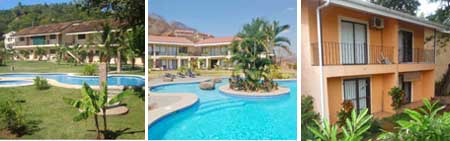
| From Page 7 Manuel Antonio hotel given recognition Special
to A.M. Costa Rica
Hotel Byblos Resort has announced that it has received the prestigious 2013 Tripadvisor Certificate of Excellence, honoring top-rated lodging businesses as reviewed by visitors from around the world on the popular travel site. To qualify, hotel businesses must maintain an average rating of four or higher out of a possible five, as reviewed by travelers on the TripAdvisor Web site from around the world. Additional criteria include volume of reviews and how recently they have been submitted by TripAdvisor users. The accolade is extended to qualifying businesses worldwide and is considered a badge of honor in the travel industry. “Byblos Resort and Casino is very excited to receive a TripAdvisor Certificate of Excellence,” said Kimberly Barron, director of marketing at the Manuel Antonio facility. “We strive to offer our customers a memorable travel experience at an affordable price, and this prestigious accolade is evidence that our hard work is translating into positive reviews on an important site like TripAdvisor.” “The TripAdvisor Certificate of Excellence program gives exceptional businesses in a variety of different industries around the world the recognition they deserve,” said Christine Petersen, president of TripAdvisor for Business. “From top-rated restaurants in Los Angeles to top-rated attractions in Italy, we want to applaud these businesses for offering TripAdvisor travelers a great customer experience.” The hotel said in a release that it has spent more than two years retraining staff, improving the installations around the hotel, as well as adding a strict sustainable tourism policy and launching numerous community projects and recycle initiatives. Hotel Byblos says it offers all the amenities and comforts of a three-star boutique resort while conserving the essence of jungle style lodging in Manuel Antonio. |