|
|
A.M. Costa Rica
Your daily English-language news source Monday through Friday |
||||
 |
 |
|||
|
|
 |
|||||||||||||||||||||
|
|
||||||||||||||||||||
 |
|||||||||||||||||||||
 |
|||||||||||||||||||||
|
|
||||||||||||||||||||
 |
| What we published this week: | Monday | Tuesday | Wednesday | Thursday | Friday | Earlier |
|
|
|
|
|
|
|
Food |
|
Jo
Stuart |
|
Abstracts and fair use are permitted. Check HERE for more details |
 |
| A.M. Costa Rica's Second news page | |||||||||
| San José, Costa Rica, Wednesday, Feb. 13, 2013, Vol. 13, No. 31 | |||||||||
|
|
|
|
|
|
|
Food |
|
 |
 |
|
Detailed presentation given
on genetically modified crops By
the A.M. Costa Rica staff
Lawmakers heard presentations from four experts Tuesday on the controversial topic of genetically modified plants. The experts were Pedro Rocha Salvatierra, who is with the Ministrio de Agricultura y Ganadería, Gloria Abraham Peralta, president of the Comisión Nacional de Bioseguridad, Walter Quirós Ortega from the Oficina Nacional de la Semilla and Esteban Cerdas Quirós of the Dirección de Regulación of the Ministerio de Salud. All hold doctorates. The genetically modified plants are not dangerous and there is no scientifically proven case that they are harmful to the health of humans or animals, said Rocha, who also said there was no danger of loss of biodiversity. Quiròs said that the benefit of these plants for humans is that they will augment the production of food for future demand. Cerdas said that there exists many myths over genetically modified products and many are totally false. He said that one could not state in general that genetically modified plants are good or bad. Each situation requires an evaluation of risk, he said. It was the Comisión Nacional de Bioseguridad that gave approval for a Monsanto subsidiary to plant a small plot of genetically modified corn in Chomes, Puntarenas, to produce seed for export. That decision is controversial and the decision has been appealed to the Sala IV constitutional court. There is a movement of environmentalists and students to overturn the decision based, in part, on the need to defend corn strains that have been planted for years in Costa Rica. As A.M. Costa Rica pointed out Friday, there is no comprehensive list of so-called heritage corn. A number of municipalities have declared that they will remain free of genetically modified crops. The experts gave detailed presentations that showed there are and have been many varieties of modified crops already growing in Costa Rica, including cotton, soybean, rice, banana and pineapple. The bulk of the plants either are engineered to resist certain weed killers or to produce a poison that will kill munching insect pests. Three quakes near Nosara take place in seven minutes By
the A.M. Costa Rica staff
Mother Earth got the attention of residents in Nosara with three earthquakes within seven minutes Tuesday morning. The first was estimated to have a magnitude of 3.5, said the Laboratorio de Ingenieria Sismica. The quake was logged at 10:58 a.m. Five minutes later, the Laboratorio logged a 3.7 magnitude quake. And at 11:05 there was a third, estimated to be of 3.5 magnitude. The epicenters all appeared to be just off shore into the Pacific from the beach community. The Observatorio Vulcanológico y Sismológico estimated slightly different magnitudes. Nosara residents have felt hundreds of quakes since the Sept. 5 major earthquake off nearby Sámara. Two maritime zone bills passed out of committee By
the A.M. Costa Rica staff
A legislative committee approved and sent to the full Asamblea Legislativa Tuesday two bills that affect property along the coast. One is No. 18.592 that creates urban zones along the coast. The bill only would apply to existing collections of homes and businesses. The second measure, No. 18.593 seeks to provide a legal framework to protect homes and businesses that are now illegally in the country's maritime zone. Both concepts were supported by President Laura Chinchilla to stop the eviction and demolition of properties along the coast. An urban zone would provide rights for property owners to have structures near the beach where many of them are now.
|
||||||||||||||||||||||||||||||||||||||||||||||||||||||
 |
|||||||||||||||||||||||||||||||||||||||||||||||||||||||
|
|
|
|
|
|
|
Food |
|
| What we published this week: | Monday | Tuesday | Wednesday | Thursday | Friday | Earlier |
| The contents of this page and this Web site are copyrighted by Consultantes Río Colorado S.A. 2013 and may not be reproduced anywhere without permission. Abstracts and fair use are permitted. Check HERE for details | ||||||
A.M. Costa Rica Third News Page |
A.M.
Costa Rica advertising reaches from 12,000 to 14,000 unique visitors every weekday in up to 90 countries. |
| San José, Costa Rica, Wednesday, Feb. 13, 2013, Vol. 13, No. 31 | |
|
|
|
|
|
|
|
Food |
|
 A.M.
Costa Rica photos/Kayla Pearson
The
collection Muñecas
Acata, made in the Hakata
Kyushu region, represents clay dolls in sports, battle and the arts
|
|
| Doll exhibit gives a glimpse into the
private lives of Japanese |
|
|
By
Kayla Pearson
of the A.M. Costa Rica staff Dolls are typically thought of as children's toys, that are used for play dates and given personalities by the owner's imagination. In Japan, the delicately made figurines carry a deeper significance. They are created with intriguing designs, colors and shapes and collected as an embodiment of the ideals of the people. “A tradition of 1,000 years which has passed from generation to generation, the doll is not a simple game, but is an art in this oriental country,” said a release from the Museo Nacional de Costa Rica. “Made with care by artisans and artists, they are testimony to the culture, customs and aspirations of its people and occupy a privileged place in homes and the lives of their infants. The Japanese Embassy in Costa Rica, Japan Foundation and the national museum are hosting an exhibition that showcases 75 of the traditional dolls. The dolls are on a world tour. They came from Brazil and will travel to Honduras next month. The exhibit is located in the museum's west hall for temporary exhibits. To get there, visitors take a transformative journey through the butterfly garden and past the pre-Columbian permanent showcase to a white room where Japanese lanterns and umbrellas line the walls and colorful dolls behind protective glass casings provide contrast to the surroundings. Here persons are able to envision daily activities of the Japanese through the various scenarios set up and acted out by the wooden, porcelain and clay models. Children's games like the New Year's classic called buriburi where a wooden hammer is used to hit a ball are depicted in one room. In the back is a collection that represents Japanese special events. One example is the dolls festival, Hina Matsuri, held March 3 where families exhibit dolls as a sign of prayer for the happiness of their daughters. Another is the flag festival, Tango no Sekku, held May 5 where figurines of warriors are shown to offer prayers for male children to grow healthy and strong. For the later, a strong young warrior dressed in battle gear in preparation for his first war serves as a centerpiece. |
 aristocrats of the Heian period (800-1200).  Wooden
doll is of a woman from the Edo period absorbed in a good book.
The arts are also represented with dolls that show the noh theater and the classic bunraku puppet theatre. Dolls designed after musicians show the art of playing the biwa, the Japanese lute with four strings. Athletes depict sports like sumo, portrayed through a fighter performing his ritual before combat. Older dolls from the Edo Period, a time that lasted from the early 1600s to the late 1800s, adorn the middle showroom. Wooden kimekomi dolls dressed in colorful fabrics show persons doing hobbies such as reading a book. The kokeshi dolls from northeast Japan are also wooden characters, but possess no arms or legs. They are simply large heads on cylindrical bodies, brought to life with bright colors. All these techniques will be available to view until March 3. Persons can visit the museum during the hours of 8:30 a.m. to 4:30 p.m. Tuesday through Saturday and 9 a.m. to 4:30 p.m. Sundays. |
| Art City Tour begins its fourth season of
free culture tonight |
|
|
By
the A.M. Costa Rica staff
The Art City Tour will return today with the first installation of the fourth season. Last November saw a turnout of 1,543 for the season three finale, said the Ministerio de la Cultura y Juventud. This cultural event, which takes place every two months, allows participants to visit galleries, museums, cultural centers and design shops in the late afternoon and night for free. Persons can travel between venues by bus, bike, or foot. Special performances for this event will be a concert by the Banda de San José at 4:30 in the Plaza de la Democracia and another “serenade surprise” at 9 p.m. at the Templo de la Música at Parque Morazán, said the cultural ministry. "We are entering the fourth season after 18 editions and according to the balance sheet gives us 19,628 people who have benefited and had the opportunity to get closer to our culture,” said Henry Bastos, event manager. “Most notable, is that 70 percent of those people approached these kinds of spaces for the first time.” All the cultural locations will extend hours today until 8:30. |
Both admission and the shuttle
between locations are free. The shuttle is made possible through
the Compañía Nacional de Fuerza y Luz. The vehicle will leave from four places, Museo de Arte Costarricense in La Sabana, Museo de Arte y Diseño Contemporáneo, Museos del Banco Central and Museo Nacional. The first departure is at 5:30 p.m. Those wishing to take the walking guided tour that emphasizes heritage architecture will have the option of leaving from two points. They are the Instituto Nacional de Seguros or Museo Nacional. Guides will start the tours at 5 p.m. Bike riders can meet together at 6 p.m. at the Instituto Nacional de Seguros. Some new exhibitions are Las muñecas de Japón at the national museum, and Construcciones/Invenciones: De la Suiza Centroamericana al país más feliz del mundo at the Museo de Arte y Diseño. Also, Allianza Francesa in Barrio Amón will host a photography exhibition called Un poco de tu invierno and ¿Dónde tomé las fotos? The photos are the work of Romain Berglez. |
 |
| You need to see Costa Rican tourism information HERE! |
|
|
|
|
|
|
|
Food |
|
| What we published this week: | Monday | Tuesday | Wednesday | Thursday | Friday | Earlier |
| The contents of this page and this Web site are copyrighted by Consultantes Río Colorado S.A. 2013 and may not be reproduced anywhere without permission. Abstracts and fair use are permitted. Check HERE for details | ||||||
 |
|
||||
| A.M. Costa Rica's Fourth News page | |||||
| San José, Costa Rica, Wednesday, Feb. 13, 2013, Vol. 13, No. 31 | |||||
|
|
|
|
|
|
|
Food |
|
 |
 A.M. Costa Rica/Kayla Pearson
Kids play in the confetti
organizers set forth to celebrate breaking the record. |
|
|
Fried rice for
7,000 appears to be a Guinness record breaker
|
|
|
By
Kayla Pearson
of the A.M. Costa Rica staff It starts with a giant handmade wok that is heated up to melt a coating of oil. Next 80 kilograms of eggs are poured in and scrambled with metal shovel spatulas. Once the eggs no longer ooze, 230 kilograms of pork are added and mixed around until it is cooked thoroughly. Then 735 kilograms of rice are dispersed, one giant pot full at a time. The rice is dug into from the bottom and flipped to the top in an effort to blend ingredients together. Later gallon jugs of soy sauce join the food in the pan, turning the rice from white to the familiar brown hue. Finally 35 kilograms of chili peppers, 53 kilograms of onions, 260 kilograms of chicken, 120 kilograms of ham and 20 kilograms of Chinese chorizo are gradually heaved, folded and stirred into the concoction until a time span of three hours passes. The result is a Guinness World Record fried rice, a feat that was achieved Tuesday thanks to the efforts of 52 Chinese chefs from different Chinese restaurants. The Asociación Colonia China en Costa Rica and the Municipalidad de San José organized the official attempt. It was chosen as a way to celebrate the Chinese New Year or Spring Festival, which began Sunday. Chinese across the world will celebrate for the next two weeks the welcoming of the year of the snake. Chefs arrived at 6 a.m. to prep for the work ahead of them. The cooking of the rice began at 10 a.m. Onlookers patiently peered from the sidelines talking to each other using expressions such as “Que rico,” “There’s still white rice on the bottom” and “What is lacking?” As the ingredients piled in, the looks on the chef’s faces changed from smiles to gazes of exhaustion. When one’s arms grew too weary from the manipulation of the shovel, another chef jumped in to take over. |
 A.M. Costa Rica/Kayla Pearson
The ham goes in the
record-breaking dishAt approximately 1 p.m., the anticipation was over as the time of truth arrived. Guinness inspector Briton Ralph Hannah weighed the final dish at 837 kilograms (about 1,841 pounds), earning Costa Rica the title for now. From the dish, 7,000 plates were served up. During the wait, members of the Chinese community gave performances to entertain the crowds and keep the celebration spirit going. |
| Costa Rica joins world to condemn North
Korea's nuclear test |
|
|
By
the A.M. Costa Rica staff
with wire service reports Costa Rica has joined most of the world in roundly condemning North Korea for its third nuclear test that took place Tuesday. The country in a foreign ministry statement urged full compliance with a U.N. Security Council resolution that prohibits North Korea from conducting such tests. The country has exploded nuclear devices in 2006, 2009 and now in 2012. Israeli intelligence sources leaked the information that North Korea actually was participating with Iran in conducting the tests. Iran, another outlaw nation, has threatened to eliminate Israel. The explosion took place just a day after a ceremony at Casa Presidencial in support of the international campaign to abolish nuclear arms. President Laura Chinchilla and others signed a letter supporting a movement toward a U.N. treaty banning the weapons. Also attending were students from the University for Peace in Ciudad Colón. The U.N. Security Council also condemned North Korea’s nuclear test and said it will begin work immediately on |
appropriate measures in the
form of a council resolution. The surprise test also brought
quick condemnation from the United States, South Korea, China and other
nations. U.N. Secretary-General Ban Ki-moon, himself a former South Korean foreign minister, called Pyongyang’s test appalling and reckless and said it shows outright disregard for the repeated call of the international community for North Korea to refrain from further provocative measures. North Korea, he said is the only country that has carried out nuclear tests in the 21st century. "The authorities in Pyongyang should not be under any illusion that nuclear weapons will enhance their security. To the contrary, as Pyongyang pursues nuclear weapons, it will suffer only greater insecurity and isolation,” he said. In Beijing, the foreign ministry summoned the North Korean ambassador to protest the development. The Vienna-based agency that monitors the Nuclear Test Ban Treaty said Tuesday’s test blast was nearly twice as large as the 2009 nuclear test and much larger than the one in 2006. North Korea also launched a rocket Dec. 14 that put a payload into Earth orbit. |
|
|
|
|
|
|
|
Food |
|
| What we published this week: | Monday | Tuesday | Wednesday | Thursday | Friday | Earlier |
| The contents of this page and this Web site are copyrighted by Consultantes Río Colorado S.A. 2013 and may not be reproduced anywhere without permission. Abstracts and fair use are permitted. Check HERE for details | ||||||
| A.M.
Costa Rica's Fifth news page |
 |
||||||||
| San José, Costa Rica, Wednesday, Feb. 13, 2013, Vol. 13, No. 31 | |||||||||
|
|
|
|
|
|
|
Food |
|
 |
|
|
| Obama
stresses withdrawal from Afghanistan in speech By
the A.M. Costa Rica wire services
U.S. President Barack Obama says about one-half of American forces still in Afghanistan will leave the country by this time next year. The president made the announcement during his annual State of the Union address, which focused largely on the U.S. economy. The president said 34,000 troops will come home from Afghanistan over the next year. That would put the United States on pace to have all its combat forces out by the end of 2014, as planned. “This drawdown will continue. And by the end of next year, our war in Afghanistan will be over,” he said. The president called for ongoing U.S. training of Afghan forces, and continued counterterrorism efforts worldwide, including a legal framework to guide those operations. In his fifth annual address to Congress, and the first of his second term, Mr. Obama laid out his agenda for the coming year. After his inaugural address last month emphasized social issues, the president used his State of the Union speech to refocus attention on his plan to boost the U.S. economy. He called on both parties in Congress to support his proposals to help the middle class, create jobs and reduce the deficit. “Nothing I am proposing tonight should increase our deficit by a single dime. It is not a bigger government we need, but a smarter government that sets priorities and invests in broad-based growth,” he said. In the Republican Party response, Sen. Marco Rubio of Florida, who has been mentioned as a possible presidential candidate in 2016, said Obama’s economic plan depends too heavily on government spending. “And, therefore, as you heard tonight, his solution to virtually every problem we face is for Washington to tax more, borrow more and spend more,” he said. Those polled in a recent public opinion survey by Pew Research Center listed the economy, jobs and the budget deficit as their top concerns. On foreign policy, the president issued a warning to North Korea, which conducted a nuclear test early Tuesday. “Provocations of the sort we saw last night will only further isolate them, as we stand by our allies, strengthen our own missile defense, and lead the world in taking firm action in response to these threats,” Obama said. Obama also said the U.S. and its allies will do what is necessary to prevent Iran from getting a nuclear weapon. On Syria, the president pledged to keep the pressure up on the government there, but did not commit to military force. He also announced that he will visit the Middle East in March, and promised continued support for Israel’s security and peace in the region. On a key domestic issue, Obama asked lawmakers to speed passage of legislation to update U.S. immigration policy. “As we speak, bipartisan groups in both chambers are working diligently to draft a bill, and I applaud their efforts. Now let’s get this done. Send me a comprehensive immigration reform bill in the next few months, and I will sign it right away, and America will be better for it. Let’s get it done,” he said. Rubio agreed on the need for immigration reform, but he called for stricter enforcement of existing laws. “We need a responsible, permanent solution to the problem of those who are here illegally. But first, we must follow through on the broken promises of the past, to secure our borders and enforce our laws,” Rubio said. The president also appealed for passage of his gun control initiatives. He said that more than 1,000 people have died from guns in America since the killing of 20 children and six adults at a Connecticut school in December. He talked about one victim, a 15-year-old girl from Chicago named Hadiya Pendleton, who was gunned down days after marching in his inaugural parade. “Just three weeks ago, she was here, in Washington, with her classmates, performing for her country at my inauguration. And a week later, she was shot and killed in a Chicago park after school, just a mile away from my house,” Obama said. Hadiya’s parents were among the shooting victims’ families who attended the speech. Obama will make separate trips to North Carolina, Georgia and Illinois this week to seek support for his agenda. The annual address comes from a requirement in the U.S. Constitution that the president report to Congress from time to time on the state of the union. Rebels in Colombia blow up grenade near fire fighters By
the A.M. Costa Rica wire services
Colombia's rebels killed a policeman and a child with a grenade in what the defense minister called a demented, diabolical' attack, and police said the guerrillas also blew up an oil pipeline. Fighting has intensified since a unilateral rebel ceasefire expired Jan. 20, with guerrillas taking hostages, killing soldiers and blowing up oil and energy infrastructure, and government security forces also stepped up operations. The violence comes even as the two sides talk peace in Havana to try to end a five-decade-long war that has killed tens of thousands of people and displaced millions more. Defense Minister Juan Carlos Pinzon said the FARC, or the Fuerzas Armadas Revolucionariass de Colombia, killed a policeman and a boy in a village in the southeastern province of Guaviare Monday night while residents tried to put out a fire the rebels had started. "This act is demented, diabolical, there's no other explanation,'' Pinzon told journalists Tuesday. "In whose mind does it make sense to throw a grenade at a group of people, police and citizens who are working shoulder to shoulder to put out a fire? In what war, under what logic is that acceptable? None.'' In a separate attack in the southern Putumayo department, the guerrilla group blew up a pipeline, police said. It was not immediately clear which line was attacked. President Juan Manuel Santos' administration and the rebel leaders launched a peace process late last year, the latest in a long history of failed attempts. Sunday, the government and the Marxist rebels said their talks were picking up in pace and making progress toward an agreement on land reform, the first in a five-point agenda. A U.S.-backed military offensive against rebels and drug gangs since 2002 has made vast strides in improving security in Latin America's No. 4 oil producer, opening up swathes of the country to investment, especially in the oil and mining sectors. . |
|
|
|
|
|
|
|
|
Food |
|
| What we published this week: | Monday | Tuesday | Wednesday | Thursday | Friday | Earlier |
| The contents of this page and this Web site are copyrighted by Consultantes Río Colorado S.A. 2013 and may not be reproduced anywhere without permission. Abstracts and fair use are permitted. Check HERE for details | ||||||
| A.M. Costa
Rica's sixth news page |
|
||||||||
| San José, Costa Rica, Wednesday, Feb. 13, 2013, Vol. 13, No. 31 | |||||||||
|
|
|
|
|
|
|
Food |
|
 |
Latin America news |
FATCA causes
headaches
for expats and foreign banks Have you been wondering why it is now so difficult for a U.S. citizen to open a bank account in Costa Rica? The reason is that the Internal Revenue Service has begun its implementation of the Foreign Account Tax Compliance Act, or FATCA for short. FATCA was passed in 2010 in an attempt to prevent overseas tax evasion activities. Unfortunately, many experts believe it is causing more harm than good. FATCA creates additional reporting requirements for U.S. taxpayers. All U.S. citizens were already required to report to the IRS information on their bank accounts held outside of the United States. FATCA creates yet another form to report these same assets again, as well as certain other assets. Failure to report these assets to the IRS can result in stiff penalties. If you are a U.S. citizen and you have financial assets outside of the United States, you should contact a professional to help you comply with the reporting requirements. U.S. Tax and Accounting Services, S.A., is located in Escazú and they specialize in tax matters for U.S. citizens living abroad. The most controversial provision of FATCA requires banks and other financial institutions to report information on U.S. account holders directly to the IRS. If the bank fails to send the information, the institution would be subject to massive withholdings on payments from U.S. assets. The requirement has caused such an expense for overseas banks, that some are simply denying access to customers from the U.S., deciding it's better to lose the U.S. business than to incur the reporting cost. U.S. Rep. Carolyn Maloney, a Democrat from New York, has introduced legislation to study the effects of FATCA on U.S. citizens living abroad, but it has received little traction in the House. Still, there are many powerful financial lobbying groups that want FATCA trimmed or eliminated. Time will tell where things go from here, but in the meantime U.S. citizens have to make sure they comply with reporting requirements. Editor's Note; Today we begin a column that will appear from time to time on tax matters for U.S. citizens and others. |
|
|
Latin
American news feed are disabled on archived pages.
|
||
| Costa Rican News |
AMCostaRicaArchives.com |
Retire NOW in Costa Rica |
CostaRicaReport.com |
|
|
|
|
|
|
|
Food |
|
| What we published this week: | Monday | Tuesday | Wednesday | Thursday | Friday | Earlier |
| The contents of this page and this Web site are copyrighted by Consultantes Río Colorado S.A. 2013 and may not be reproduced anywhere without permission. Abstracts and fair use are permitted. Check HERE for details | ||||||
| A.M. Costa Rica Seventh Newspage |
|
| San José, Costa Rica, Wednesday, Feb. 13, 2013, Vol. 13, No. 31 | |
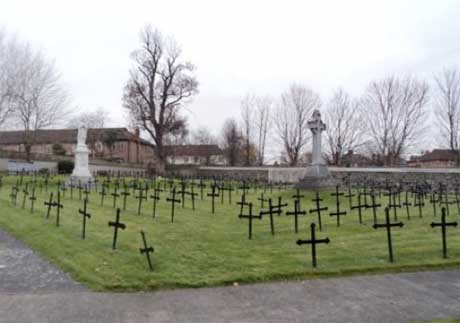 Justice for Magdalenes photo
Graves of former Magdalenes in
Donnybrook Cemetery, Dublin.Justice sought for Irish laundry slaves By
the A.M. Costa Rica wire services
Ireland’s Labor Party is calling this week for an official apology and compensation for survivors of the so-called Magdalene Laundries, workhouses run by Roman Catholic nuns through most of the past century. For years, the government insisted that the workhouses were privately run by the church. But last week, the government officially admitted its role in sending thousands of girls and young women into the laundries, where they worked in virtual servitude. Survivors of the workhouses are not satisfied. They say the government failed to offer the official apology and compensation the women say they deserve. In June 2011, the advocacy group Justice for Magdalenes appealed to the United Nations Committee Against Torture, which subsequently called on Ireland to investigate the issue. Last week, Ireland issued the findings of its probe, which showed that Irish governments not only admitted girls to the program but held lucrative contracts with the laundries. Ireland’s prime minister, Enda Kenny, said last Tuesday he is sorry for women forced to live in what he termed a hostile and far-off environment. Mari T. Steed is a Justice for Magdalenes co-founder and committee director and herself a daughter of a laundry survivor. She calls Kenny’s statement a farce. “Obviously, we were very disappointed. It was perhaps an expression of Kenny's personal remorse, but certainly not a full, formal state apology,” she said. “We spoke to all the survivors and my mum over the past week, and of course they are very disappointed and minced no words about Kenny,” Ms. Steed said. “But they are so trusting in the process and us, they feel we will fight it to the end — and we will.” The first of the Magdalene Asylums were established in the late 1700s to reform penitent prostitutes, who took in washing and sewing to pay for their keep. The model quickly spread elsewhere in the United Kingdom, Canada and the United States. By the 19th Century, most of these asylums had closed but not in Ireland. By the 20th Century, the Irish laundries had become workhouses for unwed mothers, orphans, the mentally disabled, the homeless and even girls the clergy judged at risk of getting into trouble because they were too pretty. Today, the term Magdalene is still associated with prostitution, which Ms. Steed says gives survivors a deep sense of shame. “The societal connotation has been that these institutions were for women who were prostitutes, criminals or insane,” Ms. Steed said. “It was only recently that the public began to learn that there were girls and women in there merely for the crime of being pretty, that is, a moral danger to society.” More than 11,000 women passed through 10 institutions between 1922 and 1996 operated by four religious orders: The Sisters of Our Lady of Charity of Refuge, Congregation of the Sisters of Mercy, Religious Sisters of Charity and Sisters of the Good Shepherd. The last laundry workhouse was shut down in 1996. The government report estimates there are between 800 and 1,200 survivors still living. But because records from two laundries are still missing, Steed believes as many as 2,000 to 3,000 are still alive. On entrance into a Magdalene laundry, girls gave up their given names and were assigned new names or numbers. Survivors tell stories of long hours washing heavy laundry and ironing. They were fed little and allowed to bathe only weekly. If they tried to escape, they were hunted down by police and returned to face solitary confinement, public shaming, whippings or food deprivation. One such woman was Margaret Bullen — known as No. 322 — who spent 35 years in a Magdalene Laundry. As a teenager, she became pregnant and gave birth to twin daughters. The babies were taken from her and adopted out to an Irish family in the U.S. One of her twins, New York resident Henrietta Thornton, tells her story: “My mother Margaret was born in the mid-1950s in a Dublin mental hospital called St. Brendans at Grangegorman. Margaret’s own mother remained in the hospital, and she went home to be raised by her father,” Ms. Thornton said. “When she was two years and four months old, she and some of her other siblings were taken away from her father for neglect into a system called industrial schools, which were orphanages-slash-reform homes for children.” Ms. Thornton said even small children were given work to do. “One of their first jobs in the morning was to kill the rats in the kitchen. Starting at 5 years old, she was making breakfast for 70 girls,” Ms. Thornton said. When Henrietta and her twin were in their early 20s, they grew curious about their past. A social worker eventually found their mother. That’s when the twin learned she was a Magdalene, still living in the convent after decades. They also found out she was mentally disabled. “When Margaret was 13 her IQ was assessed as 50,” Ms. Thornton said. “It seems to me that the assessment concluded she was fit for work but unfit for an education. The assessment just determined Margaret was eligible to be a slave.” At 16, Margaret was transferred to the Gloucester Street Laundry in Dublin, where she would live out her days. “I think there’s a misconception here that these girls were washing a few blouses for the nuns or something like that,” Ms. Thornton said. “It wasn’t nuns’ clothes. It was a factory situation, where they were doing laundry for prisons, the armed forces and other public and private organizations. It was really a big business.” Henrietta and her twin were reunited with their mother in 1995. They met at a hotel café, where Margaret, then 41 years old, sipped her first cup of coffee. “I learned afterwards that up to when she heard about the possibility of meeting us, she didn’t remember that she had children,” Ms. Thornton said. “She had just blocked it from her mind.” Henrietta Thornton visited Margaret in the High Park convent several times over the next few years. Margaret died in 2003 of a disease caused by exposure to industrial chemicals. Ms. Thornton says no one called to tell her about her mother’s death. She heard about the “death of the youngest Magdalene” on the radio. Survivors are not only looking for a full apology, but lost wages, pensions and health and housing services for the work they performed for the state, in some cases, for decades. The Dáil Eireann, Ireland’s main house of parliament, will debate the issue this week. Only one religious order, the Sisters of Charity, has apologized “unreservedly to any woman who experienced hurt” while in their care. The other three orders have issued statements of regret on their Web sites. Castro tones down optimism on Chávez By
the A.M. Costa Rica staff
More than a week after former leader Fidel Castro was quoted in Cuban media as saying Venezuela's cancer-stricken President Hugo Chávez was much better, the Communist Party newspaper published a different, toned down version of his comments Tuesday. The transcript in Granma, said to have been reviewed and updated' by Castro, left out the more positive assessments of Chavez' condition, but did say he was recovering. Castro, who spoke with reporters when he went to vote in Cuba's National Assembly election, was quoted in Feb. 4 news accounts as telling reporters he got daily reports on Chávez and that he was doing "much better, recovering'' two months after undergoing a six-hour operation in Havana. "It has been a tough fight but he is improving,'' Castro said. `"We have to cure him. Chávez is very important for his country and for Latin America.'' In the official version, published Tuesday, Castro said that Chávez is recovering, according to the last medical report I received today, Feb. 3, at midday.'' Castro replied. |
|
| What we published this week: | Monday | Tuesday | Wednesday | Thursday | Friday | Earlier |
| The contents of this page and this Web site are copyrighted by Consultantes Río Colorado S.A. 2013 and may not be reproduced anywhere without permission. Abstracts and fair use are permitted. Check HERE for details | ||||||