|
|
A.M. Costa Rica
Your daily English-language news source Monday through Friday |
||||
 |
 |
|||
|
|
 |
|||||||||||||||||||||||||
|
|
||||||||||||||||||||||||
 |
|||||||||||||||||||||||||
 |
|||||||||||||||||||||||||
|
|
||||||||||||||||||||||||
 |
| What we published this week: | Monday | Tuesday | Wednesday | Thursday | Friday | Earlier |
|
|
|
|
|
|
|
Food |
|
Jo
Stuart |
|
Abstracts and fair use are permitted. Check HERE for more details |
 |
| A.M. Costa Rica's Second news page | |||||||||
| San José, Costa Rica, Tuesday, Feb. 12, 2013, Vol. 13, No. 30 | |||||||||
|
|
|
|
|
|
|
Food |
|
 |
 |
|
Trafficking law says trials
are to be held in secret By
the A.M. Costa Rica staff
A new law to fight human trafficking calls for secret courts and secret proceedings for such cases. The confidentiality extends to trials, which usually are open to the public, although sometimes the identity of witnesses are protected. The measure also adopts a litany of international treaties into the Costa Rican law. A text of the new law became available on the La Gaceta Web site. The law defines trafficking in persons as promoting or facilitating the entry or exit from the country or promoting the movement of persons within the national territory if they are to engage in prostitution, labor or sexual exploitation, slavery, forced labor, forced marriage, illegal extraction of organs or illegal adoption. The law extends to forced pregnancies and also to persons providing transport, the administrators of homes and businesses used in sexual exploitation. The law also covers what it says are other activities derived directly from trafficking in persons. The government is instructed to house victims of trafficking and get them immigration papers free of charge. There is an affirmative obligation of public employees and private persons to report such cases. This is the law that creates a new $1 airport exit tax to support a bureaucracy to oversee human trafficking. The security ministry said that there were 93 victims of trafficking last year and attributed the cases of organized crime. Some were fishermen under foreign flags and some were strippers who worked as prostitutes at clubs. The part that worries a lot of expats is the clause that provides four to eight years in prison for anyone who promotes or sets up programs, campaigns or publicity announcements making use of whatever medium to project the country nationally and internationally as a tourist destination accessible for the commercial exploitation of prostitution of whatever sex or age. That is an adjustment to Artículo 162 bis of the penal code. That crime is not further described. In addition, the law orders the news media, television and radio to turn over a quarter percent of space or time to the Coalición Nacional contra el Tráfico Ilícito de Migrantes y Trata de Personas to commercials or ads against sexual tourism. The law also absolves anyone who claims to be a victim of exploitation of any crimes he or she has committed while engaged in the exploitive activity. The law contains incentives for individuals to claim they have been victims of human trafficking. They will receive housing, temporary residency and even transportation to their home country if they are foreigners.
|
|||||||||||||||||||||||||||||||||||||||||||||||
 |
||||||||||||||||||||||||||||||||||||||||||||||||
|
|
|
|
|
|
|
Food |
|
| What we published this week: | Monday | Tuesday | Wednesday | Thursday | Friday | Earlier |
| The contents of this page and this Web site are copyrighted by Consultantes Río Colorado S.A. 2013 and may not be reproduced anywhere without permission. Abstracts and fair use are permitted. Check HERE for details | ||||||
A.M. Costa Rica Third News Page |
A.M.
Costa Rica advertising reaches from 12,000 to 14,000 unique visitors every weekday in up to 90 countries. |
| San José, Costa Rica, Tuesday, Feb. 12, 2013, Vol. 13, No. 30 | |
|
|
|
|
|
|
|
Food |
|
 A.M. Costa Rica/Kayla Pearson
Epsy Campbell gestures to crowd
outside her campaign bus Monday afternoon in the downtown. |
|
| Ms. Campbell opens her campaign for her
party's nomination |
|
|
By
the A.M. Costa Rica staff
Epsy Campbell came out swinging Monday, but the slogan on her bus says it all: ¿Vamos o no vamos a sacar a Liberación? "Are we or are we not going to take out Liberación?" Ms. Campbell of Partido Acción Ciudadana is targeting the major political party and its unopposed presidential candidate, San José Mayor Johnny Araya. She is promising zero tolerance to corruption if she is elected. Both Liberación and Araya has accumulated a lot of political baggage that can be targeted in a political campaign. However, he is seen as a clear favorite. Ms. Campbell herself has a little baggage. She was one of the individuals who received money from Casa Presidencial and Óscar Arias Sánchez to serve as a so-called legislative adviser to help pass the free trade treaty with the United States. The problem was that Ms. Campbell was president of Acción Ciudadana which was actively opposing the treaty. The Arias administration got about $2 million from the Banco Centroamericano de Integración Económica. The money was spread around in various small contracts to 82 friends and political foes. All of the payments were off the books, something that has generated continuing legal actions. Casa Presidencial spent about $342,000 of the funds until word of the arrangement became public. In addition to paying people |
who had technical expertise, some
contracts went to vehicle drivers and similar. Ms. Campbell
dropped out of the deal and did not accept $9,000 after La
Nación disclosed the existence of the slush fund. Ms. Campbell served as a legislator and was the vice presidential candidate under Ottón Solís in 2006. He is not expected to seek the party nomination this year. Ms. Campbell spoke from a podium beside a van downtown in the middle of the pedestrian walkway of Avenida Central. She spoke about how she is going on a route for change and how she can bring positive reform to the country and the government if the people give her support. Her campaign Web site lists a promise for “a community for the new majority who really wants to do something and not to be simply watching as our country continues without direction.” The work to “change” is a reoccurring theme for the politician. Ms. Campbell has worked in human rights specifically on issues that affect women and African descendents. She has served as the leader of the Center for Women of African Descent, the Alliance of Leaders of African descent in Latin America and the Caribbean, and the Black Parliament of the Americas. In the 2010 election, she ran for the party's presidential nomination but lost to Solis. |
| Officials cheer survey that shows lower
sense of insecurity |
|
|
By
the A.M. Costa Rica staff
Security officials and the Chinchilla administration are taking credit for the results of a new survey that said insecurity was no longer the No. 1 concern of Costa Ricans. That concern fell to third place behind government corruption and the economy. according to a report in the daily La Republica Monday. The Ministerio de Gobernación, Policía y Seguridad Pública quickly produced a press release reporting some of the CID Gallup results. It said that now only 55 percent of Costa Ricans believe that crime is increasing instead of the 77 percent of those questioned in 2010. Decreasing insecurity has been a cornerstone of the Laura Chinchilla campaign and administration. The survey also said that just two of every 10 households reported that someone there had been the victim of a crime during the last four months of 2012. In 2010 the figure was three out of every 10 homes. The incident of crime appears to be increasing in higher income homes, said the report. CID Gallup surveyed 1,282 homes all over the country. The survey was done from Jan. 15 to 23. The security ministry attributed the decrease in feelings of insecurity to various sweeps, roadblocks and coordinated work with other organizations and the community. The Chinchilla administration has put many more police officers on the street than during previous administrations. There also have been donations of vehicles from the People's Republic of China and a new tax on corporations that goes to police officials. Although corruption also is a crime, the impact on the population is more long-term and was treated separately in the survey. |
 Ministerio de Gobernación.
Policía y Seguridad Pública photo
Security officials
inaugurated this building Tuesday. Ithouses the police preventative programs for an estimated 2,000 communities and other outreach programs. A.M. Costa Rica has been seeing an increase in crimes involving tourists. A woman tourist in Atenas reported that a cat burglar with a knife entered her rented cottage over the weekend. Some tourists also were victims of theft on the Caribbean coast. However, tourists, who are major targets for some thieves, would be overlooked by a telephone survey. |
 |
| You need to see Costa Rican tourism information HERE! |
|
|
|
|
|
|
|
Food |
|
| What we published this week: | Monday | Tuesday | Wednesday | Thursday | Friday | Earlier |
| The contents of this page and this Web site are copyrighted by Consultantes Río Colorado S.A. 2013 and may not be reproduced anywhere without permission. Abstracts and fair use are permitted. Check HERE for details | ||||||
 |
|
||||
| A.M. Costa Rica's Fourth News page | |||||
| San José, Costa Rica, Tuesday, Feb. 12, 2013, Vol. 13, No. 30 | |||||
|
|
|
|
|
|
|
Food |
|
 |
| There are hints that the next pope could
be Latin American |
|
|
By
the A.M. Costa Rica wire services
With Pope Benedict's stunning announcement that he will resign later this month, the time may be coming for the Roman Catholic Church to elect its first non-European leader, and it could be a Latin American. The region already represents 42 percent of the world's 1.2 billion-strong Catholic population, the largest single block in the church, compared to 25 percent in its European heartland. After Pope John Paul, a Pole, and German-born Benedict, the post once reserved for Italians is now open to all. Who gets the nod depends on the profile of the new pope that the cardinals who elect him at the next conclave think will guide the church best. Two senior Vatican officials recently dropped surprisingly clear hints about possible successors. The upshot of their remarks is that the next pope could well be from Latin America. "I know a lot of bishops and cardinals from Latin America who could take responsibility for the universal church,'' said Archbishop Gerhard Mueller, who now holds the pope's old post as head of the Congregation for the Doctrine of the Faith. "The universal church teaches that Christianity isn't centered on Europe,'' the German-born archbishop told Duesseldorf's Rheinische Post newspaper just before Christmas. Swiss Cardinal Kurt Koch, head of the Vatican department for Christian unity, told the Tagesanzeiger daily in Zurich at the same time that the Church's future was not in Europe. "It would be good if there were candidates from Africa or South America at the next conclave,'' he said, referring to the closed-door election in the Vatican's Sistine Chapel. Asked if he would vote for a non-European over a European candidate if they were equally qualified, he responded, "Yes.'' If the next conclave really is Latin America's turn, the leading candidates there seem to be Odilo Scherer, archbishop of the huge diocese of Sao Paolo, or the Italian-Argentine Leonardo Sandri, now heading the Vatican department for eastern churches. Peter Turkson from Ghana, now head of the Vatican's justice and peace department, is often tipped as Africa's frontrunner. About half the cardinals who can vote are from Europe, even though only a quarter of the world's Catholics live there. |
If the conclave tilts to the Old
Continent, Vatican watchers say Angelo Scola of Milan is in pole
position. Vienna Cardinal Christoph Schoenborn, a former student and close ally of Benedict, is also considered a strong candidate. While there are no official candidates, here are the potential popes, most frequently mentioned recently. The list is in alphabetical order. • Joao Braz de Aviz (Brazil, 65) brought fresh air to the Vatican department for religious congregations when he took over in 2011. He supports the preference for the poor in Latin America's liberation theology, but not the excesses of its advocates. • Timothy Dolan, (USA, 62) became the voice of U.S. Catholicism after being named archbishop of New York in 2009. His humor and dynamism have impressed the Vatican, where both are often missing. • Marc Ouellet (Canada, 68) is effectively the Vatican's top staff director as head of the Congregation for Bishops. He once said becoming pope would be a nightmare. • Gianfranco Ravasi (Italy, 70) has been Vatican culture minister since 2007 and represents the church to the worlds of art, science, culture and even to atheists. • Leonardo Sandri (Argentina, 69) is a "transatlantic'' figure born in Buenos Aires to Italian parents. He held the third-highest Vatican post as its chief of staff in 2000-2007. • Odilo Pedro Scherer (Brazilia, 63) ranks as Latin America's strongest candidate. He's archbishop of Sao Paolo, largest diocese in the largest Catholic country. • Christoph Schoenborn (Austria, 67) is a former student of Pope Benedict with a pastoral touch the pontiff lacks. The Vienna archbishop has ranked as papal material since editing the Church catechism in the 1990s. • Angelo Scola (Italy, 71) is archbishop of Milan, a springboard to the papacy, and is many Italians' bet to win. An expert on bioethics, he also knows Islam as head of a foundation to promote Muslim-Christian understanding. • Luis Tagle (Philippines, 55) has a charisma often compared to that of the late Pope John Paul. He is also close to Pope Benedict after working with him at the International Theological Commission. • Peter Turkson (Ghana, 64) is the top African candidate. Head of the Vatican justice and peace bureau, he is spokesman for the church's social conscience and backs world financial reform. |
|
|
|
|
|
|
|
Food |
|
| What we published this week: | Monday | Tuesday | Wednesday | Thursday | Friday | Earlier |
| The contents of this page and this Web site are copyrighted by Consultantes Río Colorado S.A. 2013 and may not be reproduced anywhere without permission. Abstracts and fair use are permitted. Check HERE for details | ||||||
| A.M.
Costa Rica's Fifth news page |
 |
||||||||
| San José, Costa Rica, Tuesday, Feb. 12, 2013, Vol. 13, No. 30 | |||||||||
|
|
|
|
|
|
|
Food |
|
 |
|
|
| Economy
will dominate State of Union address By
the A.M. Costa Rica wire services
In his State of the Union Address tonight to a joint session of the U.S. Congress, President Barack Obama will attempt to prod lawmakers to join him in further steps to strengthen the economy, create jobs, and support the middle class. Obama will deliver what is technically his fourth State of the Union Address, aware that most Americans view the economy and unemployment as the country's biggest problems. He also knows that despite political capital from his reelection victory, public dissatisfaction remains high with the failure of leaders in Washington to deal with these problems. In a speech White House aides say began to be drafted last November, he is likely to return to themes he sounded as he campaigned for reelection. He will urge Republicans and Democrats to work with him to keep the economy moving forward by strengthening and expanding the middle class, rebuilding American infrastructure and boosting manufacturing. The president gave this hint as he addressed Democratic lawmakers last week. "I'm going to be talking about making sure that we're focused on job creation here in the United States of America," said Obama. "It means that we're focused on education and that every young person is equipped with the skills they need to compete in the 21st century." On the eve of tonight's address, White House Press Secretary Jay Carney described the State of the Union as the second act of a play that includes Obama's inaugural address last month. Obama, he said, will directly speak to American's concerns about lingering effects of the recession. "He would address those Americans directly and talk about the need for Washington to take positive action to help the economy grow, to help it create jobs, the need for Washington to refrain from taking negative action by allowing for example, the sequester to kick in which would do direct harm to Americans, direct harm to the middle class, direct harm to our defense industries and national security interests," said Carney. Carney said the president will say work is not done to boost the economy, that positive trends are not irreversible, and that a stronger foundation is needed for growth. Listening Tuesday night will be Republicans who control the House of Representatives, and who since mid-term elections in 2010 have posed major roadblocks to the president's domestic agenda. Obama will again warn about potentially damaging effects for the economy of Congress allowing about $110 billion in automatic spending cuts to occur at the beginning of March. On foreign policy, Obama is expected to mention the accelerated process he announced in December of drawing down U.S. troops from Afghanistan, turning over security to Afghan forces, heading for a complete foreign combat force withdrawal by 2014. Concern voiced over guns made with new 3-D printers By
the Cornell University news service
With controversy swirling over gun-sale background checks, limiting the size of weapon magazines and retaining Second Amendment rights, the problem of making homemade guns with 3-D printers has become a matter of public concern. Laws mean little if a determined criminal or a hobbyist teen wants to make plastic guns or extra-high capacity magazines, says Hod Lipson, Cornell University professor of engineering and a pioneer in 3-D printing. “With a homemade 3-D printer, you can print a gun using ABS plastic, the same material that LEGOS are made out of. You can even use nylon, and that’s pretty tough,” he says. “You won’t be able to make a sniper rifle with a 3-D printer and it won’t shoot 10 rounds a second, but the gun you can make could be dangerous. And a high-capacity magazine is nothing more than a strong plastic box with a spring. It’s trivial to print.” Lipson and co-author Melba Kurman just published a new book, “Fabricated: The promise and peril of a machine that can make (almost) anything.” The book includes a chapter on 3-D printing and the law, which addresses the legal and ethical challenges raised by 3-D printed firearms. The book also explores 3-D printing’s impact on consumer safety, intellectual property, and ethics. As Lipson and Ms. Kurman detail, three-dimensional printers are intended to do the world good. In industry, 3-D printers can make hard-to-find spare parts and complex new devices. Researchers are developing techniques to 3-D print tailored and personalized body parts like heart valves. 3-D printers can even make food. Lipson explains that on the Internet, there are blueprints and designs available to 3-D print guns. As an engineer, he’s seen dubious rogue designs online. “Some designs are not safe,” he says. “More than criminals, I am worried about innocent kids making guns and injuring themselves. What happens if the design is faulty or if the plastic was printed at the wrong temperature, rendering the gun weak? When fired, it could blow up in its user’s face. All kinds of parameters go into making 3-D objects and when you introduce an explosive such as gunpowder, that’s when things can go wrong,” Lipson says. The small footprint of new personal-scale manufacturing systems also makes it easier to fabricate firearms more discreetly than before. Lipson agrees that a more effective gun control solution worth exploring might impose legal limitations on gunpowder rather than gun parts and accessories such as magazines. Says Lipson: “If I were talking to lawmakers, I would encourage them to address the most basic part of a firearm – the energy source. You must have gunpowder to fire a weapon. The law could regulate the explosives. To fire a bullet, you need high-energy propellant like gunpowder. After all, 3-D printed and arbitrarily shaped plastic firearms are going to be increasingly hard to detect using traditional screening techniques. A high-capacity magazine might look like something else. It may be more effective to control the gunpowder.” Venezuela to devalue bolívar By
the A.M. Costa Rica wire services
Venezuela has announced it is devaluing its currency in the hope of boosting economic growth. Starting Wednesday, the fixed exchange rate will go from 4.30 bolivars to the dollar to 6.30. The Venezuelan government strictly controls the currency exchange to limit available dollars and avoid currency flight. But the shortage of dollars has created a thriving black market currency exchange. It has also boosted the price of imports, leading to shortages of some basic goods. The devalued bolivar is expected to make Venezuelan exports cheaper on world markets. |
|
|
|
|
|
|
|
|
Food |
|
| What we published this week: | Monday | Tuesday | Wednesday | Thursday | Friday | Earlier |
| The contents of this page and this Web site are copyrighted by Consultantes Río Colorado S.A. 2013 and may not be reproduced anywhere without permission. Abstracts and fair use are permitted. Check HERE for details | ||||||
| A.M. Costa
Rica's sixth news page |
|
||||||||
| San José, Costa Rica, Tuesday, Feb. 12, 2013, Vol. 13, No. 30 | |||||||||
|
|
|
|
|
|
|
Food |
|
 |
Latin America news |
Monteverde gets
fire station
By
the A.M. Costa Rica staff
Fire fighters have a new station in Monteverde. The location is to the south side of the local clinic. The building is the 73rd fire station in the country. The six professional fire fighters and the eight volunteers at the station have responsibility for La Guaria, Lindora, Los Llanos, Santa Elena, San Luis, Cañitas, Cebadilla, San Rafael, Los Tornos, Las Nubes and other locations. The station was financed by a new tax on electrical bills. With the new 1.75 percent tax, the Cuerpo de Bomberos has financed a half dozen new stations, and there are more on the way. Two quakes felt in east metro By
the A.M. Costa Rica staff
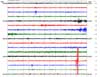
There were two felt earthquakes Monday afternoon and early today in the San Pedro vicinity. The first at 4:23 p.m. had an epicenter in San Rafael de Montes de Oca, said the Observatorio Vulcanológico y Sismológico de Costa Rica. The Laboratorio de Ingenieria Sismica said that the epicenter was closer to San Ramón de la Unión, The magnitude was between 3 and 3.1. It was felt in the eastern part of the metro area. A second quake at 58 minutes after midnight today had an epicenter near Jaboncillal de Goicoechea, said the Obersvatorio. The Laboratorio said it, too, was near San Ramon de La Union. The magnitude was estimated by the Observatorio at 2.8, but the Laboratorio said 3.0. British politicians visiting By
the A.M. Costa Rica staff
A group of British members of Parliament are visiting Costa Rica. They arrived Sunday and will be here until Wednesday. The bulk of their activities have been in contact with Costa Rican lawmakers. They met with members of the Comisión Permanente Especial de Relaciones Internacionales and Comercio Exterior Monday. Motorcyclists beating suspects By
the A.M. Costa Rica staff
Operators of motorcycles and the driver of a passenger car clashed Sunday in Orosi, and the vehicle driver died of injuries. He was identified by the Judicial Investigating Organization as Jose Pablo Lorea Artavia, 29. Lorea was reported to have struck a motorcycle with his vehicle when he was leaving the parking lot of a supermarket. For some reason agents said he returned to smash into other motorcycles. A chase ensued, and a motorcycle rider was struck and injured by the Lorea vehicle, agents said. That was when the motorcycle operators administered a beating to Lorea, said agents. The motorcyclists are from San José, they said. |
|
Latin
American news feeds are disabled on archived pages.
|
|
| Costa Rican News |
AMCostaRicaArchives.com |
Retire NOW in Costa Rica |
CostaRicaReport.com |
|
|
|
|
|
|
|
Food |
|
| What we published this week: | Monday | Tuesday | Wednesday | Thursday | Friday | Earlier |
| The contents of this page and this Web site are copyrighted by Consultantes Río Colorado S.A. 2013 and may not be reproduced anywhere without permission. Abstracts and fair use are permitted. Check HERE for details | ||||||
| A.M. Costa Rica Seventh Newspage |
|
| San José, Costa Rica, Tuesday, Feb. 12, 2013, Vol. 13, No. 30 | |
 White House photo
President
Barack Obama applauds former staff sergeant Clinton Romesha
Medal of Honor awarded to Afghan vet By
the A.M. Costa Rica wire services
Former staff sergeant Clinton Romesha was serving with Bravo Troop at Combat Outpost Keating in Afghanistan near the border with Pakistan. He and 52 other U.S. soldiers came under an intense AK-47 and rocket-propelled grenade attack from a force estimated at more than 300 Taliban fighters. Despite shrapnel wounds, Romesha organized and led a counter-attack to hold the outpost, calling in air strikes and helping to recover fallen comrades. Eight U.S. soldiers were killed and 22 wounded in fighting that lasted through the day. President Obama recounted Monday the battle and the courage Romesha and fellow-soldiers showed in the face of devastating fire. "Throughout history the question has often been asked, why? Why do those in uniform take such extraordinary risks and what compels them to such courage? You ask Clint and any of these soldiers who are here today and they will tell you, yes, they fight for their country and they fight for our freedom; yes, they fight to come home to their families. But most of all they fight for each other, to keep each other safe and to have each other's backs," said President Obama. Afterwards, Romesha appeared before media cameras at the White House and said that like other Medal of Honor recipients he had mixed emotions of joy and sadness as he remembered sacrifices of fellow soldiers. "I'm feeling conflicted with this medal I now wear," said Romesha. "The joy comes from recognition for us doing our jobs as soldiers on distant battlefields. But it is countered by the constant reminder of the loss of our battle buddies. My battle buddies. My soldiers, my friends." Romesha said he and his comrades were determined not to be beat that day in Afghanistan, adding he accepted the Medal of Honor for all who served and the eight who died. President Obama recognized members of Bravo Troop during the ceremony. In his remarks before awarding the medal to Romesha, President Obama noted the results of an investigation into the attack showed that the camp was tactically indefensible. It was in a deep valley with high ground on all sides. "There are many lessons from COP Keating," said Obama. "One of them is that our troops should never, ever be put in a position where they have to defend the indefensible. That is what these soldiers did for each other, in sacrifice driven by pure love." The son of a Vietnam War veteran, Romesha also served in Kosovo, and Iraq. He is the fourth living recipient to receive the Medal of Honor for actions in Iraq or Afghanistan. President Obama has awarded the medal to three other living Afghanistan war veterans, and posthumously to four veterans of the conflicts in Afghanistan, Vietnam and Korea. Romesha receives another honor today. He will be among guests invited by the president to observe the State of the Union Address, sitting next to First Lady Michelle Obama in the House of Representatives chamber. Loss due to cyber hackers put at billions By
the A.M. Costa Rica wire services
U.S. officials say hackers pose a threat to the nation's economy and accuse China of carrying out the most cyber attacks. The assessment is in a classified national intelligence estimate that officials described to U.S. media. A published report says hackers are targeting the energy, finance, information technology, aerospace and automotive sectors. Some estimates put the cost to the U.S. economy at tens of billions of dollars each year. Brad Glosserman, executive director of the Hawaii-based Pacific Forum think tank, said it is difficult to identify the true sources of cyber espionage. "Attacks have been on the rise without question," he said, explaining that, often, even experts can only guess where the attacks are coming from. "As for the vulnerabilities to the financial sector, I would assume that's correct, but I would suggest that the vulnerabilities are throughout the U.S. economy," he added. "The problem is that many people do not like to speak about these things because either they're unaware they are being attacked or very reluctant to publicize their vulnerabilities." The White House is considering responses to cyber attacks, including trade actions and visa restrictions. President Barack Obama is expected to issue an executive order on cyber security soon, intended to help private companies defend themselves against hacking. The newspaper says the report also names Russia, Israel and France as countries that gather economic intelligence through cyber attacks. Several U.S. newspapers accuse Chinese hackers of infiltrating their computer systems. The Chinese Foreign Ministry denies the allegations. Duncan Clarke of Stanford University, who also chairs BDA — a China-based investment and advisory firm — said that if China is responsible for directing corporate espionage, it would be to help Chinese companies compete with their U.S. rivals. He said a government could harm its own economy if it responds too harshly. "The risk is in overreacting, particularly without explicit evidence, that you cause protectionist tendencies," he said. "There have already been issues at Huawei and ZTE, which are China's champion telecom equipment companies, denying them access to U.S. markets. And we have not seen that level of concern in other countries, so the risk is that you actually hurt your own interests by taking too hard a line on this." The U.S. government has been concerned for years about the significant and growing threat of hackers stealing data for economic gain, and a report in The Wall Street Journal says businesses have long been well aware of the problem. So far, Washington's response has included everything from giving written guidance to businesses on intellectual property crimes, to setting up a toll-free number to report problems, to unsuccessful efforts to get Congress to pass legislation on the issue. President Obama says foreign governments and criminals are looking into U.S. financial, energy and public safety systems "every day." Outgoing Secretary of Defense Leon Panetta issued a strong warning about the threat of cyber-attacks in a speech in October. He says the U.S. military has put $3 billion into cyber security efforts. New satellite blasts into Earth orbit By
the A.M. Costa Rica wire services
NASA’s latest Earth-observing satellite rocketed into space Monday continuing a program which began more than 40 years ago. An Atlas V rocket carrying the Landsat Data Continuity Mission spacecraft launched from Vandenberg Air Force Base in Lompoc, California. NASA officials called the launch picture perfect. The spacecraft is now on its own after a successful separation from the Centaur upper stage. The Landsat craft is the eighth in a series of global observational spacecraft, a collaborative effort between NASA and the U.S. Geological Survey. According to NASA, it will play a critical role in monitoring, understanding and managing the resources, such as food and water, needed to sustain human life. After three months of testing in orbit, the satellite will become known as Landsat 8, and all operational control of the spacecraft will transfer to the Geological Survey. |
|
| What we published this week: | Monday | Tuesday | Wednesday | Thursday | Friday | Earlier |
| The contents of this page and this Web site are copyrighted by Consultantes Río Colorado S.A. 2013 and may not be reproduced anywhere without permission. Abstracts and fair use are permitted. Check HERE for details | ||||||