mmmm
|
colon exchange rate HERE! |
Your daily English-language
news source
Monday through Friday

|
mmmm
|
Your daily English-language
|
|
|
|
|
|
|
|
|
|
|
|
|
|
|||||||||||||
|
|
|||||||||||||
 |
| Costa Rica Expertise Ltd http://crexpertise.com E-mail info@crexpertise.com Tel:506-256-8585 Fax:506-256-9393 |
 |

La Costanera, Quepos, Parrita, Manuel Antonio |
|
Lives lost in Iraq
Dear A.M. Costa Rica: Are we just careless as a country? We are looking at the money spent on Iraq as the main issue, weapons of mass destruction, terrorists, which I might add are in Afghanistan, Mr. Bush!!! But the most important thing is we are loosing American lives!!!!!!!!!!!!!! And for what? Did we not learn from Vietnam? But of course, Mr. Bush, you were nowhere to be found at the time, so you go after a man that has served there just like going after Saddam isn't it? Look at your intelligence reports. I think they said Osama Bin Laden was responsible. Well enough of my uneducated ramblings and all the other stuff you admirers of Mr. Bush are going to say, But if you support him that much, go help out in Iraq and let some of the innocent Americans come home. George Bahrijczuk
Bill Clinton disgraced
Jacó himself and liberals Dear A.M. Costa Rica: Comments on the article "When did liberal become a dirty word?" Liberal became a dirty word when President Clinton disgraced our nation, when he flat-out lied about his affair, in the White House, with a young female intern. Liberal became a dirty word when Senator Kerry, after returning from Vietnam, accused all members of the military serving there of performing outrages acts. Mr. Humes is just repeating what all Liberals are saying. He is naive and his comments are pure nonsense. Al Almeida
He readily accepts
Nuevo Arenal being labeled a liberal Dear A.M. Costa Rica: If I were John Kerry, I would ‘fess up. You bet I’m a liberal. And, if I were Kerry, I’d say, I have two words for those who don’t like it. Abraham Lincoln. Lincoln was a liberal. A uniter. A man who favored labor over capital. A man who freed the slaves. A liberal. If he needed more, I’d offer Kerry two more words. Teddy Roosevelt. He fought the big bosses. He was the first president to tax corporate finances. He fought the mining industry when it wanted to dig up the Grand Canyon. A trust-buster. A liberal. It may seem odd, but they were both Republicans. Liberals can be of any political shade if they also believe in advancing the rights of the little guy, of the disadvantaged, the under-represented. Once blacks were measured in the Constitution as worth three-fifths of whites, for the purpose of counting Americans. Once women couldn’t vote. Liberals changed that. Once we had no social security, no Medicare. Liberals changed that. Would you roll back minimum-wage laws? Factory safety regulations? Clean air and clean water laws? Would you get rid of them? They were written by liberals. Liberals kept hydroelectric dams out of the Grand Canyon. Liberals kept Disney from turning Mineral King into yet another Disney resort. Fair housing laws. Fair employment laws. Fair political practices. Liberals gave us all those. Once factories employed children 10, 12, 14 years of age, to work 10, 12, 14 hours a day. Liberals changed that. In case you didn’t know, I’m a liberal. Long before the Civil Rights movement of the 1960s, back in 1948, my wife Bonnie and I went door to door in Harlem, registering blacks. When we came to Laguna Beach, Calif., in 1955, we discovered that black residents could not have their hair cut in Laguna barbershops. Bonnie and I and a handful of Lagunans, black and white, changed that. Liberals, all. So let me define myself. I am a liberal, yes, but I am also a Democrat, a Jew, a combat veteran of World War II, an American. I put those terms in no particular order. I am other things as well: a writer who has been published in every decade since the 1930s, a former teacher, a former editor. I am a father and a grandfather. I am a husband. None of these words can be used against me, except one. Liberal. I am a liberal. To those close-minded people, the case is closed. Well, I am opening the case. I refuse to permit you to define me in your terms. I refuse to permit you to use "liberal" as a pejorative. I insist you accept me, liberal voice and all. Would you brush aside that I have given 60 pints of blood to strangers, and will give more? Will you ignore that I coached Little League kids my first summer in Laguna? I still hold doors for little old ladies who probably are younger than I. So look at your candidates. Listen to them when they define themselves. And know that they are more, far more, than a thoughtless prejudice would have you think. And if any of them is a liberal, by his or her definition, remember Abraham Lincoln and Teddy Roosevelt. If you insist on calling a candidate a liberal, that candidate should thank you. You have linked that candidate with Lincoln and Teddy Roosevelt and others who have made America what it is today. Who needs greater glory? Arnold Hano
Laguna Beach, Calif. (former Peace Corps volunteer in Costa Rica.) |
|
 |
|
 |
 |
1173 More info HERE! |
|
|
||
 |
 |
|
Expat makes better citizens of the world |
|
|
Special to A.M. Costa Rica Come Nov. 3rd, how will you be feeling? Proud to be an American, or ready to dust off that dream of living abroad? Some people are threatening to leave the country if the election doesn’t go their way. We’ve heard it before, but this time more people seem to be saying it, and they appear to be in earnest. The idea is so prevalent that it gets skewered in the October issue of Harper’s. Offering "A Readers’ Guide to Expatriation," Bryant Urstadt suggests a host of expat alternatives: buying citizenship (for $125,000) from the Caribbean nation of St. Kitts and Nevis; investing $1.3 million in an apartment on a ship called "The World;" or building your own private island out of mud and landfill. He jokes that war supporters might want to relocate to one of the "Coalition of the Willing," those few countries that supported Bush in his invasion of Iraq, but notes the long road to citizenship in Pakistan and Uzbekistan. The author fails to mention another member of that coalition — Costa Rica. In "Fahrenheit 9-11," coalition countries are lampooned with cartoons suggesting the countries’ backwardness. Costa Rica was represented by an ox cart, which rankled Costa Ricans and gave them one more reason to suspect that even American liberals are clueless about the rest of the world. No doubt Harper’s omitted mention of Costa Rica because it’s too much a real and attractive possibility. That would have made the article less funny. But it is a real option, and what’s ironic about Costa Rica’s current position (as a one-time member of the Coalition of the Willing) is that the country has a long history of pacificism. In 1948 Costa Rica abolished its army, funneling the money that would have gone to defense into education, health care, environmental protection, and other "backward" priorities. When current president Abel Pacheco threw his weight behind Bush there was a huge uproar: Costa Ricans called Pacheco Bush’s toady, and noted that it was illegal under the Costa Rican constitution to declare or support war. Not to mention the fact that a country with no army may be Willing to support a war but will not be very Able. Notwithstanding this recent glitch, Costa Rica is a viable option for those who want to make good on their threat to skip town if the War President gets another term. For half a century, North Americans have been heading to Costa Rica |
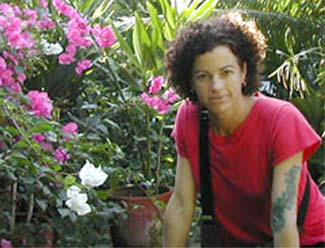
precisely because of its pacificism, from the anti-war Alabama Quakers who homesteaded the jungle in the 1950s to Bill White, founder of the only arts colony in the country (The Julia and David White Arts Colony). He left the United States in despair after the first Gulf war. Whether it’s Costa Rica or another country, living abroad is an idea whose time has come. In the past three decades the number of Americans living abroad has more than quadrupled — from about 70,000 in 1966 to around 4 million in 1996. The U.S. Internal Revenue Service has long kept track of peripatetic Americans, but now the Census Department has pilot projects in Mexico, France and Kuwait to decide whether Americans living abroad will be counted in the 2010 census. If more Americans lived abroad (and eventually returned, as most do), we’d have a country of people with a more global perspective, a country of people who have seen first hand how the rest of the world views the U.S. We’d have a critical mass of citizens who know that the U.S. can’t be the big daddy bully of the world, how we need allies, not just people who tremble and curse when they see us coming. For what it’s worth, a recent Zogby poll found that U.S. citizens with passports support Kerry over Bush, 58 percent to 35 percent. Come to think of it, maybe anyone who wants to lead this country needs
to have living abroad on his or her resume — preferably for a year or more,
and in one of the so-called developing countries. And no, being CEO of
a multinational corporation that rebuilds the countries we tear town does
not count.
|
|
|
|
|
WASHINGTON, D.C. — In a world of security concerns and cultural misunderstandings, Peace Corps volunteers from all backgrounds are changing views of the United States and of its people, says Gaddi Vasquez, the agency's director. "There has never been a greater time to promote understanding," he said at the National Press Club in Washington. With more than 7,500 volunteers, the Peace Corps is at its highest level in 28 years and hopes to grow further, Vasquez said, adding that the institution is continually changing to meet developing countries' needs. In recent years, he said, the agency has expanded its programs in agriculture, community development, information technology, HIV/AIDS, and programs focusing on educating girls and helping them build self-esteem. Volunteers also are working around the world in areas such as environmental protection and job creation, he said. But as the agency changes, the Peace Corps goal remains the same: "promoting global peace and understanding," Vasquez said. The director said that there are no boundaries to where the Peace Corps could serve in the developing world. He said currently 20 percent of Peace Corps volunteers serve in 18 Muslim countries, ranging from Morocco to Uzbekistan and Mauritania. Of the 27 countries that have asked for the Peace Corps to start or restart programs, 13 are Muslim, he said. "These countries want to better understand America," he added. The Peace Corps also is evaluating how it might reopen a program in India, where 1,000 volunteers once served, Vasquez said. |
Vasquez said the effect of Peace
Corps volunteers on the people in their host communities can last lifetimes.
For instance, he said, a woman who is now a leader in Afghanistan's government
told him that she had learned English from a volunteer.
As a boy, Peru's President Alejandro Toledo also was taught by volunteers, Vasquez said. By living and working at the community level, Peace Corps volunteers are able to change beliefs "that all Americans look the same," Vasquez said. He recalled a Muslim volunteer serving in Cameroon telling him that his host community initially was surprised to see a Muslim from the United States. Then the volunteer sat down and talked to his neighbors and they developed a greater appreciation for the diversity of the United States, Vasquez said. Vasquez, a Hispanic American, recalled another story illustrating how the Peace Corps helps change peoples' views of the United States. He said when he visited a school in Casablanca, a Moroccan boy told him, "You don't look like an American." "That experience gave me an opportunity to put a face on America" for the boy, the director said. Since its beginning in 1961, the Peace Corps has served in 137 countries. It now serves in 71. The Peace Corps serves only in countries where it has been invited and where volunteers' safety and security can be assured, Vasquez said. More than 170,000 people have served as Peace Corps volunteers. The administration has requested $401 million for the Peace Corps for the fiscal year that began Oct. 1, Vasquez said. |
|
|
|

Authentic German food Bavarian music German beer Restaurante La Galería (100 meters west from Lavacar Los Yoses) Reserve for this weekend now: 234-0850 Friday: noon to 2:30 p.m. and 7 p.m. to 10:30 p.m. Saturday: 7 p.m. to 10:30 p.m. |
other currencies A.M. Costa Rica is now able to deal in four more important world currencies, thanks to its association with Pay Pal. Until now, the newspaper accepted payment internationally in U.S. dollars. Colons were accepted in Costa Rica. However, now the newspaper will accept Canadian dollars, euros, pounds sterling and yen via the Pay Pal Internet system. |
|
Case against free trade hinges on worker rights |
|
|
of the Council on Hemispheric Affairs* U.S. investors and its multinationals will emerge as main winners from ratification of the Central American free trade treaty. As part of the Bush administration’s move to expand and legitimize the interests of U.S. investment capital throughout the hemisphere, on May 28 Washington signed a multilateral free trade accord with five Central American nations that, if ratified, threatens to adversely affect living standards for a large percentage of the region’s population. Although the Central American free trade agreement clearly and forcefully addresses the most pressing demands of multinational corporations, such as protecting investor and intellectual property rights, it fails to ensure the enhancement and enforcement of labor rights and environmental regulations and limits the exercise of national sovereignty. 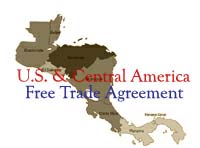 The treaty will exacerbate the unequal economic relationship that currently exists between the world’s largest economy and Central America’s underdeveloped societies, by eliminating the only recourses the latter possess to protect their national interests, to politically determine governmental policy and to mobilize social reforms. The treaty advocates in Congress may attempt to ratify it in a lame duck session before the legislators officially reconvene next January. On May 28 Costa Rica, El Salvador, Guatemala, Honduras and Nicaragua, together with the United States, signed a free trade accord whose underlying principle is the aggressive protection and expansion of individual and corporate investor rights. These privileges come at the expense of environmental protection, legislative independence, and a nation’s right to autonomously determine social and economic policy. Despite the assurances of its proponents, the Central America free trade accord is not likely to translate into a significant improvement for the region’s atrocious labor rights record because it does not institute the fixed penalties and incentives required for such a profound change. The absence of such provisions is especially distressing in Central American societies that, in a twisted and deadly caricature of respectable collective bargaining, have historically witnessed hundreds of labor leaders gunned down and intimidated by hired hands on the payrolls of land owners and factory managers. The agreement’s limited and unbalanced scope is a result of a heavily delimited negotiating process that lacked any sense of transparency and only involved government-sponsored experts. In its present form, the treaty represents a very significant undermining of the traditional sovereign rights of nations and exposes a lamentable deference on the part of Central American governments. This clearly demonstrates their intent of mainly serving privileged elements of their societies at the expense of the generality of their populations. Once implemented, the treaty will, in fact, likely condemn the area’s agricultural, service and industrial workers to further marginalization, with the accompanying risk that they might fall into abject poverty. Most likely, comparable Central American enterprises will be hard-pressed to successfully compete with foreign competitors because they lack the economies of scale, investor control, access to low interest loans, investor pool and an outreach to skilled management which is readily available to transnational commercial entities. Numerous non-governmental organizations, civic organizations, trade union groups and political figures in both Central America and the United Statets have expressed their opposition to the agreement. Despite the recent lull in activity regarding its ratification, due in large part to Washington’s absorption with the November U.S. presidential elections, many Republican advocates of the agreement, such as Rep. Kevin Brady of Texas, hope to push the treaty through Congress during a possible lame duck session before it reconvenes next Jan. 2. The Congress Daily quoted Brady as stating that "A lot depends on the November elections, [but] a lame duck session is a powerful weapon." Treaty critics maintain that now is the time for those likely to be adversely affected by the pact to make their arguments known and quickly form a broad-based domestic opposition and tap into the already existent anti-free trade international movement in order to coalesce against it, on an urgent basis, before it is too late. A victory by Democratic presidential hopeful John Kerry, who has repeatedly stated his intention to reevaluate all free-trade agreements, could also provide anti-treaty advocates with an opportunity to participate in producing a more balanced draft than the one now ready for ratification. If and when the treaty is ratified, it will represent a momentous victory to business sectors in the United States and in Central America. The five Central American nations that are taking part in the agreement constitute a relatively underdeveloped region whose total gross domestic product equals only $152 billion, or a negligible fraction of the United States’ $11 trillion economy. The treaty fails to adequately consider this facet of the signatories’ asymmetrical relationship. According to renowned Nicaraguan academic Rene Oscar Vargas, "CAFTA is a vehicle for an increase of U.S. exports and an opportunity to maximize the potential of its basic industries: information technology, telecommunications, the service industry, agriculture and intellectual property." On another occasion Vargas commented, "What is CAFTA but an agreement between unequal partners." The principle that states that free trade is beneficial to all those involved is misleading and simplistic as it disregards the fact that with unfettered access, the advantage almost always lies with the powerful. In its current format, the treaty is the economic equivalent of a 220-pound heavyweight being allowed to step into the ring against a 112- pound flyweight. Although international trade and foreign investment are necessary components of any economy, it is a state’s responsibility to prioritize the interests of all its citizens, not just the privileged few, and certainly not that of transnational corporations. For the treaty agreement to be ratified, it must be approved by the legislature and signed by the president of each signatory country. A full and transparent reexamination of its costs and benefits, and who will be the winners and losers, is imperative because renegotiation of contested clauses will be all but impossible once the agreement is ratified. A look at Mexico’s experience with the North American Free Trade Agreement and its unsuccessful attempts to renegotiate agriculture-related provisions, underscores the serious implications of ratifying the Central American treaty. Free-trade agreements are not in themselves pernicious instruments. However, they must benefit both parties, and the Central American Free Trade Agreement, in its current format, does not satisfy this overriding requirement. If this agreement is implemented without alterations, it will demonstrate that unscrupulousness and greed will prevail over the best interests of the citizens directly concerned. But the rhetoric used to tout the treaty’s virtues — that it promotes a win-win scenario — the reality is that it will provide already well-heeled international and domestic corporations and investors with lucrative incentives, protections, and almost plenary immunity from prosecution. |
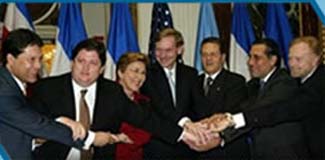
U.S. Trade Representative file photo
Officials shake hands as the Dominican Republic signs on to the free
trade pact.
In Article 10.28 of the agreement, the definition of an investor is purposefully vague as it encompasses any individual involved or considering participation in a business venture. If the treaty is ratified, any investing individual or corporation will have the vested right to challenge a nation’s national or local policy, regulation, or law which they perceive as an impediment to their business dealings, and can call for it to be voided before a dispute panel. This ability to circumscribe constitutionally enacted national legislation and regulation, or seek monetary compensation for their enforcement, gives rise to a new class of parties who essentially will be above the rule of local law. Like the North American Free Trade Agreement ratified by Mexico, the U.S. and Canada and put into effect in 1994, this accord would provide private parties a protection that today is not in conformity with existing U.S. law. In addition, the Central American treaty does not clearly and reciprocally address a nation’s legitimate course of action when a corporation is thought to have participated in unlawful behavior within its boundaries. To enforce its bylaws, the treaty will create an unaccountable supranational body bestowed with the authority to redress any so-called infringement on a foreign corporation’s or investor’s economic interests. Not only is the burden of proof in these cases placed upon the respective government, the plaintiffs face little consequence if they submit a frivolous complaint. Past experience with the North American Free Trade Agreement suggests that environmental regulations will be the object of most of the infringement suits that will be filed because, despite Central America being the second most biodiverse region in the world, sustainable development is not a central tenet of the treaty. In fact, the mere threat of legal action, and the accompanying litigation costs, should discourage the region’s economically-strapped nations from aggressively enforcing environmental regulations. The optimistic contention made by the Office of the U.S. Trade Representative in an August 2003 Interim Environmental Review, that "CAFTA may have positive environmental consequences in Central America," is disputed by Dr. Angel Maria Ibarra, president of the Salvadoran Ecological Unit. He notes that "a simple reading of the text and its relationship to other chapters reveals its essentially cosmetic nature. CAFTA is a custom-made agreement for transnational corporations." This is a thesis that U.S.-based private environmental organizations, such as the Center for International Environmental Law and the Sierra Club, have consistently reaffirmed. In negotiations with the Central American countries, Washington pushed for and succeeded in institutionalizing a mechanism that suborns the very tenets of a country’s sovereignty. There is no doubt that the Central American agreement will hinder the ability of the region’s citizens to propose, discuss, and implement the rules of conduct which they may consider to be desirable and appropriate. The pact, therefore, challenges the very essence of using legislative action as a legitimate vehicle to achieve economic and social redress. Interestingly, whereas Washington refuses to participate in many supranational bodies, like the International Criminal Court and the Kyoto Protocol, citing their need to protect national interests, such fears are hypocritically brushed aside when lucrative private business transactions involving the state are at stake and the possibility of unfavorable rulings against enterprises are most likely to be minimal. The restrictions which the treaty imposes on Central American governments will extend well beyond the capacity, or lack thereof, of states to bind companies to comply with domestic laws. In simplest terms, the treaty will prohibit states from determining and implementing economic and social policies which their branches of government believe are most suitable to their developmental needs, thus forcing them to adhere to a "one size fits all" liberalizing recipe that does not account for the unique particularities of a given country. Under this system, the agreement’s provisions substitute for an objective cost-benefit analysis of the beneficial or negative impacts a particular policy, regulation, or law would have on society. If, for example, Costa Rican authorities decide that they wish to encourage an emerging and possibly lucrative sector of the economy through tariffs and incentives, as Ireland and the lauded Asian Tigers most successfully did with their information technology and manufacturing industries, respectively, treaty provisions could be used to prohibit them from doing so. In addition, the eventual elimination of all tariffs will expose essential domestic industries to potentially devastating competition from multinational corporations that enjoy a tremendous advantage based on their economies of scale or, as is the case with white corn, Washington-subsidized production. Even government procurement, a mechanism that the U.S. government itself utilizes in certain instances to offset market inequities, will not be exempt from the treaty’s strict regulations. According to Chapter 10 of the pact’s text, foreign actors must be guaranteed the same treatment, in both the public and private sphere, as a nation’s citizens. This begs the question of who the Central American negotiators were in fact representing when they agreed to these stipulations, because they demonstrably will not benefit the majority of their own citizens. In the long term, the region’s severely underdeveloped economies can be expected to fall prey to the natural forces of the market and will undoubtedly incur heavy domestic job attrition, the displacement of thousands of small and medium scale farmers and a more skewed distribution of wealth to the benefit of the nation’s privileged capital-holding minority. Salvador Arias, a Salvadoran legislator with the Faribundo Marti Liberation Front, told La Nación USA, a Washington D.C.-area daily, that his country alone would likely lose upwards of 54,000 agricultural jobs during the first year of the treaty’s implementation. The Central American treaty’s proponents assure critics that the agreement will encourage a marked improvement in labor rights for Central American workers. The chapter that addresses this issue, however, seems much more concerned with ensuring a level playing field for U.S-based corporations than protecting the region’s workers. The real aim of the agreement’s provisions appears to be the ability to retain the excessively low costs of production that grossly unsatisfactory working conditions help maintain without appearing to do so. In this respect, even though Article 16.2 states that Central American governments must "strive to ensure" compliance with their domestic labor laws and guarantee not to "encourage trade or investment by weakening or reducing the protections" these laws provide, this, and other passages like it, fall far short of constituting a sturdy defense of labor rights and make the chapter’s overall lackadaisical tone one of the agreement’s most grievous deficiencies. In a March press release, Human Rights Watch strongly criticized the agreement’s glaring reliance on current Central American domestic legislation that, until now, has been ineffective in curbing labor rights abuses. In addition, that organization maintains that real change will not come about unless the treaty adopts strong "procedural guarantees for [their] enforcement." Without clearer mechanisms that redress worker abuse (which ideally would be equal to those that the treaty would provide to investors) only blind optimists foresee anything more than a marginal improvement of the currently corrosive, if not deplorable and inhumane, labor rights situation in Central America. In fact, the question of whether the Central American free trade agreement,
in its current format, will improve the overall standard of living of the
region’s inhabitants is highly debatable at best.
*The Council on Hemispheric Affairs, founded in 1975, describes itself as an independent, non-profit, non-partisan, tax-exempt research and information organization. |
|
|
|
|
|
|
|
|
| What we published this week: | Monday | Tuesday | Wednesday | Thursday | Friday | Earlier |
|
|