mmmm
|
colon exchange rate HERE! |
Your daily English-language
news source
Monday through Friday

|
mmmm
|
Your daily English-language
|
|
|
|
|
|
|
|
|
|
|
|
|
|
|||||||||||||
|
|
|||||||||||||
 |
| Costa Rica Expertise Ltd http://crexpertise.com E-mail info@crexpertise.com Tel:506-256-8585 Fax:506-256-9393 |
 |

La Costanera, Quepos, Parrita, Manuel Antonio |
| Transfer of domain
leads to blackouts By the A.M. Costa Rica staff A.M. Costa Rica experienced two periods of blackout Thursday. The first, in the morning, took place because the amcostarica.com domain was being switched to another Internet provider. The second blackout, from about noon until 3:30 p.m., was caused by the newspaper editor who mistakenly entered incorrect information on the server. The blackouts notwithstanding, A.M. Costa Rica is now on the server of a major Internet provider that promises better service for readers and advertisers. The previous hosting company was experiencing computer problems and was an involuntary source of e-mail spam or unwanted messages. There will be glitches on some of the newspaper’s web pages for several days until all links are double-checked. Readers are encouraged to check out the Thursday issue of the newspaper if they did not get a chance to read it HERE! La Carpio rioters
By the A.M. Costa Rica staff Some 21 persons held after the La Carpio district flared into a full-scale riot last May have been given community service. The Juzgado Penal de San José accepted an application to suspend criminal proceedings in favor of what amounts to a suspended sentence for those involved. In addition to 100 hours of community service, each person must donate money to Hogares Crea, a social work group. They also must maintain a fixed place of residence, not commit other crimes and not participate in similar disturbances, under terms of the agreement released by a spokesperson for the courts. The La Carpio district west of San José is heavily populated by Nicaraguan immigrants who have little money. Countdown continues
By the A.M. Costa Rica staff Street vendors in San José are fast approaching the time when they must vacate their stalls and stands along principal streets. The vendors lost another round in an administrative court Thursday. In all, vendors presented six appeals, and five have been denied. The Municipalidad de San José wants to open up the streets to pedestrian traffic while at the same time reduce the chances of criminal activity. The crowded streets are prime territory for pickpockets and other types of criminals who prey on shoppers. Cause of death awaited By the A.M. Costa Rica staff Investigators still are awaiting the results of an autopsy to learn the cause of death of a Chicago, Ill., tourist who died while skindiving near Isla de Cocos Sept. 15. The woman, identified as Linda Iris Pollock, 56, was in a party of 10 who had taken the tour to the island aboard the Undersea Hunter from Puntarenas. She failed to surface with her colleagues and was later found. More rain for today By the A.M. Costa Rica staff Winds and a reduction in the humidity cut down on rain Thursday in the Central Valley, but for today the weather experts say that rainfall will be more general throughout the country. Afternoon thunderstorms and isolated evening rains are predicted except
for the Caribbean and the northern zone where the chances of rain are less.
|
|
FAX: (506) 223-1190 In Costa Rica: From elsewhere: A.M. Costa Rica
Consultantes Río Colo.
|
The last and choicest mountainside 35.387 m2 (8.7 acres) development property offered at wholesale price Only $28 per square meter with easy bank & owner financing! Breathtaking 270º views Central Valley, Ciudad Colón, unpolluted fresh air & climate only 8 minutes from FORUM Office Center, quick access Prospero Fernando Freeway, shopping, new hospital, 20 minutes to San José. Zoned and ready to go. Contact Captain Haines, globaltrade@racsa.co.cr Tel (506) 249-4758 Fax (506) 249-1559 |
 |
 |
1173 More info HERE! |
|
|
||
|
 |
|
|
|
|
Highway officials said Thursday that they were embarking on a month-long project to repair potholes and damaged roads. Nevertheless, the Ministerio de Obras Públicas y Transportes said that only 14.9 percent of the national highway network was in poor condition, compared to 35 percent at the same time in 2002. Officials said they plan to fill 10,000 potholes a week. Some of the roads being targeted are in the Pacific tourism area, and Ovido Pacheco, the new minister of Obras Públicas, said the idea was to get the highways in shape for tourism’s high season. Specifically, the road to Playa Tamarindo and from Flamingo to Sardinal will be part of the program. However, the bulk of the highways are in the Central Valley. Filling potholes will be done in conjunction with the municipalities. In the first two weeks workmen will be in Goicoechea, Desamparados, Alajuelita, Heredia Centro, Santa Bárbara, Alajuela Centro, Cartago Centro, Puriscal, Pococí and Grecia. Palmares, San Ramón and Valverde Vega will get some new asphalt coatings. In the two weeks following, the pothole brigades will be in San Pedro, Curridabat, Coronado, Belén, Flores, Barva, San Isidro, Aserrí, la Union and Limón. San Carlos and Grecia will see some new asphalt coatings these weeks. Officials hope to use up to 1,000 tons of asphalt a week just to fill potholes. Some 500 tons will go for |

A.M. Costa Rica/Saray Ramírez
Vindas
Ovido Pacheco announces the new compaign to fill potholes
recoating highways. They hope to cover 400 kms. In another effort, the government will seek to construct 250 kms. of drainage work to protect roads. Some 1,400 gravel roads also will be dressed with heavy machinery. The ministry also will turn over slightly more than $1 million to the municipalities for additional roadwork. The municipalities have been complaining they have not gotten the money they should from the central government. The pothole work will cost about $300,000. An equal amount will be spent to rent machinery for drainage work, the ministry said. |
|
|
||||
| Before coming to Costa Rica, my experience
with guava had been limited to jars of jelly in Christmas baskets or on
market shelves. In recent years, guava nectar appeared in cooler dispensers.
Large cans of guava shells from South America came to Latino markets, joining
blocks of dark red guava paste, guayabate. I tried them all.
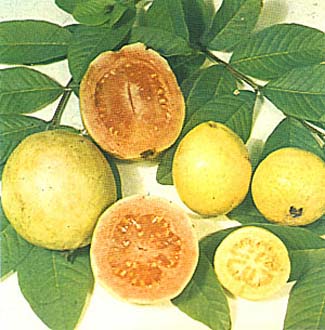
The jellies, jams and marmalades were fine on toast with cream cheese. They were better as glazes for ham, pork roasts, ribs, roast chicken and turkey. I added guava to barbecue sauces and to spicy Thai peanut sauces and used it to candy sweet potatoes and carrots. It went well in salad dressings, particularly vinaigrette, and softened the richness of balsamic vinegar. The nectar became a marinade, alone or in combination with olive or sesame oil, soy sauce, rice vinegar or sake. After a potent punch cup of guava and lime juices, coconut milk and rum, I fell asleep at the table. The canned shells were only ok. They were guava halves, peeled, with the central seeds removed, packed in heavy sweet syrup. My best rendition was shell cavities filled with tart fresh fruit pieces and a sprig of mint to offset the syrup. A friend used the canned shells successfully as pie filling. The local pancake house offered guava syrup as one of six pancake toppings. The dense guava paste that comes in blocks is fabulous, redolent with flavor and not too sweet. It pairs very well with slices of cheese from queso fresco to jack to chevre to Gorgonzola. It works well mixed with ricotta, mascarpone, feta or cream cheese as a filling for tartlets, turnovers, puffs, profiteroles, blintzes or filo triangles. What is in a name? When I saw a sign for guava cheese, I bought a sealed packet. When I opened it at home, it was only a chunk of the same guava paste under a different name. It contained no cheese. At the splendid Saturday fruit and vegetable market in Alajuela, I went lusting for fresh ripe guava with my wife, Joan. Carefully, to obscure my obvious gringo origins, I pronounced the "v" as a "b," guaba. A fellow shopper led us to a stand covered with thick green seedpods a foot long and chose a pod for me. I was too embarrassed to refuse and bought this fruit of the inga vera tree, totally unrelated to the myrtle family and its myriad types of guava. The good Samaritan detected my confusion and asked softly, to save my face, if indeed I meant guanabana instead of guaba. It sounded close enough. I smiled a yes. My next shameful purchase was a green spike covered football that weighed about five pounds, a soursop. The seller saw my surprise and spoke in slow simple Spanish, admonishing me to remove the toxic black seeds and add lots of sugar to the sour pulp and juice to make drinks. We did. Joan spotted a crate of small yellow guavas. The sign said cas. "Are these guavas?" she asked the seller. She got a yes and no response. They were a type of guava much too sour to eat in hand, but fine for drinks and jellies. Another name for cas is Costa Rican guava. We were getting closer. My blush began to fade. On our little farm, we have cas and guayaba (guava) trees. Our problem with the fruit is that it ripens late in the rainy season at a time when little white worms invade it. Our undaunted and appreciative next-door neighbor and the birds in our aviary consume it worms and all. There are dozens of guava varieties. Let me help you differentiate and demystify the five you are most likely to encounter. 1) Guava, (guayaba, Psidium guajava). The dimensions of the fruit vary from tangerine to orange size. It is pleasantly aromatic to some and cloyingly musky to others. The thin skin is green, yellow or purple. Flesh colors vary by species from white to yellow to pink to red. Next to the skin is a layer of pulp. The small gritty seeds fill the center and are a good source of dietary fiber. Some have softer seeds, some fewer and a variety from Indonesia is seedless. The fruit is very rich in Vitamin C and pectin. The bark can be used to tan animal hides. It is rich in tannin and peels easily like eucalyptus or sycamore bark. 2) Pineapple guava (Feijoa sellowiana). When Joan and I lived in San Francisco, a flock of wild parrots lived nearby. They ate palm fruit, cherries, wild plums and a neighbor’s pineapple guavas. With seasonal temperatures down to 50 F (10 C ), the plants bore fruit in abundance. Here in Costa Rica, the plants produce glorious flowers but little fruit because of the absence of a cold season. The pear shaped fruit tastes to me of pineapple, pepper and spearmint. The flowers have a base of edible white petals and an inedible plume of white tipped long red stamens. 3) Strawberry guava ( Cattley guava, purple guava, cas dulce, Psidium cattleianum). This variety is a gorgeous ornamental shrub, resistant to cold like its pineapple cousin, resplendent with sweetly fragrant all white flowers that are not edible and full of small red fruit. The fruit has none of the musky odor of larger guavas and tastes like a spicy strawberry. The flesh goes from pink near the skin to white in the center. A yellow variety (psidium lucidum) looks and tastes the same except for the color of the fruit. 4) Cas (Costa Rican guava, cas acida, Psidium friedrichsthalianum). The tree is larger than strawberry guava and smaller than the common guava. Its leaves are a waxy deep green. Like its cousins, its bark peels easily and contains lots of tannin. The small round yellow colored fruit has no |
Purdue University photo
musky odor and is so acidic, a bite will pucker your lips and implode your cheeks. Sweetened, it makes wonderful drinks, good jelly and tasty pie and pastry filling. The parrots and toucans in our aviary (all rescue birds or abandoned pets unfit for survival in the wild) prefer cas to all other fruits except papaya. 5) Brazilian guava (cas estranjero, guayaba agria, Castilian guava, Psidium guinense). This small tree or large shrub has hairy leaves, a gray trunk, flowers with as many as two hundred stamens each and yellow fruit less than an inch wide. It is too tart to eat raw and I have not seen it sold in drinks. I include it only because it produces uniquely flavored jelly that aficionados seem to prefer to all others. I have not tasted it. Guava flavors desserts everywhere; in and atop ice cream, rice pudding, flan and fruit salad. For the easiest introduction to home use, melt a little guava jam or jelly and spoon over one of these desserts or over bananas browned in butter. Google.com has pages of guava recipes including layer cakes, cheesecakes and pies. Try using guava jelly and nectar in place of apricot jelly and nectar in old recipes. Use melted jelly in place of honey for baking or stewing. Baked ham with imbedded cloves tastes great with a glaze of Dijon mustard, cinnamon and guava jelly for the last twenty minutes in the oven. Try the jelly alone or with your favorite barbecue sauce on any grilled, broiled or roasted meat or poultry. Jelly and lime juice together are great for grilled or broiled fish. Share your successes, failures and other ideas with A. M. Costa Rica and me. If you confuse a guava name, you needn’t feel any shame. I exhausted the supply for all of us. 4) Cas (Costa Rican guava, cas acida, Psidium friedrichsthalianum). The tree is larger than strawberry guava and smaller than the common guava. Its leaves are a waxy deep green. Like its cousins, its bark peels easily and contains lots of tannin. The small round yellow colored fruit has no musky odor and is so acidic, a bite will pucker your lips and implode your cheeks. Sweetened, it makes wonderful drinks, good jelly and tasty pie and pastry filling. The parrots and toucans in our aviary (all rescue birds or abandoned pets unfit for survival in the wild) prefer cas to all other fruits except papaya. 5) Brazilian guava (cas estranjero, guayaba agria, Castilian guava, Psidium guinense). This small tree or large shrub has hairy leaves, a gray trunk, flowers with as many as two hundred stamens each and yellow fruit less than an inch wide. It is too tart to eat raw and I have not seen it sold in drinks. I include it only because it produces uniquely flavored jelly that aficionados seem to prefer to all others. I have not tasted it. Guava flavors desserts everywhere; in and atop ice cream, rice pudding, flan and fruit salad. For the easiest introduction to home use, melt a little guava jam or jelly and spoon over one of these desserts or over bananas browned in butter. Google.com has pages of guava recipes including layer cakes, cheesecakes and pies. Try using guava jelly and nectar in place of apricot jelly and nectar in old recipes. Use melted jelly in place of honey for baking or stewing. Baked ham with imbedded cloves tastes great with a glaze of Dijon mustard, cinnamon and guava jelly for the last twenty minutes in the oven. Try the jelly alone or with your favorite barbecue sauce on any grilled, broiled or roasted meat or poultry. Jelly and lime juice together are great for grilled or broiled fish. Share your successes, failures and other ideas with A M Costa Rica and me. If you confuse a guava name, you needn’t feel any shame. I exhausted the supply for all of us. |
|||
|
|
|
|
|
|
|
WASHINGTON, D.C. — The Organization of American States, other inter-American agencies, and the United Nations have pledged better cooperation to help improve the lives of people in the Americas. In a statement, the OAS said stepped-up collaboration would begin with initiatives to help Haiti and other Caribbean countries devastated by catastrophic hurricanes that struck the region beginning the first week of September. The OAS said the inter-American agencies and the United Nations made the commitment at a meeting Monday in Washington, in which they agreed that a more efficient collaboration would help the region on such issues as democracy and development, and promotion of human rights. Among those attending the meeting were OAS Assistant Secretary-General Luigi Einaudi; Enrique Iglesias, president of the Inter-American Development Bank; Mirta Roses, director of the Pan American Health Organization; Jose Luis Machinea, executive secretary of the U.N. Economic Commission for Latin America and the Caribbean; and Robert Landman, from the Inter-American Institute for Cooperation on Agriculture. Regarding the natural disasters that struck the Caribbean, the OAS said the parties at the meeting agreed that inter-agency cooperation must be strengthened to prevent and manage such catastrophes. Preventive measures under consideration include enforcing stronger building codes. The OAS said a donors' conference is being considered to help provide relief to those affected by the storm damage in the Caribbean, which Haitian officials said left at least 1,000 people dead in Haiti and another 160,000 people homeless. News reports said 37 people were dead in Grenada, and 11 people dead in the Dominican Republic. Meanwhile, the International Federation of Red Cross and Red Crescent Societies has launched an appeal for $3.3 million to support Red Cross relief operations for 40,000 people in Haiti affected by Tropical Storm Jeanne. The International Federation, which comprises 181 Red Cross and Red Crescent member societies around the world, said that due to the high level of deforestation in Haiti, torrential rains caused massive flooding and landslides in the northern parts of the country. The federation said the death toll in Haiti is certain to rise as more bodies are found in the floodwaters. Haiti has an urgent need for food and drinking waters as well as blankets and plastic sheeting, the International Federation said in a statement, |

OAS photo by Roberto Ribeiro
Miguel Ángel Rodríguez and wife are the center of attention
as he assumed his new post as secretary general of the Oranization of American
States Thursday. To the left is President Abel Pacheco, one of eight presidents
from Western Hemisphere countries at the Washington ceremony.
and Juan Manuel Herrera adding that it is greatly concerned about possible outbreaks of water-related diseases, given the contamination of water sources and flooding of latrines. The International Federation appeal would assist 40,000 Haitians over the next six months by supplying them with food, kitchen equipment, plastic sheeting, tents, treated mosquito nets, first-aid kits, water purification tablets and hygiene articles. For its part, the U.S. Agency for International Development initially is providing $60,000 to CARE, a non-governmental organization, to distribute in Haiti a variety of non-food emergency supplies such as cooking sets, blankets, water containers and other relief supplies to those most affected by the floods in that country. USAID also dispatched a two-person team from its Office of Foreign Disaster Assistance to help coordinate U.S. relief efforts with local disaster officials. The agency also secured an aircraft to provide aerial damage assessments and transport of personnel and relief supplies in Haiti. In addition, USAID donated $50,000 this week to World Vision to help people in the Dominican Republic affected by Tropical Storm Jeanne. USAID indicated it will provide additional support to Haiti and the Dominican Republic based on damage assessments. |
|
|
|||
|
Is it possible for a voter to distinguish that which is authentic from that which is propaganda? And more importantly how can citizens be sure that the votes will be correctly counted? These were the questions posed to and by Costa Rican reporters Thursday. The 2004 U.S. election campaign is in full swing, and
Enter Jennie Lincoln, who holds a doctorate in political science. She spoke to Costa Rican newspeople Thursday at the U.S. Embassy. She has been an official observer for a number of Latin American elections, including the August voting in Venezuela. Mrs. Lincoln told newspeople that their role was to "maintain their credibility as a source of the people’s news. Provide the true information that people need to make the vote that counts." |
Newspapers and television channels
always want to be the first with the news, but to be the first doesn’t
necessarily mean they are reporting the truth, she warned.
Although Mrs. Lincoln did not mention CBS and Dan Rather, the network and long-time reporter are in a scandal. The authenticity of documents used in the show "60 Minutes," aired Sept. 8 is in doubt. The documents purport to show that President George W. Bush got favorable treatment in the Texas National Guard during the Vietnam war. Rather gave an on-air apology and said the network could not substantiate the claims that it made, and that the report was a mistake. Mrs. Lincoln, a researcher for the Georgia Tech Research Institute in Atlanta, Ga. She is an expert on comparative political systems. More than a dozen employees from the Spanish-langauge press came to hear her views and to press her on the accuracy of the voting system in the United States. Mrs. Lincoln, a fluent Spanish speaker, said she had faith in the system. She has been involved in oversight of Latin elections since the 1984 vote in Nicaragua and has wrtten two books on Latin political systems. Local reporters also were interested in her opinion of who would win the U.S. election. She did not say, but she suggested that Kerry’s campaign lacks drive. And what about separating facts from propaganda. Mrs. Lincoln's best advice was for voters to seek out multiple sources of information and then apply a little critical thinking. |
||
|
|
|
|
|
|
|
|
| What we published this week: | Monday | Tuesday | Wednesday | Thursday | Friday | Earlier |
|
|