Your daily English-language news
source
Monday through Friday
our classifieds
|
|
|
Your daily English-language news
source
|
our classifieds
|
|
|
|
|
|
|
|
|
|
|
|
|
|||||||||||
|
|
|||||||||||

| Costa Rica Expertise Ltd http://crexpertise.com E-mail info@crexpertise.com Tel:506-256-8585 Fax:506-256-9393 |

LAKE FRONT PROPERTY 2 acres ready for construction, Breathtaking view of volcanoes & lake. Near country club & Tilaran City. US$58,000. Call 816-2450/6931203 or sjechem@yahoo.com |
 |
| Proposed budget
has giant deficit By the A.M. Costa Rica staff Under the proposed 2005 national budget, Costa Rica will take in 1.2 trillion colons ($2.7 billion). But the country will spend 2.3 trillion colons ($5.2 billion). Those were the figures Alberto Dent Zeledón, the minister of Hacienda, gave the president of the Asamblea Legislativa Wednesday. Dent and other members of the government’s political party characterize the budget as austere because it only calls for a 7.4 percent increase in spending compared to 2004. That amount probably will be less than the devaluation of the colon over the same period. A release from the legislature said that governmental income would go up about 13.2 percent, taking 13.4 percent of the value of all goods and services in the country for the fiscal year. Debt, salaries and pensions represent 80 percent of the total government expenditures. So how will the government manage to cover the difference between income and outgo, an estimated deficit of $2.5 billion? The government will borrow the money, thereby racking up more debt. The current national debt is now $6.8 billion, larger by $1.6 billion than the proposed budget. Wednesday was Dent’s last day on the job. He quit over the salary hikes the administration gave public employees to end nine days of strikes and social unrest. But the remaining public officials are betting that the legislature will quickly pass a proposed tax package that will generate some $500 million more income for the government. The legislature will send the proposed budget to a committee for study and discussion. VFW plans meeting
The San Jose Veterans of foreign Wars Post 11207 will have its regular general membership meeting at 11 a.m. next Tuesday, in the rear dining room of the Bar/Restaurante Mariscar, located three doors east of the Hotel Presidente on the Avenida Central pedestrian promenade. Adjacent seating for family and friends is also available, as are beverages and food from the Mariscar menu, a VFW announcement said. Post Commander Manuel Delgado will preside. Adjutant Rick Garcia and Quartermaster Ed Ramirez will process any new applications for membership and/or VFW fraternal paraphernalia or uniform items. All present and/or former members of the Armed Forces of the United States and allied nations are invited to attend. For additional information, contact past post commander Edward Ives, (506) 255-2806 in San José. Guevara to talk to GOP By the A.M. Costa Rica staff Republicans Abroad of Costa Rica will hear Otto Guevara Guth, leader of the Movimiento Libertario at its meeting Sept. 14 at Barbecue Los Anonos in Escazú. The meeting begins at 12:30 p.m. A club announcement said that Guevara would speak on Costa Rican and U.S. relations. Reservations at 386-1420 are required. |
|
FAX: (506) 223-1190 In Costa Rica: From elsewhere: A.M. Costa Rica
Consultantes Río Colo.
|
The last and choicest mountainside 35.387 m2 (8.7 acres) development property offered at wholesale price Only $28 per square meter with easy bank & owner financing! Breathtaking 270º views Central Valley, Ciudad Colón, unpolluted fresh air & climate only 8 minutes from FORUM Office Center, quick access Prospero Fernando Freeway, shopping, new hospital, 20 minutes to San José. Zoned and ready to go. Contact Captain Haines, globaltrade@racsa.co.cr Tel (506) 249-4758 Fax (506) 249-1559 |
|
|
|
|
SANTIAGO, Chile — A judge will question former dictator Augusto Pinochet next week about political killings that took place during his 17-year grip on power in the 1970s and 1980s. Chile's Supreme Court recently lifted the former general's immunity from prosecution, a major step toward bringing him to trial. The ruling that lifts Augusto Pinochet's immunity cannot be appealed.
It will force the retired general to face legal proceedings he has managed
to evade for years because of his political immunity or his competence
to stand trial.
The 88-year-old former Chilean ruler has been charged with war crimes in connection with a campaign, known as "Operation Condor," in which several South American dictatorships sought to suppress political opponents. More than 3,000 people were killed or disappeared during his rule from 1973 to 1990. Mark Enselaco directs the Human Rights Program at the University of Dayton in Ohio and has written two books on the Pinochet era and the war crimes that occurred in Chile during those years. He says Pinochet managed to create an aura of "untouchability" for himself that he thought would last even after he left office. "Pinochet is really a case study in impunity," he said. "He created a climate of terror that put him beyond the reach of the law. He rewrote the law amnestying himself. He became senator for life, he thought would put himself beyond prosecution. He loaded the judicial system. He has deep reservoirs of admiration, 20-30 percent of the population think he did a great thing and think he should not be touched." The court has also judged Pinochet mentally competent to stand trial. The decision was made after he gave two media interviews that highlighted his lucid state of mind. Pinochet used the argument of his mental state to avoid extradition from Britain to Spain in 1998. Using the claim of universal jurisdiction under international human rights laws, a Spanish judge sought Pinochet's prosecution for the murder of several Spanish nationals during his campaign against political dissidents. Victims' families in Belgium and France also filed separate lawsuits. |
Enselaco explained the more aggressive
recent attitude of Chile's judiciary by saying it is trying to correct
injustices that occurred in the past.
"Why should Pinochet be prosecuted?" he asked. "Because there are countless individuals whose grief is profound and whose life was destroyed by this man and they deserve justice in a court of law." Enselaco says the ruling against Augusto Pinochet sends a powerful message beyond Chile's borders. Pinochet now joins the ranks of other former rulers being pursued for crimes against humanity, notably the former leaders of Yugoslavia, Rwanda, Sierra Leone, and Iraq. Ian Seiderman, legal adviser at the International Commission of Jurists in Geneva, attributes the more aggressive pursuit of war criminals to the growing political will to prosecute crimes against humanity, not just document them. "This prosecution and the whole international tribunal movement which the courts established for Yugoslavia and Rwanda and the international criminal court, are all signs that point out human rights abuses and dictators that they cannot just fade into the woodwork, that they will be pursued and prosecuted," he said. Seiderman sees the tougher approach to war crimes evolving from an initial reluctance to interfere in what belatedly were revealed as ethnic-cleansing campaigns or massacres like the Cambodian killing fields, Rwanda massacres or Serb campaigns against minorities. "I think in the one sense the lack of international political will to confront the Yugoslav and Rwanda situations when they occurred in the 1990s actually helped lead to the establishment of the courts, because the courts were seen as a gesture so the international community could be seen to be doing something without direct military interference," he adds. "And it was thought at the time it would not fly, but they have been quite successful and they provided the impetus which led to the international criminal court." The International War Crimes Tribunal is currently trying Slobodan Milosevic for war crimes committed during his reign in the former Yugoslavia. Seiderman says the world court and legal rulings like those in the Pinochet case are a clear message to state leaders who abuse human rights that they are no longer beyond the reach of the law. |
|
|
|
|
|
|
|
PANAMÁ CITY, Panamá — Martín Torrijos, the 41-year-old son of former Panamanian strongman, Omar Torrijos was sworn in Wednesday as Panama's president. He faces enormous challenges that include the modernization of the Panamá Canal. The president's father, Gen. Torrijos along with then-president Jimmy Carter signed in 1977 the Panamá Canal treaties that turned over the administration of the inter-oceanic waterway to Panamanian control in 1999. The younger Torrijos is a graduate of Texas A&M University with degrees in political science and economics. Visiting presidents and dignitaries that included U.S. Secretary of State Colin Powell and the heir to the Spanish throne joined thousands of Panamanians in the swearing in ceremonies held in Panamá City. President Torrijos inherits a government that is mired in accusations of malfeasance and corruption. Panama's foreign debt is among the highest in the world with 40 percent of the nation's three million inhabitants living in poverty. Torrijos has promised to restart the economy, lowering the unemployment rate that is |
approaching 20 percent, while attracting
foreign investment. He believes that tourism can generate thousands of
jobs and that Panama's maritime sector can provide the incentives needed
to pull the country out of economic depression. Political analysts point
to the many challenges facing the Torrijos administration. Among them,
the modernization of the Panamá Canal, a project estimated to cost
at least $5 billion that will allow supertankers and large vessels to travel
between the Atlantic and Pacific oceans.
Torrijos will also have to reform the country's social security system before it collapses. Fiscal deficits and uncontrolled government spending are threatening the retirement plans of thousands of Panamanians that look to social security as a safety net in their old age. Torrijos will also have to resolve the diplomatic crisis with Cuba, triggered by the pardon last week by outgoing President Mireya Moscoso of four Cubans convicted of attempting to kill Fidel Castro. The pardon angered the Cuban government which severed its diplomatic relations with Panamá. President Torrijos' father was a close friend of Castro and it is expected that President Martín Torrijos will move quickly to restore diplomatic ties with the Cuban government. |
|
Broccoli again emerges as important cancer fighter |
|||
|
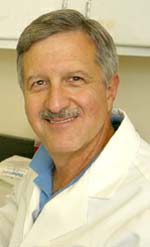
CHAMPAIGN, Ill. — A well known anti-cancer agent in certain vegetables has just had its reputation enhanced. The compound, in broccoli and other cruciferous vegetables, has been found to be effective in disrupting late stages of cell growth in breast cancer. Keith Singletary and doctoral student Steven Jackson of the University of Illinois at Urbana-Champaign report their finding involving sulforaphane, which they say could ultimately be used to enhance the prevention and treatment of breast cancer, in the September issue of the Journal of Nutrition. "This is the first report to show how the naturally occurring plant chemical sulforaphane can block late stages of the cancer process by disrupting components of the cell called microtubules," said Singletary, a professor in the department of food science and human nutrition. "We were surprised and pleased to find that SUL could block the growth of breast cells that were already cancerous." Sulforaphane is abundant in such vegetables as broccoli, brussels sprouts and kale. Chewing causes the cell walls of these vegetables to break, and sulforaphane is released into the body. Singletary, a researcher in phytochemicals and cancer chemoprevention, and Jackson exposed cultures of malignant human breast cancer cells to sulforaphane. Within hours, sulforaphane blocked cell division and disrupted microtubules, which are long, slender cylinders made up of tubulin (protein), that are essential for the separation of duplicated chromosomes during cell division. "It is not yet clear whether the doses required to produce inhibition of tubulin polymerization are higher than those achievable via dietary intakes," wrote Jackson and Singletary. "However, the results show that tubulin disruption may be an important explanation for SUL’s antiproliferative action." "These findings are significant since SUL’s actions appear similar to a group of anticancer drugs currently in use, such as Taxol," Singletary said. |
Sulforaphane is studied extensively
for its effects
The Illinois research extends the 1992 discovery at Johns Hopkins and pinpoints how sulforaphane works during later stages of cancer, such that sulforaphane can suppress the orderly division process in human breast cancer cells. "The findings may be helpful in the development of new breast cancer prevention and treatment strategies," Singletary said. "For example, it may be possible that ingesting SUL in combination with certain natural compounds or drugs could enhance their anticancer effectiveness and reduce side effects." According to the American Cancer Society, breast cancer this year will account for 15 percent of all cancer deaths in women, and some 275,000 new breast cancer cases will be diagnosed. Improvements in treatments such as chemotherapy have led to an 88 percent survival rate in Caucasian women and a 74 percent survival rate in African-American women, according to the most recent society survey in 2003. However, some current chemotherapy drugs have side effects that have the society and other organizations seeking new strategies that combine chemotherapy drugs with other treatments to potentially lessen the toxic effects. |
||
|
|
|
|
|
|
|
|
| What we published this week: | Monday | Tuesday | Wednesday | Thursday | Friday | Earlier |
|
|