 |
|
||||
 |
 |
 |
||
|
|
 |
|
|
||||||||||||||||
|
|||||||||||||||||
 |
|||||||||||||||||
 |
|||||||||||||||||
|
|
||||||||||||||||
| What we published this week: | Monday | Tuesday | Wednesday | Thursday | Friday | Earlier |
|
|
|
|
|
|
|
Food |
|
|
Abstracts and fair use are permitted. Check HERE for more details |
| A.M. Costa Rica's Second news page | |
|
San
José, Costa Rica, Friday, July 11, 2014, Vol. 14, No. 136
|
|
|
|
|
|
|
|
Food |
|
|
By the A.M. Costa Rica staff
Some lawmakers want to create a fund that will help bankroll Costa Rican companies that want to do business in other countries. Alexander Mora Delgado, the minister of Comercio Exterior, stressed this point when he appeared Thursday before the Comisión Legislativa de Relaciones Internaciones y Comercio Exterior. His concept received support from the committee president, Epsy Campbell Barr, who said that for too long the model of investment was one way. A number of larger Costa Rican firms have an international presence, but the discussion Thursday suggested something more than just exportation. The Central American Free Trade Treaty gives Costa Rican comapnies the right to seek jobs in other treaty nations, including the United States. Lawmakers to suggest fate of magistrate By the A.M. Costa Rica staff
The legislature has agreed to form a committee to study the case of a Sala Primera magistrate who is being investigated for a crime. The magistrate is Óscar González, and he faces a list of violations involving a female judge who worked in a role subordinate to him. The lawmakers voted in secret to name Antonio Álvarez Desanti of Liberación Nacional, Edgardo Araya Sibaja of Frente Amplio and Carmen Quesada Santamaría of Movimiento Libertario to study the case. They gave five days to do so. The full legislature has the power to remove him from his job. Sinaloa leader extradicted to California By the A.M. Costa Rica wire srvices
A suspected leader of the Mexico-based Sinaloa crime cartel has been extradited from the Netherlands to the United States. U.S. authorities say Jose Rodrigo Arechiga-Gamboa arrived in the California city of San Diego Thursday and was booked into federal custody on charges of conspiracy to distribute and import controlled substances. He is scheduled to be arraigned today. The suspect is alleged to have served as a bodyguard for the Sinaloa cartel, providing security for narcotics shipments and carrying out other enforcement operations. According to extradition documents, Arechiga-Gamboa rose to become one of the highest-level leaders in the Sinaloa cartel. U.S. officials say he was identified despite having plastic surgery and attempting to alter his fingerprints. He was also found to be traveling on a fake passport, assuming the identity of a deceased relative. Vaccine for dengue shows promise By the A.M. Costa Rica wire services
There's new hope for those who suffer from dengue, a virus characterized by hammering headaches, high fevers and pain. A vaccine shows promise after a two-year trial in five Asian countries. Maria Rosario Capeding, one of the researchers in The Philippines, said that during the trial, the vaccine cut the number of dengue cases in half and significantly reduced the number of severe cases that cause hemorrhaging. "The vaccine efficacy against dengue hemorrhagic fever, according to the WHO criteria, after three doses was 88.5 percent," she said, citingthe Wrold Health Organization. Another large scale study is taking place in Latin America. Sanofi Pasteur, the manufacturer, says the vaccine could be available by 2015. The study was published in The Lancet medical journal. Dengue is a mosquito-borne disease called "break-bone fever," because it causes a high fever and such severe pain in the joints and bones that people who have it feel that their bones are breaking. It can take months to recover, may require hospitalization and kills 22,000 people each year, mostly children, according to the World Health Organization. World Health says the virus is now 30 times more prevalent than it was 50 years ago. It's common in many regions of Asia, the Pacific, the Americas and Africa. There are no particular drugs to fight dengue. In addition to the vaccine, researchers are working on other ways to prevent or contain the virus. At the John's Hopkins mosquito lab, George Demopoulos has discovered a way to block the dengue virus in lab mosquitos. The next step, he says, is to do the same in wild mosquitoes. "Dengue and malaria are diseases that can only be controlled through the use of multiple approaches," he said. "It's like a war. You cannot win a war with only one weapon. You need multiple types of weapons and strategies to win a war. And the same applies for these diseases." Other approaches include teaching people how to eliminate mosquito-breeding sites like water cisterns, water left in small containers near their homes or pools of standing water. Warmer climates and urbanization are increasing the spread of the mosquito that carries the virus. With urbanization, there's more standing water where mosquitoes can lay their eggs. Luis Castellanos is an infectious disease expert with the Pan American Health Organization. The number of deaths from dengue has declined in the Americas because, as he explains, his agency has extensively been working with the countries of the Americas over the last three, four years to train thousands of physicians throughout the countries to be ready to suspect dengue, identify, diagnose and treat any dengue case." The World Health Organization estimates that 40 percent of the world's population is at risk for developing dengue. By this time next year, there may be a way to fight it. Georgia man held in airine ticket scam Special to A.M. Costa Rica
A Georgia man faces federal charges that allege he fraudulently booked airline reservations by pretending to be a flight crew member. The man, Gilbert Myers Jr., 37, of Atlanta, was taken into custody late Wednesday afternoon without incident at a Beverly Hills hotel after agreeing to meet a potential traveler who was actually an undercover FBI agent. Myers was charged in an indictment returned by a federal grand jury June 6 that accuses him of one count of conspiracy and three counts of wire fraud. The indictment, which was unsealed upon Myers’ arrest, outlines a conspiracy to defraud air carriers in which travelers would illegally board aircrafts while pretending to be employees of other airlines. In exchange for arranging their trips as non-revenue employee travelers, Myers typically charged $2,000 for one year of free flights. The indictment alleges that fraudulent travelers utilized Myers’ services to fly in and out of Los Angeles County airports by pretending to be in-flight crew members employed by other airlines. To obtain boarding passes and stand-by tickets (for which airline employees pay little or nothing, hence non-revenue), Myers called the victim airline’s reservation call center and gave the victim airline’s representative the name of a traveler, the airline he supposedly worked for, a bogus employee identification number, and a date of hire. Myers typically lied to the victim airline and said he worked on a flight crew for another airline, according to court documents. Myers advised the fraudulent travelers to avoid detection by dressing appropriately and responding to questions about their employment at another airline, the indictment alleges. With the fraudulently obtained boarding pass and their real photo identification, the fraudulent traveler went through Transportation Security Administration security screening. If the fraudulent traveler was asked about his employment or how he received the tickets, the fraudulent traveler lied as instructed by Myers, according to the indictment. The fraudulent travelers boarded planes listed as employees of other airlines. All of the travelers were subject to full security screenings by the Transportation Security Administration. The indictment details a small number of flights, but investigators believe that Myers fraudulently booked hundreds of flights on air carriers such as JetBlue Airways and United Airlines, causing the victims to suffer hundreds of thousands of dollars in losses. All of the victim airlines fully cooperated in the investigation.
|
|||||||||||||||||||||||||||||||||||||||||||||
 |
||||||||||||||||||||||||||||||||||||||||||||||
|
|
|
|
|
|
|
Food |
|
| What we published this week: | Monday | Tuesday | Wednesday | Thursday | Friday | Earlier |
| The contents of this page and this Web site are copyrighted by A.M. Costa Rica.com Ltda. 2014 and may not be reproduced anywhere without permission. Abstracts and fair use are permitted. Check HERE for details | ||||||
A.M. Costa Rica Third News Page |
 |
| San José, Costa Rica, Friday, July 11, 2014, Vol. 14, No. 136 | |
|
|
|
|
|
|
|
Food |
|
| Caldera highway reported hurting hotel occupancy in
Puntarenas |
|
|
By
the A.M. Costa Rica staff
Public works effect unforeseen changes. A case in point is Ruta 27, the Caldera highway that links the Pacific coast with the Central Valley. The toll highway takes a lot of traffic from the winding, hilly Interamericana that motorists have driven bumper to bumper for years. One expected effect was to increase real estate values along the Pacific. But now tourism operators in Puntarenas are claiming the highway is reducing their business. Miguel Ángel Rennan, president of the Cámara de Turismo de Puntarenas, told lawmakers Thursday that the highway allows 99 percent of the visitors to the Puntarenas Centro area to return home |
at night,
presumably to the Central Valley. So there is now lower occupancy rates
in the region's hotels, he told the Comisión Permanente Especial
de
Turismo. Average occupancy rate there in 2010 was 80.42 percent, he said. This year, occupancy is around 69 percent, he added. The number of persons entering and leaving the central canton of Puntarenas each day is about 180,000, he said. What Rennan and other members of the chamber want, he said, are projects that would be a major attraction to tourists. He said the region also needs jobs and also some major sewer work, he said. The chamber president also noted that so far in 2014 there have been 72 cruise ships that visited Puntarenas Centro bringing 118,000 passengers. |
| Alert issued as rains continue to saturate Limón and
the northern zone |
|
|
By
the A.M. Costa Rica staff
The national emergency commission has declared a low-level alert for the northern zone and the Caribbean coast because of heavy rainfall. The agency said that rain has been falling since Tuesday and the ground is saturated. The rains may continue through Saturday, said the agency, the Comisión Nacional de Prevención de Riesgos y Atención de Emergencias. The Instituto Meteorológico Nacional did predict more rain today for that section of the country. Some rain may also fall in the southern Pacific, it said. A low-level alert basically means to keep watch, although it does generate some internal activity with local emergency committees and workers for the national agency. The weather institut inches) fell in Limón Centro Thursday. Pococi got 126.4 millimeters |
(nearly 5.5
inches) Wednesday, and Guácimo got 125.3 millimeters
(nearly five inches) Wednesday and 79.4 millimeters (a bit more than
three inches) Thursday. The data is from the institute's automatic
weather stations. The rain was accompanied by stiff winds. The emergency commission said that rivers were flowing out of their banks. They listed the Sarapiquí, Guatil and Guayabo in Turrialba. Also listed was the Río Chirripó en Matina. The ríos Telire and Sixaola in the southern Caribbean were reported rising but not causing flooding at the time of the agency report. There appears to have been less rain in that area. One family suffered flooding in Pensurth, Limón, the agency said. Another report said that there was flooding in Guácimo because rivers ran out of their banks. The weather institute was predicting winds of up to 70 kilometers per hour in the Central Valley and the north Pacific. More rain was expected overnight in affected areas. |
 |
| You need to see Costa Rican tourism information HERE! |
|
|
|
|
|
|
|
Food |
|
| What we published this week: | Monday | Tuesday | Wednesday | Thursday | Friday | Earlier |
| The contents of this page and this Web site are copyrighted by A.M. Costa Rica.com Ltda. 2014 and may not be reproduced anywhere without permission. Abstracts and fair use are permitted. Check HERE for details | ||||||
 |
|
||||
| A.M. Costa Rica's Fourth News page | |||||
| San José, Costa Rica, Friday, July 11, 2014, Vol. 14, No. 136 | |||||
|
|
|
|
|
|
|
Food |
|
| Developers say they have broken ground for Golfito marina
project |
|
|
By
the A.M. Costa Rica staff
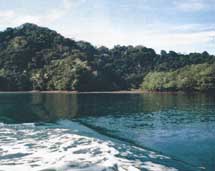
After years of planning, a marina is springing up in Golfito. Developers from Hacienda El Dorado announced Thursday they have begun construction on the Golfito Marina Village & Resort, which is planned to be a central destination for luxury tourism focused on yachting and sport fishing. The southern Pacific port town has been the subject of environmental concerns related to similar marina proposals. But now, developers' blueprints envision private floating islands, villas, a luxury hotel, and further yachting accommodations for the area. The deep-water marina on the edge of Gulfo Dulce is slated to have an infrastructure that can hold 130 ships and features secure docks for yachts up to 350 feet long. According to a release from a public relations firm in Florida, other features being built include an open-air spa, swimming pools, an island restaurant with a night club, and a fuel dock, among others. The release said Hacienda El Dorado has been operating in real estate since 1978, when it began in California. For the past 13 years the company has worked on other developments in Costa Rica, and became intrigued with Golfito after major infrastructure advancements opened up opportunities to attract people to the area. Developers cited expansions of the Palmar Sur airport that promise to bring in international flights and construction of the Caldera Highway as two key improvements for Golfito real estate. |
 Hacienda El Dorado graphic
This is a rendering of the
planned marina.As development coincides with the 65th anniversary of Golfito, officials from Hacienda El Dorado have said that they want to give back to the coastal town with this project. They have planned to build a two-kilometer boardwalk for the public called Paseo Marino that will house artworks, local dining, souvenir shops, bike trails, and even water taxis to nearby beaches. The release said developers are hoping this super-yacht destination attracts big fishing tournaments in the future, as well. |
Here's reasonable medical care
Costa Rica's world class medical specialists are at your command. Get the top care for much less than U.S. prices. It is really a great way to spend a vacation. See our list of recommended professionals HERE!amcr-prom
|
|
||||||||||||||||||||||||||||||||||||||||||||||
|
|
|
|
|
|
|
Food |
|
| What we published this week: | Monday | Tuesday | Wednesday | Thursday | Friday | Earlier |
| The contents of this page and this Web site are copyrighted by A.M. Costa Rica.com Ltda. 2014 and may not be reproduced anywhere without permission. Abstracts and fair use are permitted. Check HERE for details | ||||||
| A.M. Costa Rica's Fifth news page |
 |
| San José, Costa Rica, Friday, July 11, 2014, Vol. 14, No. 136 | |||||||
|
|
|
|
|
|
|
Food |
|
 |
|
| Chemical engineer sentenced in spying for Chinese firm By the A.M. Costa Rica wire services
A court in California has sentenced a chemical engineer to 15 years in prison and fined him $28.3 million for stealing trade secrets from U.S. industrial chemical maker DuPont to help a state-owned Chinese company. At Thursday's sentencing, U.S. District Judge Jeffrey White said Walter Liew, a naturalized citizen, had "turned against his adopted country for greed." Liew was convicted earlier this year of receiving $28 million from companies controlled by the Chinese government in exchange for Dupont's pigment technology, used for whitening a long list of everyday items. The judge also fined Liew's engineering company about $19 million. Obama and GOP trade barbs over executive authority By the A.M. Costa Rica wire services
President Barack Obama and Republicans in Congress traded barbs Thursday as plans for a lawsuit against the president intensify. The White House released a statement late Thursday saying Republicans backing such a lawsuit are participating in a political stunt rather than working with the president to expand economic opportunities for the middle class. The statement was responding to draft legislation released by House Republicans hours earlier, which, if passed, would authorize Congress to pursue the lawsuit. The legislation alleges the president violated the Constitution in 2013 by changing his signature health care reform law without getting approval from Congress. The legislation refers to a decision by the Obama administration to waive a mandate that employers provide health insurance coverage for their employees. House Speaker John Boehner said the president violated the U.S. Constitution by failing to get approval from Congress for the change. In a statement Thursday, Boehner said the legislation "isn't about Republicans versus Democrats; it's about the legislative branch versus the executive branch, and above all, protecting the Constitution." Congressional Republicans have been vocal about their opposition to the health care reform law, and have vowed to bring about its repeal since its passage in 2010. Sarah Palin is pushing plan to impeach Barack Obama By the A.M. Costa Rica wire services
Sarah Palin, the former Alaska governor is back on the national stage, leading a new conservative charge to impeach President Barack Obama. Ms. Palin has done her best to remain in the spotlight whenever possible. She’s undergone a lengthy transformation from 2008 Republican vice presidential candidate to talk show host, reality star on cable TV and now conservative celebrity who commands top dollar for speaking engagements. In a recent column, Ms. Palin cited the immigration crisis on the southern border as the last straw in what she described as the president’s purposeful dereliction of duty. Ms. Palin wrote on the conservative Web site Breitbart.com that the president’s “rewarding of lawlessness, including his own, is the foundational problem here.” She went on: “It’s time to impeach, and on behalf of American workers and legal immigrants of all backgrounds, we should vehemently oppose any politician on the left or right who would hesitate in voting for articles of impeachment.” The idea has already run into some stiff resistance from some notable Republicans. House Speaker John Boehner said he disagrees with Ms. Palin’s approach. So does the man who propelled Ms. Palin into the national spotlight, Sen. John McCain of Arizona, who shocked the political world six years ago when he chose her as his vice presidential running mate. Several conservative Republican House members who are sympathetic to the idea of impeaching the president say the move is simply not politically practical at the moment. Ms. Palin’s proposal came as the Obama White House was caught up in an immigration firestorm on the southern border, trying to cope with the influx of tens of thousands of unaccompanied children from Central America. The president has asked Congress to approve $3.7 billion in emergency spending to cope with the immigration crisis, but many Republicans in Congress are demanding that the administration first pledge to secure the border and do more to stem the flow of immigrants headed for the U.S. Instead of impeachment, Boehner is trying to build support among House Republicans for a lawsuit he would like to file against the president for taking executive actions that he believes are unconstitutional. So far that idea appears to have more appeal among House conservatives than a futile drive for impeachment, even though Ms. Palin and other conservative activists were quick to dismiss Boehner’s plan as weak. “You don’t bring a lawsuit to a gunfight,” Ms. Palin said on the “Hannity” program on Fox News. Of course, a lot of this relates to election year politics. Ms. Palin’s call for impeachment could be a motivating factor for conservative activists to get out and cast their ballots this November in the midterm congressional elections. Then again they may not need the additional incentive. Much of the political energy this year already seems to be with Republicans eager to vote against the president and his policies in November. The Democrats’ big challenge remains motivating their base supporters to get out and vote in November. The president’s falling public approval ratings, down to about 40 percent in most polls, is likely to depress Democratic turnout. But it’s possible that the prospect of Ms. Palin leading the charge for the president’s impeachment could spur a bit of a political backlash and might spur some Democrats to get off the couch and out to the polls in November. Both sides will reference the Palin impeachment push in their fundraising campaigns. Conservatives will cheer a confrontational posture they believe is lacking from Republican leaders in Washington. Liberal activists will try to use it as a clarion call to wake up lethargic Democrats who need convincing to get to the polls in November. In fact, not long after Ms. Palin issued her call for impeachment, House Democratic leader Nancy Pelosi fired off a fundraising email on behalf of the Democratic Congressional Campaign Committee warning Democratic voters of the consequences of the impeachment effort and Boehner’s plan for a lawsuit. Republicans have chosen Cleveland, Ohio, as the site of their 2016 presidential nominating convention. Cleveland beat out other contenders including Las Vegas and, finally, Dallas, which hosted the Republican convention in 1984 and set the stage for President Ronald Reagan’s re-election. Apart from the talk about hotel rooms and downtown amenities, most political analysts believe the Republicans chose Cleveland primarily because they believe it might give them a leg up in the battle for Ohio’s 18 electoral votes two years from now. No Republican has ever won the presidency without winning Ohio. Barack Obama won it both times he ran, while former President George W. Bush won it in his two elections in 2000 and 2004. In fact, it was Ohio that delivered Bush a second term when Democrat John Kerry came up short in the Buckeye state, despite having spent a good deal of time there during the campaign. Holding their convention in the upper Midwest may help Republicans appeal to a wider swath of the electorate than they have been able to reach in recent years, especially working class and suburbanites who are put off by some of the party’s more extreme elements. The convention could also be a starring vehicle for two of Ohio’s favorite sons who might figure in the 2016 Republican primaries — Gov. John Kasich and Sen. Rob Portman. Both men are aligned with the Republican Party’s establishment or moderate wing, and they could become options if other better-known potential contenders either stumble or decide not to run for the White House. Republican presidential candidates have not carried the state where their convention was held since President George H.W. Bush won Texas in 1992. He was nominated for a second term in Houston that year. Despite what at times has been a rocky book tour promoting “Hard Choices,” her State Department memoir, Hillary Clinton is still riding high in public opinion polls looking ahead to the 2016 presidential race. The latest Quinnipiac poll found that Clinton has the support of 58 percent of Democrats if she decides to run for the party nomination. Massachusetts Sen. Elizabeth Warren got 11 percent support and Vice President Joe Biden came in third with 9 percent. Sen. Warren’s standing continues to surprise some in the party. She has said she will not be a candidate in 2016 but it’s clear that the support she continues to draw suggests an opening for someone to the left of Clinton to enter the 2016 primaries. Some of those mentioned as possible contenders include California Gov. Jerry Brown and Vermont’s independent Sen. Bernie Sanders. It just seems inevitable that even if Mrs. Clinton decides to run, one or more Democrats will step up to challenger her. In addition, the Quinnipiac poll also found that Mrs. Clinton would easily beat any of the top potential Republican contenders in 2016 including Former Florida governor Jeb Bush, New Jersey Gov. Chris Christie, Kentucky Sen. Rand Paul and former Arkansas governor Mike Huckabee. Quinnipiac pollster Tim Malloy says Mrs. Clinton’s image remains strong in the midst of a book tour that has plunged her back into the national spotlight. “Hillary Clinton has weathered what some would say are bad book sales, some questions about her tenure at the State Department, some questions about what she defines as wealth,” he said. “And yet she sweeps the Democratic field in the 2016 race, so Hillary is still looking very good.” Malloy also noted that his latest poll shows no clear frontrunner on the Republican side for 2016. Rand Paul led the pack with 11 percent support. Christie, Huckabee and Bush were tied for second with 10 percent each. After that came Texas Sen. Ted Cruz, Wisconsin Gov. Scott Walker and Wisconsin's Rep. Paul Ryan, each with 8 percent. As Malloy put it, no one on the Republican side seems to have the drive to separate from the pack. “If you look at it right now, the numbers are 11 percent, 10 percent, eight percent. All of these people, the top seven of them, are all about in the same position," he said. "So there is just not a lot of momentum on the Republican side.” As for Hillary Clinton, she may be already putting some distance between herself and Obama if she decides to run. A recent Wall Street Journal story noted that Mrs. Clinton has been talking about the economic worries of the middle class during her book tour. The book itself also serves a reminder about policy differences they had during her tenure as secretary of State, most notably over Mrs. Clinton’s desire to arm moderate rebels in Syria at an earlier point in the country’s civil war. Political analysts predict that if Mrs. Clinton runs she will have to find ways to chart a different course from Obama, even while she points to accomplishments in foreign policy during his first term. Given the president’s poor approval ratings, experts say it is likely voters will be looking for change in 2016 and for a candidate who can embody that change. Under this theory, Mrs. Clinton running to extend Obama’s policies into a third presidential term simply won’t work. Of course, Mrs. Clinton must prepare for the possibility that voters are so discouraged by the political dysfunction in Washington that they simply decide to cast their lot with the Republican candidate, assuming that person is someone acceptable to moderates. In short, Mrs. Clinton’s path to the White House may involve a complicated political dance — relying on a strong Democratic turnout, especially among women, and at the same time being able to appeal to centrist voters looking to move in a different direction from the Obama years. It’s a long way until 2016 and lots of things can happen, but have no doubt that among those considering a run for president, the political calculations are already well underway. Non-communicable toll put at 38 million a year By the A.M. Costa Rica wire services
The World Health Organization warned Thursday that 38 million people die each year from chronic diseases which are preventable and treatable. A new report warns that nearly half of those who die from non-communicable diseases - about 16 million people - do so prematurely, before the age of 70. The majority of people who die from these illnesses reside in developing countries. World Health says deaths from non-communicable illnesses, such as heart disease, cancer, diabetes and chronic lung disease, have increased worldwide since 2000, and grown the most in southeast Asia and the western Pacific. But by 2020, the largest increases in these deaths will occur in Africa. Progress in reversing the trends has been insufficient and uneven. World Health Director-General Margaret Chan told a U.N. meeting Thursday that the childhood obesity epidemic is an early warning sign of bigger problems ahead. “An abundance of overweight children readily progresses to an abundance of chronically ill adults and a financial burden on the health systems that can be unbearable even in the richest countries in the world,” she said. Ms. Chan said a decline in childhood obesity would be an indication that some of the major risk factors for these diseases are being attacked at their core. The report, which breaks down the data on a country-by-country basis, notes that governments are aware of the problem of chronic illnesses and at least half of them have a plan and funding to address them. More countries also are monitoring some of the main risk factors that bring on these illnesses, such as alcohol consumption, tobacco use, an unhealthy diet and a lack of exercise. More than half the world’s governments have signed up to a World Health global action plan to reduce premature deaths from non-communicable diseases by a quarter by 2025. Ms. Chan said prevention, early diagnosis and treatment are important tools in reaching this goal. “Early diagnosis, early treatment can be secondary prevention to prevent heart attacks, to prevent kidney failure, blindness from diabetes, and to prevent amputation.” She said World Health is working to make sure that people not only have a long life expectancy, but a healthy one. China appears to agree to let demand set rate By the A.M. Costa Rica wire services
U.S. and Chinese officials have closed two days of talks in Beijing that included discussions on cyber-security, currency controls, and rival territorial claims in the South China Sea. As Chinese manufacturers produce more goods to meet growing domestic demand, China has agreed to scale back intervening in its currency market, . Chinese Central Bank Governor Zhou Xiaochuan said, "We will allow market supply-and-demand relation to play a bigger role in determining the exchange rate, expand the floating range of the exchange rate, and increase the exchange rate's flexibility." U.S. Treasury Secretary Jacob Lew says it is a win for both countries. "It is fundamentally about the fairness of the trading system and the opportunity of U.S. workers and firms to compete fairly and Chinese consumers to have the purchasing power that goes with a fairly-valued currency," he said. At this Strategic and Economic Dialogue, U.S. and Chinese officials also discussed cyber-security following the U.S. indictment of five Chinese military officers on charges of cyber-espionage. Secretary of State John Kerry said, "The loss of intellectual property through cyber has a chilling effect on innovation and investment. Incidents of cyber theft have harmed our businesses and threatened our nation's competitiveness." Cyber-espionage is a sensitive topic for China, as its manufacturing strength outpaces innovation, according to American University professor Hillary Mann Leverett. "Today, China is not a place that can innovate. And even though they are trying, they are not there," said Ms. Leverett. "And so, in part, they see this as the United States pushing its advantage and not allowing China essentially to copy, and then perfect, improve on, and learn to innovate that way." |
|
|||||||||||||||||||||||||||||||||||||||||||||||||||||||
|
|
|
|
|
|
|
Food |
|
| What we published this week: | Monday | Tuesday | Wednesday | Thursday | Friday | Earlier |
| The contents of this page and this Web site are copyrighted by A.M. Costa Rica.com Ltda. 2014 and may not be reproduced anywhere without permission. Abstracts and fair use are permitted. Check HERE for details | ||||||
| A.M. Costa Rica's sixth news page |
|
||||||||
| San José, Costa Rica, Friday, July 11, 2014, Vol. 14, No. 136 | |||||||||
|
|
|
|
|
|
|
Food |
|
||
|
Coffee's
Parkinson’s protection tracked
By
the Linköping Universitet news staff
A specific genetic variation discovered by researchers at Linköping University protects against Parkinson’s disease – especially for those who drink a lot of coffee. The study is published in the scientific journal PLOS One. Hereditary and environmental factors interact with one another in the emergence of diseases, and research is often focussed on identifying genes and exposures that increase the risk for contracting diseases. But there are also genetic variations – mutations – and environmental factors that protect against the emergence of certain diseases. Diseases such as Parkinson’s, where the nerves decompose, have a complicated background where both genetic factors and exposure to environmental factors are involved. In a study of a million genetic malformations, the Swedish research team identified a variant of the GRIN2A gene as a protective factor against Parkinson's. The corresponding protein is part of a complex that is thought to play a role in several degenerative nerve diseases. An epidemiological study of Parkinson’s patients from Östergötland and Jönköping examined a combination of a previously known protective factor – caffeine – and the genetic variant in GRIN2A. The findings show that individuals with this combination run a significantly lower risk of developing the disease. The study gives a molecular explanation to the protective effects that increased caffeine intake has on the development of Parkinson’s. Caffeine integrates with a dopamine receptor that regulates the flow of calcium into the cell. As dopamine is part of the human reward system, and the interaction of caffeine with it, it has been speculated that individuals with certain genetic variations are not rewarded to the same extent by a cup of coffee, and therefore would not enjoy the same protective effect as others. The newly published study shows that GRIN2A can be a part of such a genetic predisposition. Cinnamon may halt Parkinson's By the Rush University Medical Center
news staff
Neurological scientists at Rush University Medical Center have found that using cinnamon, a common food spice and flavoring material, can reverse the biomechanical, cellular and anatomical changes that occur in the brains of mice with Parkinson’s disease. The results of the study were recently published in the Journal of Neuroimmune Pharmacology. “Cinnamon has been used widely as a spice throughout the world for centuries,” said Kalipada Pahan, study lead researcher. “This could potentially be one of the safest approaches to halt disease progression in Parkinson’s patients.” “Cinnamon is metabolized in the liver to sodium benzoate, which is an FDA-approved drug used in the treatment for hepatic metabolic defects. . . ,” said Pahan. It is also widely used as a food preservative due to its microbiocidal effect. Chinese cinnamon (Cinnamonum cassia) and original Ceylon cinnamon (Cinnamonum verum) are two major types of cinnamon that are available in the US. “Although both types of cinnamon are metabolized into sodium benzoate, by mass spectrometric analysis, we have seen that Ceylon cinnamon is much more pure than Chinese cinnamon. . . ” said Pahan. |
| Costa Rican News |
AMCostaRicaArchives.com |
Retire NOW
in Costa Rica |
CostaRicaReport.com |
| Fine Dining
in Costa Rica |
The CAFTA Report |
Fish
fabulous Costa Rica |
|
|
|
|
|
|
|
Food |
|
| What we published this week: | Monday | Tuesday | Wednesday | Thursday | Friday | Earlier |
| The contents of this page and this Web site are copyrighted by A.M. Costa Rica.com Ltda. 2014 and may not be reproduced anywhere without permission. Abstracts and fair use are permitted. Check HERE for details | ||||||
| From Page 7: Outstanding colon credit slows, bankers say By
the A.M. Costa Rica staff
Credit numbers in colons have plateaued for the country's banking sector. Asociación Bancaria Costarricense data showed that since March the growth rate of credit in colons has dipped from 11.9 percent to 10.4 percent as of June. This decline in credit issued to the banks is directly associated with the decreased amount of liquidity in the financial system's balance of deposits, according to Gilberto Serrano, the association's president. These deposits allow banks to make loans to the general public. On the other end, credit in dollars has maintained itself at a relatively even level, despite a quick spike in June. According to data from Banco Central, credit growth in the dollar from December of 2013 to June of this year was only 2.8 percent, compared with 6.8 percent a year earlier. Serrano said there are two major reasons for the credit being stagnant in dollars, and both relate to a government that is careful when facing the foreign exchange risk. Clients are more cautious, given the volatile nature of exchange rates seen in February and March. Also, he said, the financial institutions are implementing careful measures after being advised to do so from the country's financial supervision board. |