Your daily English-language news
source
Monday through Friday
|
|
|
Your daily English-language news
source
|
|
|
|
|
|
|
|
|
|
|
|
|
|
|||||||||||
|
|
|||||||||||
David Kane’s killer
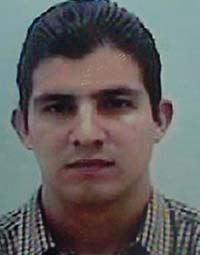
By the A.M. Costa Rica staff A man convicted of murdering a popular North American here has been
convicted and sentenced to 30 years in prison, the Poder Judicial reported.
He is Harold Steven Hernández Quirós, who was 24 when he was arrested March 1 after a shootout with police. The arrest came at a home in La Milpa de Guararí in Heredia where police were waiting for the man. He was wounded in the leg and arm. Judges gave the man an additional sentence of two years for aggravated resistance, the court spokesperson said. A woman with the last name of Céspedes was acquitted, the judicial report said. She had been considered an accessory. Kane died Jan. 4, 2003, in his home from a bullet to the head. He lived in La Granja, San Pedro. The suspect was easily identified by police because Kane was speaking to a friend on the telephone a few minutes before his death and mentioned the name of the man who was present in the house. Kane was a five-year resident here. The motive for the killing was robbery. Police later found items from Kane’s house in the home of Hernández Quirós. Kane’s sports utility vehicle was stolen as was a quantity of appliances. The vehicle was burned in an Alajuela dirt road. Rains again ravage
By the A.M. Costa Rica staff The northern zone and the Caribbean slope were hit again over the weekend by heavy rains, flooding and damage. One man died in a swollen river. The area around Guápiles was hard hit with downpours Saturday afternoon and evening, and these sent rivers out of their banks. The rains continued Sunday as they did in the Central Valley. Just a week ago similar downpours forced more than 2,000 persons from their homes in the northern zone and in and around Limón. Fake e-mail messages
By the A.M. Costa Rica staff Readers of the A.M. Costa Rica daily digest received two virus messages Sunday that appeared to have come from the newspaper. The good news is that many readers have active virus protection software on their computers that bounced or quarantined the messages. Others were wary enough to contact the newspaper. The messages were not random and were designed to appear to have come from the newspaper. The attacker was able to access the newspaper’s server in Baltimore, Md., and route the offending messages through the e-mail list for the daily digest. Although the delivery of the e-mail viruses was sophisticated, the text of the message was not good English. It said: "i'm very very sorry, anybody have sent your mail to my account address." This is the third time in six months that an effort was made to deliver virus messages to daily digest readers. A third message to readers Sunday was generated by a security tech checking how entry was made. Messages from A.M. Costa Rica hardly ever contain attachments. An attachment is a warning that the message may contain a virus. Four in fast boat
By the A.M. Costa Rica staff Law enforcement officials caught four Colombians after a prolonged sea and land chase Saturday. Two of the four suffered wounds in an exchange with police near Puerto Carrillo, Guanacaste. A Costa Rican coast guard vessel began the chase some 180 kms. off the coast. That’s about 108 miles. The Colombians were in a so-called fast boat loaded with parcels that officials said contained cocaine. The four men tried to avoid capture by directing their boat to the rocky coast of northwest Costa Rica. They carried AK-47 rifles, officials said. No drugs were found on the boat. Pursuers saw the men dumping parcels into the sea, and at least one 50-kilo package of cocaine was located in the ocean, officials said. |
Woman lawyer held
as vendor of crack By the A.M. Costa Rica staff Anti-drug police raided a downtown office Friday and took into custody a woman lawyer they said was selling crack, marijuana and cocaine. She was identified by the last names of Cortés Lacayo. The Policía de Control de Drogas said that the woman has been an active lawyer since at least 2003. She is 40. At the same time police discovered a number of people at the location. They arrested a woman who worked with the lawyer. She has the last names of Soto Muñoz. They also arrested a man with the names Sánchez Alvarado. Both are suspected of distributing drugs on the street. Police said that the office and other space provided living space for a number of presumed addicts. A fourth person arrested, with the last names of Arias Salas, was the subject of a warrant for aggravated robbery, said officials. Three undocumented individuals were turned over to immigration.
|
|
Consultantes Río Colorado S.A. James J. Brodell......................................editor
Avenida 11 bis, Barrio Otoya, San José (506) 223-1327 In Costa Rica: From elsewhere: A.M. Costa Rica
Consultantes Río Colo.
|
Professional bilingual nursing care for alzheimer’s and disabled elderly patients.
|
|
|
|
|
and wire services reports SANTO DOMINGO, Dominican Republic — Voters here ousted President Hipolito Mejia and elected a former president Sunday. Mejia has recognized the victory of his contender, Leonel Fernandez, shortly after midnight local time, according to DR1, the online service of The Santo Domingo Daily News. Informal vote counts gave Fernandez some 54 percent. Mejia attracted about 36 percent, and a third candidate, Eduardo Estrella, was last at 9 percent, the newspaper said. The election was marred by murder. Police here say three people were shot and killed at a polling station as voters begin casting ballots. Police say they are unclear what sparked the incident in Barahona, nearly 200 kms. (120 miles) west of this capital. Initial reports say the shooting involved representatives of President Mejia's party and a rival party. |
Hundreds of election monitors are
observing Sunday's vote, which Mejia has promised to be clean.
However, the Junta Central Electoral, citing violations of the law regarding commentaries, reported it had closed down some television shows. Opinion polls predicted the results accurately. Fernandez was expected to win the presidency with 54 percent of the vote. The surveys show Mejia had about 30 percent support, and Estrella trailing at 10 percent. Experts say the election hinged on efforts to revive the Caribbean nation's struggling economy. Inflation is over 43 percent per year, unemployment is high, and there have been repeated energy blackouts due to a government debt of $400 million owed to energy producers. Fernandez promised to reverse inflation and stabilize the economy. President Mejia contended the nation's economic troubles are not his doing. He says tight fiscal policies promised by Fernandez will harm the nation's poor. |
|
|
|
|
HAVANA, Cuba — President Fidel Castro has led a massive, six-hour protest in Havana against a U.S. plan to tighten economic sanctions against Cuba. Government officials say more than one million people took part in Friday's demonstration along Havana's Malecon Boulevard, near the U.S. Interests Section. Many of the marchers wore red shirts and waved Cuban flags. President Castro called for the march after President George Bush announced measures to tighten the U.S. embargo on the island. Bush said the United States intends to direct nearly $60 |
million over the next two years to
help, "hasten the day when the Cuban people will be free."
The plan calls for aircraft to broadcast U.S. government-sponsored radio and television programs into Cuba, in an attempt to avoid electronic jamming by the Castro government. It also includes restrictions on cash sent and family visits by Cuban-Americans to the island. Castro, wearing his trademark green military uniform and cap, told Friday's protest Bush's measures were ruthless and cruel. He said the United States has no right to intervene in Cuba's affairs. |
|
|
|
|
LIMA, Peru — A new public opinion poll finds a continuing slide in embattled President Alejandro Toledo's approval rating. The poll results, published Sunday in Lima, found Toledo's support had dropped to just 6 percent, with 56 percent of those surveyed saying he should step down or be impeached. |
Similar polls in recent months had
put the president's approval rating at around 7 or 8 percent. Toledo's
presidency has been marred by corruption scandals since he took office
in 2001, with a number of top cabinet members resigning or being removed
from office.
The most recent was Interior Minister Fernando Rospigliosi, who was accused of acting too slowly to restore order to a riot-torn southern town. |
|
|
|
|
|
|
|
CARACAS, Venezuela — Election officials are threatening to limit the role of international observers, claiming they are biased in favor of the opposition. Representatives from the Organization of American States and the U.S.-based Carter Center are scheduled to be in Venezuela this week to monitor the nation's recall referendum process. The review will ensure opposition leaders legitimately obtained the required 2.4 million signatures to hold a vote to recall President Hugo Chavez from office. But the National Electoral Council Thursday took exception to a joint statement issued earlier this week by the observers. In that statement, the two organizations expressed concern over reports of intimidation of voters who will reconfirm this month that they signed an opposition referendum petition. Election officials said the observers had overstepped their mark by suggesting voters could not withdraw their signatures during the reconfirmation. |
The observers say their review is
impartial and that they are seeking to work with the election council to
guarantee the recall effort is conducted fairly and openly.
Venezuela's opposition this month must verify nearly one million signatures on a petition calling for a referendum on Chavez' rule. A court last month said that 800,000 of the more than three million signatures collected were fraudulent. The development adds to the already tense atmosphere in Venezuela. Earlier this week, authorities arrested at least 80 suspected Colombian paramilitary members, alleging they had been plotting with Venezuelan dissidents to topple President Chavez's government. Venezuelan opposition leaders and the Colombian paramilitary group known as AUC, the United Self-Defense Forces of Colombia, say the arrests were politically motivated. Chavez survived a brief coup in 2002. The leftist leader has accused domestic opponents of trying to overthrow him with the help of the United States and Cuban exiles. Washington denies that. |
|
|
|
|
CARACAS, Venezuela — Colombia has offered to help Venezuela investigate an alleged plot to overthrow President Hugo Chavez. Speaking after talks with Chavez Friday here, Colombian Foreign Minister Carolina Barco said her government stands ready to provide any relevant |
information to help the investigation.
Ms. Barco also denied that any Colombian government troops were involved
in the alleged plot.
Last week Venezuelan authorities detained 100 men outside the capital, accusing them of belonging to a Colombian right-wing paramilitary group plotting with Venezuelan dissidents to topple President Chavez's government. |
|
|
|
|
RIO DE JANIERO, Brazil — Officials say the government has accepted what was called a letter of apology from The New York Times reporter who wrote about President Luiz Inacio Lula da Silva's drinking. Officials also said Friday that the government has decided to reverse its earlier decision to revoke correspondent Larry Rohter's visa. The Justice Ministry Tuesday ordered the visa revoked on the grounds Rohter's article offended the honor of the president. Rohter's story said that President da Silva's drinking had become a national concern. But a judge later said Rohter could remain in the country pending a final ruling. The New York Times issued a statement late |
Friday, saying that while it regrets
the political controversy the story generated, it had not issued an apology
or a retraction. The Times also said it was standing by its story.
Additionally, the newspaper said it was pleased that Brazil had decided to let Rohter continue to work there. President da Silva, in an interview with the news magazine Isto E, denied he drank to excess. The move to expel Rohter was criticized by the International Federation of Journalists and the group Human Rights Watch. The New York Times' executive editor, Bill Keller, said Wednesday that if Brazil expels a journalist for writing an article that offended the president, it would raise serious concerns about the country's professed commitment to freedom of expression. |
|
|
|
|
|
|
|
|
| What we published this week: | Monday | Tuesday | Wednesday | Thursday | Friday | Earlier |
|
|