|
|
||||
 |
 |
 |
||
|
|
|
|
||||||||||||||
|
|||||||||||||||
 |
|||||||||||||||
|
|
||||||||||||||
| What we published this week: | Monday | Tuesday | Wednesday | Thursday | Friday | Earlier |
|
|
|
|
|
|
|
Food |
|
|
Abstracts and fair use are permitted. Check HERE for more details |
A.M. Costa Rica's Second news page |
|
|
|
San
José, Costa Rica, Thursday, Feb. 12, 2015, Vol. 15, No. 30
|
||
|
|
|
|
|
|
|
Food |
|
|
|
 |
|
 University of Tennessee, Knoxville
photo
Crocodile photographed
playing with a flower.Crocs just
want to have fun, prof says
By the University of Tennessee,
Knoxville news staff
Crocodiles think surfing waves, playing ball and going on piggyback rides are fun, according to research by a psychology professor at the University of Tennessee, Knoxville. Vladimir Dinets, the researcher, has studied crocodiles for a decade. While doing so, he has observed the animals engaging in play-like behavior. To get more data, he conducted an informal survey of crocodilian-themed groups on social media and various conferences. His results show a softer side of the intimidating creatures — one that includes romping around with river otters and people. The findings could shed light on how intelligence has evolved. The research shows that crocodilians engage in all three main types of play distinguished by behavior specialists: locomotor play, play with objects and social play. Play with objects is reported most often. Crocodilians have been spotted playing with wooden balls, noisy ceramic bits, streams of water, their prey and debris floating in the water. Cases of locomotor play include young alligators repeatedly sliding down slopes, crocodiles surfing ocean waves and caimans riding currents of water in their pools. Observed cases of social play include baby alligators riding on their older friends' backs, baby caimans playfully courting each other and a male crocodile giving his lifetime mate rides on his back. Crocodiles have also been seen playing with other animals. Dinets observed a juvenile alligator playing with a river otter. In rare cases, individual crocodilians have been known to bond so strongly with people that they become playmates for years. For example, a Costa Rican man who rescued a crocodile that had been shot in the head became close friends with the animal. That was Gilberto "Chito" Shedden of Siquirres. They happily played every day until the crocodile's death 20 years later in 2011. The croc was named Pocho, and his funeral was a public festival in the community. "The croc would swim with his human friend, try to startle him by suddenly pretending to attack him or by sneaking up on him from behind, and accept being caressed, hugged, rotated in the water and kissed on the snout," said Dinets. Dinets' research builds on the work of colleague Gordon Burghardt, a professor in the Department of Psychology and the Department of Ecology and Evolutionary Biology, whose work defined play in a way that allows researchers to identify it in species not previously thought capable of play, such as wasps, fish and invertebrates. Dinets' work provides further evidence that play is a universal feature of intelligent animals — those with complex, flexible behavior. This knowledge might help determine how intelligence evolves and what is needed for its development. "Hundreds of thousands of crocodilians are now kept in captivity in zoos, commercial farms and breeding centers set up for endangered species. Providing them with toys and other opportunities for play makes them happier and healthier," Dinets said. The work is the first to scientifically study play in crocodiles. It is published in the journal Animal Behavior and Cognition. Previous research by Dinets discovered that crocodiles are able to climb trees, work as a team and use lures such as sticks to hunt prey. March for children planned for Sunday By the A.M. Costa Rica staff
A march is planned starting at 9 a.m. Sunday up Paseo Colón to express repudiation of child beatings. The march was triggered by the death of a 2 year old in the northern part of the country who has been beaten and tortured. President Luis Guillermos Solís is scheduled to participate. The march will attract many in the child protection field. The Patronato Nacional de la Infancia, the principal child protection agency, is seeking to have more citizens make complaints when they see a possible case of aggression toward a child. More drug-smuggling suspects detained By the A.M. Costa Rica staff
Police, investigators and prosecutors conducted 11 raids Wednesday to detain eight persons they said were linked to a cocaine and money laundering operation. Seven members of the organization, truck drivers, had been detained already at the Peñas Blancas border crossing, elsewhere in the northern zone and in Nicaragua. The organization managed a fleet of trucks with hidden compartments into which cocaine was hidden to fool police at the border. The gang would carry cocaine north through Central America and return with currency also hidden in the compartments. Investigators said they confiscated earlier nearly 900 kilos of cocaine and $442,281. Raids Wednesday were in San José, Alajuela, Cartago and Heredia. The trucks were housed in Liberia. Officials said the investigation had been going on since 2013.
|
||||||||||||||||||||||||||||||||||||||||||||
|
|
|
|
|
|
|
|
Food |
|
| What we published this week: | Monday | Tuesday | Wednesday | Thursday | Friday | Earlier |
| The contents of
this Web site are copyrighted by Consultantes Ro Colorado S.A 2015
and may
not be reproduced anywhere without permission. Abstracts and fair use are permitted. Check HERE for details |
||||||
A.M. Costa Rica Third News Page |
|
| San José, Costa Rica, Thursday, Feb. 12, 2015, Vol. 15, No. 30 | |
|
|
|
|
|
|
|
Food |
|
| Business representatives meet with the panel on competition |
|
|
By the A.M. Costa Rica staff
The Solís administration is in its 10th month, and a committee set up to improve the country's competitivity has held its second meeting. The committee met with representatives of private industry, and the topics were predictable. Business people are concerned about electrical rates, financing, transportation infrastructure, a reduction in bureaucratic paperwork and procedures as well as taxes. President Luis Guillermo Solís attended the meeting, said Casa Presidencial. Melvin Jiménez, minister of the Presidencia, characterized the meeting as a positive one. If the government is going well, private enterprise is going well, and if private enterprise is going well, so is the country, he said. The session was with representatives of the Unión |
Costarricense
de Cámaras y Asociaciones del Sector Empresarial
Privado. The organization has not always seen
eye-to-eye with the president. For example, it has challenged the
president's legal right to void a veto of a new labor code that was
imposed by former president Laura Chinchilla. That action is the
subject of a Sala IV appeal. Missing from a summary of the meeting provided by Casa Presidencial was any mention of new taxes. Solís and his finance ministry are supposed to come out with a revision, of the tax code that will bring in more money for the government. A value-added tax is being proposed in place of the existing 13 percent sales tax. Some observers say the introduction of the new taxes has been delayed because the government does not think it has the votes to pass the package. There also have been clues that an increase in the nation's exit tax might be proposed. |
| Officials turn their sights to the 1,560 security firms in
country |
|
|
By the A.M. Costa Rica staff
Private security services are getting a close look after investigators claimed that one was importing firearms for resale outside the country. The security ministry said Wednesday that there were an estimated 1,560 firms providing such services in the county. Only 443 have been authorized fully by the Ministry's Dirección de Servicios de Seguridad Privados, it said. Not being authorized within the agency's computerized data |
base means
firms cannot enroll new employees, import weapons or
offer services. Many are in the process of providing the paperwork and
information that the ministry needs to put the firm in the database. The firms, themselves, are licensed for five years by the agency. The ministry also noted that there has been a falling off of weapons being imported. In 2012 there were 5,799 weapons brought into the country. Last year the number was 4,168, the agency said. |
| Turrialba puts on a morning show with water vapor and gas |
|
|
By the A.M. Costa Rica staff
The Turrialba volcano shot off a plume of gas and water vapor Wednesday morning, but experts said that there was no ash in the eruption. The mountain's activity could be seen through much of the country after 8 a.m. |
The volcano
experts said the activity was normal. There still are alerts in force around the volcano and its national park. The Red Sismológica Nacional said that the volcano was maintaining the same level this month as it had in January, which is relatively low. |
| You need to see Costa Rican tourism information HERE! |
 |
|
|
|
|
|
|
|
Food |
|
| What we published this week: | Monday | Tuesday | Wednesday | Thursday | Friday | Earlier |
| The contents of
this Web site are copyrighted by Consultantes Río Colorado S.A.
2015 and may
not be reproduced anywhere without permission. Abstracts and fair use are permitted. Check HERE for details |
||||||
 |
 |
||||
| A.M. Costa Rica's Fourth News page | |||||
| San José, Costa Rica, Thursday, Feb. 12, 2015, Vol. 15, No. 30 | |||||
|
|
|
|
|
|
|
Food |
|
| Researchers say that women are at risk from mercury in
seafoods |
|
|
By the University of Michigan news staff
One of the greatest risk factors for autoimmunity among women of childbearing age may be associated with exposure to mercury such as through seafood, a new University of Michigan study says. The findings, which appear in Environmental Health Perspectives, found that mercury, even at low levels generally considered safe, was associated with autoimmunity. Autoimmune disorders, which cause the body's immune system to attack healthy cells by mistake, affects nearly 50 million Americans and predominately women. “We don’t have a very good sense of why people develop autoimmune disorders,” says lead author Emily Somers, an associate professor in Internal Medicine at the university medical and public health schools. “A large number of cases are not explained by genetics, so we believe studying environmental factors will help us understand why autoimmunity happens and how we may be able to intervene to improve health outcomes. In our study, exposure to mercury stood out as the main risk factor for autoimmunity.” Autoimmune disease, which can include such conditions as inflammatory bowel disease, lupus, Sjögren’s syndrome, rheumatoid arthritis and multiple sclerosis, is among the 10 leading causes of death among women. Researchers analyzed data among women ages 16-49 from |
the
National
Health and Nutrition Examination Survey from 1999-2004. Greater
exposure to mercury was associated with a higher rate of
autoantibodies, a precursor to autoimmune disease. Most autoimmune
diseases are characterized by autoantibodies, proteins made by a
person's immune system when it fails to distinguish between its own
tissues and potentially harmful cells. Many fish consumption recommendations are aimed at pregnant women, those who may become pregnant, nursing moms and young children. The U.S. Food and Drug Administration and the Environmental Protection Agency say pregnant women can safely eat up to 12 ounces (340 grams) of seafood a week. Fish such as swordfish, king mackerel and tilefish contain the highest levels of mercury while shrimp, canned light tuna and salmon have lower levels. Authors note there are many health benefits to seafood, a lean protein packed with vital nutrients. However, the findings provide further evidence that women of reproductive age should be mindful of the type of fish they’re eating.” “The presence of autoantibodies doesn’t necessarily mean they will lead to an autoimmune disease,” Professor Somers said. “However, we know that autoantibodies are significant predictors of future autoimmune disease, and may predate the symptoms and diagnosis of an autoimmune disease by years. “For women of childbearing age, who are at particular risk of developing this type of disease, it may be especially important to keep track of seafood consumption.” |
Here's reasonable medical care
Costa Rica's world class medical specialists are at your command. Get the top care for much less than U.S. prices. It is really a great way to spend a vacation. See our list of recommended professionals HERE!amcr-prom
|
|
|||||||||||||||||||||||||||||||||||||||||
|
|
|
|
|
|
|
Food |
|
| What we published this week: | Monday | Tuesday | Wednesday | Thursday | Friday | Earlier |
| The
contents of
this Web site are copyrighted by Consultantes Río Colorado S.A.
2015 and may
not be reproduced anywhere without permission. Abstracts and fair use are permitted. Check HERE for details |
||||||
|
A.M. Costa Rica's Fifth
news page
|
||
 |
 |
|
| San José, Costa Rica, Thursday, Feb. 12, 2015, Vol. 15, No. 30 | |||||||
|
|
|
|
|
|
|
Food |
|
 |
| Obama seeks lawmakers' OK to campaign in Middle East By the A.M. Costa Rica wire services
President Barack Obama sent Congress a request Wednesday for authorization to use military force in the campaign against the Islamic State group, urging lawmakers to "show the world we are united in our resolve to counter the threat." In a letter to Congress, the president said he is committed to working with Congress on bipartisan authorization for the use of military force. The proposed authorization for the use of military force would limit operations against the militants to three years and bar U.S. troops from what it terms enduring offensive ground combat. Obama's draft proposal said large-scale ground combat operations, similar to those in Iraq and Afghanistan, should be left to local forces instead of the U.S. military. The proposal also would repeal the 2002 measure that authorized the Iraq war but keep a 2001 authorization, passed shortly after the Sept. 11 attacks, for a campaign against al-Qaida and its affiliates. "This is a difficult mission, and it will remain difficult for some time," the president said in nationally televised remarks. "But our coalition is on the offensive. ISIL is on the defensive, and ISIL is going to lose." The president says the authorization would give him the flexibility he needs to go after the militants. “For example, if we had actionable intelligence about a gathering of ISIL leaders, and our partners didn’t have the capacity to get them, I would be prepared to order our Special Forces to take action, because I will not allow these terrorists to have a safe haven,” he said. Obama's proposal must be approved by both the U.S. Senate and House of Representatives. The proposal is expected to provoke strong debate between Democrats, who are generally wary of another Middle East war, and Republicans, many of whom have been pushing for stronger measures against the militant fighters. Republican Senate Majority Leader Mitch McConnell said Wednesday senators will "listen closely to the advice of military commanders as they consider the best strategy for defeating ISIL," referring to an acronym for the Islamic State group. House Speaker John Boehner, a Repubican, said, "Now we will begin hearings and rigorous oversight so lawmakers and the public can provide their input." Sen. Tim Kaine of Virginia, a close Democratic ally of Obama's and who has been seeking the military authorization for months, said Wednesday, "Finally, we are at the point where Congress is going to take seriously its most solemn obligation.” Several Democrats voiced concerns, saying the president’s resolution limiting operations against Islamist militants to three years is too vague. Rep. Adam Schiff said “The language pertaining to ground troops . . . is very broad, very ambiguous. None of us really knows what 'enduring offensive combat operations' means. And deliberately, I think, drafted to be ambiguous," Schiff said. House Minority leader Nancy Pelosi, a Democrat, spoke for many who are wary of the U.S. getting involved in another protracted ground war in the Middle East, saying the American people have no appetite for what she called U.S. boots on the ground. Some analysts said the president may face more opposition from his fellow Democrats than from Republicans, who now control both the House and the Senate. White House spokesman Josh Earnest said Tuesday that while Obama believes he has the authority to order military action against the Islamist group, the new authorization would represent a powerful symbol of unity to degrade and destroy the group. "The president does believe that this message is even more powerful if it has bipartisan support," said Earnest. Meanwhile, U.S. lawmakers on Wednesday are hearing testimony from counter-terrorism experts that more than 20,000 volunteers from more than 90 countries are flowing into Iraq and Syria to join Islamic State fighters. The National CounterTerrorism Center believes more than 150 are Americans or U.S. residents. The rate of such volunteer fighters is unprecedented and exceeds that of those who went to fight in Afghanistan, Pakistan, Iraq, Yemen or Somalia in the past 20 years. One of those testifying before Congress is Rick Brennan, a RAND Corp, senior political analyst and career Army officer. Brennan said this movement represents the generational challenge of the time. He also said radical Islamist groups have multiplied in recent decades. "Going back to 1988, there were only three of these types of groups that existed in the world. By 2001, that number had expanded to 20 and the growth of those groups continued at a very steady pace until 2010," he said. "But, by 2013, the largest as a result of the turbulence created by the Arab Spring, the number jumped from 32 in 2010 to 51 in 2013," Brennan said. Individual foreign fighters have jumped from up to 22,000 in 2001 to as many as 90,000 in 2013, he said, and the success of the Islamic State group in 2014 has caused those numbers to skyrocket. Foreign radical fighters called a flood in Mideast By the A.M. Costa Rica wire services
The threat posed by foreign fighters flocking to Iraq and Syria is "not even close to being under control," top U.S. intelligence officials are warning the U.S. Congress. FBI Assistant Director Michael Steinbach told the House Homeland Security Committee Wednesday the uncertainty about the number and the whereabouts of would-be foreign fighters applies even to those hailing from the United States. "I don't know every person there, and I don't know every person coming back," he said. No matter where they come from, the majority now seeks to join with the Islamic State, which is actively seeking to expand its global footprint. National Counterterrorism Center Director Nicholas Rasmussen said the terror group's social media outreach is robust and effective despite the brutality it portrays. "Their ability to generate timely propaganda continues to grow," he said. "ISIL has proven far more adept than core al-Qaida ever was, or more adept than core al-Qaida's affiliate groups, more adept at using these new social media tools to reach a broader audience." Officials say Islamic State's reliance on social media does not help them track foreign fighters. "In many cases, the information we have about foreign fighters traveling to the conflict zone stops when they get there," Rasmussen said. "And we don't have as much insight or nearly enough insight into what actually happens when they're on the ground in Syria." U.S. counterterror officials and lawmakers have long worried about the threat from foreign fighters returning from Iraq or Syria, concerns that have been heightened following the recent, deadly attacks in France and raids in Belgium. House Homeland Security Committee Chairman Michael McCaul finds the trend alarming. "These fanatics want nothing less than the destruction of our way of life," he said. "Now their ability to match words with deeds is growing at an astonishing rate." U.S. officials have said efforts to stem the flow of foreign fighters have been starting to make a difference, citing increased cooperation from partners in Europe, described by National Counterterrorism's Rasmussen as a pendulum swing from what was taking place just a few years ago. Still, he said worrisome gaps remain, in part because of the reluctance of European countries to share bulk metadata. "We know what we know but that comes from a wide variety of sources, and we have always assessed that there is likely more information out there that we have not yet been able to collect, either from our foreign partners or from other intelligence means," he said. "And that it's possible that greater numbers of foreign fighters and potentially greater numbers of individuals from western countries and the United States have traveled to the conflict zones." One source of concern is Turkey, which has been used repeatedly as a transit point for foreign fighters looking to enter Syria. In an interview with Turkey's Anadolu news agency, Turkish Interior Minister Efkan Ala said Anakara "imposed entry bans on 9,955 people from 91 countries" but there have been concerns about Turkey's ability to implement such a ban. Rasmussen told lawmakers Wednesday that success in stemming the flow of foreign fighters "requires a functioning effective partnership with the Turks." Crypto-currency a new tactic in financing radical groups By the A.M. Costa Rica wire services
Online appeals from the so-called Islamic State to wage jihad are nothing new. But now they're suggesting a very new tactic. Virtual digital money is increasingly being promoted as a way for money-needy jihadists to support their efforts, according to intelligence agency and media reports. Also known as crypto-currency, the trading method has rapidly grown in popularity since the introduction of Bitcoin in 2009. There are over 500 different currencies with an estimated total market capitalization of over $3.7 billion dollars. But a portion of that growth, perhaps even a majority of it, has come from individuals using the digital dollars for questionable or illegal purposes and by groups who want to keep their activities out of view of governments. And with the technological skills demonstrated by the so-called Islamic State, Boko Haram, al-Qaida and other groups, there are new worries that crypto-currencies may become a new, hidden way to funnel money to fund terror. "This system has the potential to revive the lost sunnah of donating to the mujahideen," a blog post on a pro-IS website said last year, using the term for Muslim believers. "It is simple, easy and we ask Allah to hasten its usage for us." The post, titled “Bitcoin and the Charity of Violent Physical Struggle," urged supporters to back IS fighters in Iraq and Syria through donations using the digital virtual currency. Nearly every financial transaction these days at some point touches on the cyber world, and some services such as PayPal, seem to live almost entirely online. A major difference, says Sarah Meiklejohn, a lecturer at University College London, is that nearly all of those ATM and PayPal-type services convert a stored digital value into traditional fiat currencies – such as the dollar, the renminbi or the ruble – which are in turn tightly controlled by centralized governments. Crypto-currencies like Bitcoin, she says, aren’t. "The main difference is decentralization," Ms. Meiklejohn said. “Bitcoins are not generated by any single entity. The U.S. government is the only thing that can generate dollars, and dictate the supply. Also, the Bitcoin transactions are decentralized as well, and the entire peer-to-peer network is responsible for bearing witness to the transaction." The currency part of Bitcoin is fairly straight forward: Users exchange coins to buy and sell goods and services. Bitcoin is now accepted as payment at thousands of small businesses around the world, and increasingly at multinational firms such as Microsoft and Expedia. The "crypto" part of Bitcoin and similar is that user identities are pseudonymous, meaning they’re visible only as a string of numbers and characters, thus granting users relative anonymity in their purchases and shielding many of the transactions from government view. But Aaron Brantly, a cybersecurity researcher at the Army Cyber Institute at West Point, is quick to point out that pseudonymous does not equal anonymous. "Bitcoin is not anonymous. In fact, it is the opposite of anonymous," he said via email. "The transfer of BTCs from one point to another are tracked, but the individuals engaging in those transactions are not. However, with repeated transactions the anonymity of the user is diminished in much the same way that your shopping habits with cash lose anonymity if you shop at the same store over and over. You will be recognized." This pseudonymous nature of Bitcoin is the main reason its rise was so often tied to the now-shuttered Silk Road, a Darknet market where users could purchase illegal drugs or other illicit services. And it’s also a main reason that governments around the world view crypto-currencies and the rapid growth of encrypted digital devices with a wary eye. So far, only six nations have banned the use of Bitcoins, but many nations restrict how and where they can be used. Bitcoin use in the U.S. is legal, but the Internal Revenue Service officially classifies it as property, not currency, that is subject to taxation. The Obama administration has been outspoken about the need for government entities such as the National Security Agency to have encryption back doors, allowing access to the digital communications and activities of suspected criminals and terrorists. Federal Bureau of Investigation Director James Comey has repeatedly warned about the dangers of encryption, saying it allows terrorists to go dark, making surveillance impossible "If the challenges of real-time interception threaten to leave us in the dark, encryption threatens to lead all of us to a very dark place," Comey said in a 2014 speech. The Combating Terrorism Technical Support Office at the U.S. Department of Defense wrote in a memo last year: "The introduction of virtual currency will likely shape threat finance by increasing the opaqueness, transactional velocity, and overall efficiencies of terrorist attacks." "I do think it’s certainly possible," said cryptography lecturer Ms. Meiklejohn. "The thing I would say, though, is that in its current state, Bitcoin is just not very usable, especially for a group like the Islamic State." A person might be able to order take-out in London or contribute to a political campaign in California using Bitcoin, but Ms. Meiklejohn said there just aren’t that many places that accept crypto-currency. Adding to that, the currencies are still very complicated, said Brantly, the researcher at West Point. "Your average jihadist computer user would find Bitcoin or other similar currencies rather difficult to use and even more difficult to understand," he said via email. "Specialized skills and training are required to maintain anonymity over the long term." While crypto-currencies can offer highly skilled users a degree of anonymity, a 2013 study by Ms. Meiklejohn said it can easily be lost. "Bitcoin can offer fairly good anonymity, but most users don’t have that, whether out of ignorance or the fact that they just don’t care," she said. Keystone XL pipeline bill sent to Obama for veto By the A.M. Costa Rica wire services
The U.S. House of Representatives has approved the Keystone XL pipeline project and sent the measure to President Barack Obama, who has said he will veto it. The House voted 270-152 to pass the bill Wednesday. It follows an affirmative vote in the Senate Jan. 29. Republicans made approving the Keystone XL pipeline one of their top priorities when they took control of Congress in January. Neither the House nor the Senate passed the proposal by a wide enough margin to override the expected presidential veto. First proposed in 2008, the Keystone XL pipeline oil runs from Canada to the U.S. Gulf. Republicans and the oil industry have argued that the $8 billion infrastructure project is about jobs and boosting energy security, by importing oil from a friendly neighbor and shipping it to domestic refineries subject to stringent environmental regulations. Democrats, and their environmental allies, have characterized it as a gift to the oil industry that would worsen global warming and subject parts of the U.S. to the risks of an oil spill. U.S. says China bankrolls exports in some industries By the A.M. Costa Rica wire services
The United States is accusing China of illegally subsidizing its exporters in seven industries. U.S. Trade Representative Michael Froman said Beijing provided at least $1 billion in illegal subsidies during the past three years. The financial support, he said, violates rules set by the World Trade Organization. Froman said Chinese textile, clothing, metal, chemical, medical product, building material and agricultural industries benefited from the Chinese government's subsidies. He said the subsidies hurt U.S. workers, farmers, ranchers and businesses by reducing competition and threatening jobs and wages in the United States. The United States said it would try to reach a settlement of the case with China, but if that failed, the U.S. could ask the Geneva-based agency to rule in the dispute. There was no immediate reaction to the dispute from Beijing. The U.S. accusation came a day after President Barack Obama and Chinese President Xi Jinping spoke by phone, with the Chinese leader set to make a state visit to Washington in September. Jon Stewart will leave his Comedy Central show By the A.M. Costa Rica wire services
Comedian Jon Stewart is quitting as host of U.S. cable television's popular satirical news program "The Daily Show" after 16 years. Stewart, 52, made the announcement Tuesday during a taping of the late-night Comedy Central show. He struggled to hold back tears as he told the studio audience that "The Daily Show" had been "the honor of my professional life," but that it "doesn't deserve an even slightly restless host." Stewart recently took an extended leave of absence to direct his first feature film, "Rosewater," about an Iranian-born journalist who had been held prisoner in Iran for 118 days. A well-known standup comedian when he took over the "The Daily Show" hosting job in 1999, Stewart's view on current events attracted a new generation of Americans who had become uninterested and disillusioned with politics and journalism. The show earned several Emmy Awards during Stewart's tenure, and many of its comic performers who appeared as "correspondents" have gone on to greater success, including Stephen Colbert, John Oliver and Larry Wilmore, each of whom have hosted similar satirical news shows. Comedy Central President Michele Ganeless issued a statement saying that through Stewart's "unique voice and vision, ‘The Daily Show’ has become a cultural touchstone for millions of fans and an unparalleled platform for political comedy that will endure for years to come." No exact date has been announced for Stewart's departure. |
|
|||||||||||||||||||||||||||||||||||||||||||||||||||||||
|
|
|
|
|
|
|
Food |
|
| What we published this week: | Monday | Tuesday | Wednesday | Thursday | Friday | Earlier |
| The
contents of
this Web site are copyrighted by Consultantes Río Colorado S.A.
2015 and may
not be reproduced anywhere without permission. Abstracts and fair use are permitted. Check HERE for details |
||||||
| A.M. Costa Rica's sixth news page |
|
||||||||
| San José, Costa Rica, Thursday, Feb. 12, 2015, Vol. 15, No. 30 | |||||||||
|
|
|
|
|
|
|
Food |
|
||
|
By the A.M. Costa Rica staff
Agronomists are celebrating their profession with a week of activities starting March 9. The week includes Expoferia Agropecuaria y Forestal that will be held Saturday, March 15, and Sunday, March 15, all at the Colegio de Ingenieros Agrónomos de Costa Rica in Residencial Los Colegios, Moravia. But all is not celebration. The professionals are conducting discussions on items of critical interest to some farmers on subjects that those outside agricultural areas may not have considered. For example, March 10 the discussion will be on the illegal importation of beans, which has an impact on the local market. Welmer Ramos, the economics minister will be a guest March 12 when the discussion is on the price of rice. March 13, the topic will be insecticides and fungicides and their use in Costa Rica. The expo featured a parade and display of pets March 15 as well as the exhibition and sale of agricultural and forestry products both March 14 and 15.  A.M. Costa Rica/Alexis Terán
Rose Luardo and Emilia
Brintnall made up for their show.Visiting artists
honored in San Ramón
By the A.M. Costa Rica staff
Two artists from Philadelphia, Pennsylvania, Emilia Brintnall and Rose Luardo, capped a month-long residency with a show at the Museo de San Ramón Friday, The exhibit captures the pair's experiences in Costa Rica and the intermingling of several art disciplines. Ms. Brintnall is a visual artist and dancer. Ms. Luardo is a performance and fabric artist. The pair have been working with artists of all ages of San Ramón. The main message of the event was to create visual art that crosses both cultural and generational boundaries. Other local artists participated, including an 80-year-old resident of Hogar Ancianos who created a woven work of fabric roses. The Philadelphia artists’ residency program is operated by Odysseys Costa Rica located in San Ramón. The program is based on the belief that creating great art across borders opens up human hearts and challenges barriers that separate them, organizers said. This is the third Odyssey event promoted by the Community Action Alliance’s Cultural & Social Committee. |
| Costa Rican News |
AMCostaRicaArchives.com |
Retire NOW
in Costa Rica |
CostaRicaReport.com |
| Fine Dining
in Costa Rica |
The CAFTA Report |
Fish
fabulous Costa Rica |
|
|
|
|
|
|
|
Food |
|
| What we published this week: | Monday | Tuesday | Wednesday | Thursday | Friday | Earlier |
| The
contents of
this Web site are copyrighted by Consultantes Río Colorado S.A.
2015 and may
not be reproduced anywhere without permission. Abstracts and fair use are permitted. Check HERE for details |
||||||
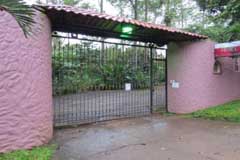
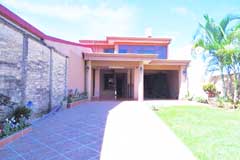
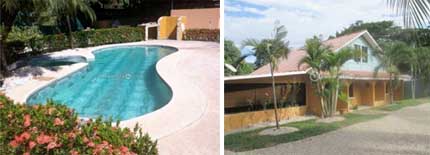
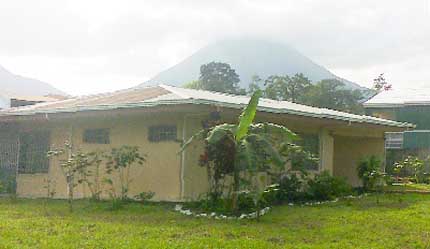
| From Page 7: Housing expo begins next Wednesday By the A.M. Costa Rica staff
The seventh annual ExpoConstrucción y Vivienda begins Wednesday and runs through Sunday, Feb. 22. Organizers promise 636 stands by 230 firms offering homes, materials financing and associated goods or services. The expo is at the Centro de Eventos Pedregal in Belén. Another promise is that there will be homes available for sale from $40,000 to $1 million. There are supposed to be 180 individual housing projects represented. Hundreds of deals are made each year at the expo. Some 45,000 spectators are expected for the five-day event, said organizers. At least 17 financial institutions will be there to offer options for purchasing. |