 |
| A.M.
Costa Rica Your daily English-language news source Monday through Friday |
||
 |
 |
 |
|
|
 |
|
|
|||||||||||||||||||||||||||
 |
||||||||||||||||||||||||||||
|
||||||||||||||||||||||||||||
|
|
|||||||||||||||||||||||||||
| What we published this week: | Monday | Tuesday | Wednesday | Thursday | Friday | Earlier |
|
|
|
|
|
|
|
Food |
|
Jo
Stuart |
|
Abstracts and fair use are permitted. Check HERE for more details |
| A.M. Costa Rica's Second news page | |
|
San
José, Costa Rica, Monday, Feb. 3, 2014, Vol. 14, No. 23
|
|
|
|
|
|
|
|
Food |
|
 |
|
 A.M. Costa Rica/Michael
Krumholtz
Dancers at the Sportsmen's
Lodge were one of the attractionsfor the annual Super bowl party. The defense
again prevails
on Seahawk Super bowl win By
the A.M. Costa Rica staff
In a showdown between the NFL's top defense and its top offense, the old saying again rang true. But defense didn't just win Super Bowl XLVIII, it dominated it from the first minute onwards as the Seattle Seahawks won the franchise's first championship. The game was watched widely in Costa Rica, mainly by expats Seattle, led by that superb defense, suffocated the Broncos, 43-8. to win the Super Bowl Sunday. A safety on the opening play of the game foreshadowed Denver's nightmare night as Seattle jumped out to a 23-0 halftime lead. Percy Harvin's kickoff return for a touchdown to open the second half put the game away. In the first quarter, Seattle prevented Peyton Manning and the record-setting Broncos attack from getting a first down. The ultra athletic defensive line disrupted Manning's timing, which led to three early turnovers that included a pair of interceptions thrown by the league MVP. And in the highly anticipated position matchup, it was Seattle's self-labeled Legion of Doom secondary that proved too physical and too fast for Denver. Though Denver set a record in scoring offense this season, it failed to reach double digits in the season's most important contest. The nightmare in New Jersey for the Broncos could be summed up in any number of disastrous sequences. Though they only sacked Manning once, the Seattle front seven abused his offensive line and ruined the rhythm between him and his receivers. It is the fifth time that the Super Bowl has been played when the league's best defense is matched up with the No. 1-ranked offense. The team with the top defense is now 4-1. El Salvador counting ballots, but a runoff there likely, too By
the A.M. Costa Rica wire services
and the A.M. Costa Rica staff No candidate obtained 50 percent of the presidential vote in El Salvador Sunday, so a runoff is likely. Former left-wing guerrilla commander Salvador Sánchez Cerén took a strong early lead Sunday and managed to obtain 48.92 percent of the total vote, according to the nation's election tribunal. That total was with 99.15 per cent of the country's 10,455 polling places counted. He is running on the ticket of the Frente Farabundo Martí para la Liberación Nacional. Right-leaning former San Salvador mayor Norman Quijano had 38.95 percent. If there is no clear winner after a recount, the two leading candidates will go to a run-off on March 9. The former mayor is with the Partido Alianza Republicana Nacionalista Quijano is considered a conservative rival who wants to send the army in to fight powerful street gangs, Sánchez Cerén is the country's current vice president under President Mauricio Funes. Our reader's opinion
Reader counters letter claimthat DDT is not harmful Dear A.M. Costa Rica: Mr. Cocker in his letter made this statement: "All the scientific studies have proved how safe DDT is, yet the efforts of biased environmentalists have created a perception of harm. The studies showing, for example, of thinning egg shells, and deformed birds were shown to be junk science." This is according to the "junk science" by the U.S. Environmental Protection Agency: FISH DDT causes many problems in fish (So many, in fact, that it has been difficult to study DDT in fish. We can't seem to find where the DDT is doing the most damage.) We think that the problem involves DDT's presence in the fish's plasma membrane, an area where important biological processes are occurring. BIRDS DDT is most famous for its effect on birds. Some research has shown that for certain species, DDT causes the thinning of eggshells. The species affected by DDT: osprey, eagles, pelicans, falcons, hawks. BATS Bats are especially sensitive to DDT. Very low doses of DDT can affect them severely. As they use this fat, the DDT stored there is released into their bodies in relatively large concentration. These concentrations are often high enough to have toxic effects. Thus, DDT affects migrating, adult bats the most. Here is some of the "junk science" from a study by Cornell University, Michigan State University, Oregon State University, and University of California at Davis. Major support and funding was provided by the USDA/Extension Service/National Agricultural Pesticide Impact Assessment Program. Support was not from biased environmentalists, as Mr, Cocker would have you believe. The mechanisms of eggshell thinning are not fully understood. It is thought that this occurs from the major metabolite, DDE, and that predator species of birds are the most sensitive to these effects. DDT is very highly toxic to many aquatic invertebrate species. DDT is very highly toxic to fish species as well. Henry
Kantrowitz
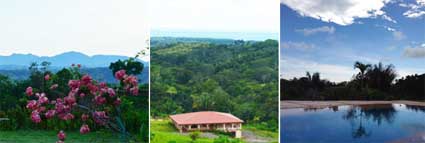
Punta Leona
|
|||||||||||||||||||||||||||||||||||||||||||||||
 |
||||||||||||||||||||||||||||||||||||||||||||||||
|
|
|
|
|
|
|
Food |
|
| What we published this week: | Monday | Tuesday | Wednesday | Thursday | Friday | Earlier |
| The contents of this page and this Web site are copyrighted by A.M. Costa Rica.com Ltda. 2014 and may not be reproduced anywhere without permission. Abstracts and fair use are permitted. Check HERE for details | ||||||
A.M. Costa Rica Third News Page |
|
| San José, Costa Rica, Monday, Feb. 3, 2014, Vol. 14, No. 23 | |
|
|
|
|
|
|
|
Food |
|
| Child dies when flames destroy a home
illuminated by candles |
|
|
By
the A.M. Costa Rica staff
Neighbors saved a 6-year-old boy, but his younger sister died when flames ravaged a home in Puerto Viejo de Sarapiquí Saturday night. Both the Cuerpo de Bomberos and the Judicial Investigating Organization said that candles were used in the home for illumination. The mother of the children had left the home briefly to do an |
errand at a nearby home of a member
of the family, said judicial agents. The bomberos identified the dead girl as Britani López Arrieta. They said she was 3. Agents said her age was 4. The boy suffered some burns, agents said. There are only about two dozen fatal fires in Costa Rica in any year. Typically they come from faulty wiring or as in this case, some form of open flame. |
Fuerza Pública officers supervise the off-loading of corn grain from the hijacked truck that was forced partly into a ditch after a chase from Río Frío de Sarapiquí |
 Ministerio de Gobernación,
Policía y Seguridad Pública photo
|
| Truck hijackings are epidemic, judicial
police report |
|
|
By
the A.M. Costa Rica staff
Bandits are sticking up more and more truck drivers to take the merchandise rather than money. In some cases they actually are inviting the drivers to show up to be robbed, said agents. Delivery trucks with loose cash are fewer and fewer because many business operators have installed onboard safes to hold cash. And more and more trucks are going out with an armed guard. So crooks have come up with a new idea, said the Judicial Investigating Organization. They are contacting construction companies, tire dealers, auto repair shops and just about any business that sells goods that can be taken and sold. The crooks make a delivery appointment, and when the truck shows up at the appointed place, the robbers are waiting. This happened about once a day in the metro area, said agents. There were 21 such cases in December, and in January there have been one to two cases a day, agents said. It also appears |
that the calls making the
appointments originate from the country's prisons. Of course, some crooks still do the hijackings the old fashioned way. One case happened Thursday night when four men in vehicles cut off two trucks from the same firm on Ruta 32 at Río Frío. The armed bandits took personal items from the two pairs of drivers and then put them in the back of one truck. The robbery triggered a police chase because someone saw the crime and called officers. Police caught up with the truck in La Uruca on the Autopista General Cañas, and a firefight ensued. At one point, one of the victims suffered a gunshot wound. Fuerza Pública officers said they captured one hijacking suspect, but three more fled and continued to fire at police as they did. The trucks were loaded with corn grain, which can easily be marketed. Last week, bandits made off with 3,000 boxes of crackers that were in trucks parked at a warehouse. |
 |
| You need to see Costa Rican tourism information HERE! |
|
|
|
|
|
|
|
Food |
|
| What we published this week: | Monday | Tuesday | Wednesday | Thursday | Friday | Earlier |
| The contents of this page and this Web site are copyrighted by A.M. Costa Rica.com Ltda. 2014 and may not be reproduced anywhere without permission. Abstracts and fair use are permitted. Check HERE for details | ||||||
 |
|
||||
| A.M. Costa Rica's Fourth News page | |||||
| San José, Costa Rica, Monday, Feb. 3, 2014, Vol. 14, No. 23 | |||||
|
|
|
|
|
|
|
Food |
|
| Drug trafficking and money laundering said to encourage
deforestation |
|
|
By
the Ohio State University news service
Add yet another threat to the list of problems facing the rapidly disappearing rainforests of Central America: drug trafficking. In an article in the journal Science, seven researchers who have done work in Central America point to growing evidence that drug trafficking threatens forests in remote areas of Honduras, Guatemala, Nicaragua and nearby countries. Traffickers are slashing down forests, often within protected areas, to make way for clandestine landing strips and roads to move drugs, and converting forests into agribusinesses to launder their drug profits, the researchers say. Much of this appears to be a response to U.S.-led anti-trafficking efforts, especially in Mexico, said Kendra McSweeney, lead author of the Science article and an associate professor of geography at The Ohio State University. “In response to the crackdown in Mexico, drug traffickers began moving south into Central America around 2007 to find new routes through remote areas to move their drugs from South America and get them to the United States,” Ms. McSweeney said. “When drug traffickers moved in, they brought ecological devastation with them.” For example, the researchers found that the amount of new deforestation per year more than quadrupled in Honduras between 2007 and 2011, the same period when cocaine movements in the country also spiked. Ms. McSweeney is a geographer who has done research in Honduras for more than 20 years, studying how indigenous people interact with their environment. The drug trade is not something she would normally investigate, but it has been impossible to ignore in recent years, she said. “Starting about 2007, we started seeing rates of deforestation there that we had never seen before. When we asked the local people the reason, they would tell us: los narcos, the drug traffickers. |
There were other
indications of drug trafficking taking place in the area. “I would get approached by people who wanted to change $20 bills in places where cash is very scarce and dollars are not the normal currency. When that starts happening, you know narcos are there,” she said. When Ms. McSweeney talked to other researchers in Central America, they had similar stories. “The emerging impacts of narco-trafficking were being mentioned among people who worked in Central America, but usually just as a side conversation. We heard the same kinds of things from agricultural specialists, geographers, conservationists. Several of us decided we needed to bring more attention to this issue.” In the Science article, Ms. McSweeney and her co-authors say deforestation starts with the clandestine roads and landing strips that traffickers create in the remote forests. The infusion of drug cash into these areas helps embolden resident ranchers, land speculators and timber traffickers to expand their activities, primarily at the expense of the indigenous people who are often key forest defenders. In addition, the drug traffickers themselves convert forest to agriculture as a way to launder their money. While much of this land conversion occurs within protected areas and is therefore illegal, drug traffickers often use their profits to influence government leaders to look the other way. Ms. McSweeney said more research is needed to examine the links between drug trafficking and conservation issues. But there is already enough evidence to show that U.S. drug policy has a much wider effect than is often realized. “Drug policies are also conservation policies, whether we realize it or not,” McSweeney said. “U.S.-led militarized interdiction, for example, has succeeded mainly in moving traffickers around, driving them to operate in ever-more remote, biodiverse ecosystems. Reforming drug policies could alleviate some of the pressures on Central America’s disappearing forests.” |
Here's reasonable medical care
Costa Rica's world class medical specialists are at your command. Get the top care for much less than U.S. prices. It is really a great way to spend a vacation. See our list of recommended professionals HERE!amcr-prom
|
|
|||||||||||||||||||||||||||||||||||||||||||||||||
|
|
|
|
|
|
|
Food |
|
| What we published this week: | Monday | Tuesday | Wednesday | Thursday | Friday | Earlier |
| The contents of this page and this Web site are copyrighted by A.M. Costa Rica.com Ltda. 2014 and may not be reproduced anywhere without permission. Abstracts and fair use are permitted. Check HERE for details | ||||||
| A.M. Costa Rica's Fifth news page |
 |
||||
| San José, Costa Rica, Monday, Feb. 3, 2014, Vol. 14, No. 23 | |||||
|
|
|
|
|
|
|
Food |
|
 |
|
| Phil sees his shadow again predicting a longer winter By
the A.M. Costa Rica news services
It has been a brutally cold and snowy winter in much of the United States, and now a groundhog, a famed rotund rodent with an even more famous shadow, is predicting it is going to last another six weeks, much to the chagrin of those hoping for an early spring. In an annual wintertime amusement Sunday, the famed groundhog named Punxsutawney Phil peaked his head out of his burrow at Gobblers Knob in the western Pennsylvania town of Punxsutawney around 7:30 a.m. on Groundhog Day. Weather forecasters mock his predictions, but legend has it that if Phil sees his shadow on Groundhog Day there will be another six weeks of winter. But if not, spring will come early. Sunday, as 20,000 people watched and cheered his name in a tradition made popular by the 1993 film comedy “Groundhog Day” starring Bill Murray. This year, Phil saw his shadow. And that, or so the legend says, heralds more frigid temperatures and snow shoveling for Americans. Groundhogs have been offering weather predictions in the tiny town of Punxsutawney since 1887. After the movie was released, record crowds numbering as many as 30,000 have been drawn to the event, according to groundhog.org With a shadow powerful enough to lift spirits or dash them, Phil has met with Pennsylvania governors and appeared on national television talk shows and New York City's Times Square JumboTron. In 1986, he even traveled to Washington to meet with President Ronald Reagan, the Web site said. Bad dreams and nightmares can be managed, study says By
the A.M. Costa Rica news services
Waking up in the morning after having a bad dream at night might not be the best way to start the day, but, a terrifying nightmare can rock people awake from a sound sleep and leave them scared and confused. A new study released by psychology researchers Geneviève Robert and Antonio Zadra at the University of Montreal has revealed that nightmares indeed pack a much bigger emotional punch than simply having a bad dream. Yes there is a difference between nightmares and bad dreams. Zadra sums up the difference between the two in terms of intensity. Nightmares, according to Zadra are disturbing dreams that actually wake you up and the awakening is directly tied into what was going on in the nightmare. Having a bad dream can also be disturbing, but you continue to sleep and wake up as you normally would. You may also remember the content of the bad dream as soon as you wake up or perhaps later in the day but, “there’s no temporal relationship between the content of the dream and us waking up from it,” said Zadra. Zadra adds that nightmares end up giving rise to much more emotional distress than bad dreams do. The researchers asked their volunteer test subjects to rate the intensity of the emotions they experience within their dreams. After analyzing what the volunteers had written the researchers found that nightmares came out to be much more emotionally intense than bad dreams overall. And, while most people tend to link fear to nightmares and bad dreams, believe it or not it isn’t always the driving factor. While fear does drive a majority of nightmares and bad dreams, Zadra says that about 35 percent of the nightmares and 50 percent of the bad dreams of the 10,000 they studied contained other primary emotions such as sadness, confusion, guilt, anger, disgust, and others. As a result, nightmares can intensify a wide range of negative emotions. So did the researchers find a common theme with nightmares and bad dreams? Zadra said that the most frequently reported themes involved physical aggression or interpersonal conflicts, such as one where the dreamer is having an intense argument or is being humiliated by either a co-worker or family member. Other themes related to helplessness, failure or health related concerns such as being told that you’re about to die since you have cancer or learning of someone else’s death. Zadra said that being chased, the theme commonly used for nightmares in a number of books and movies, is actually quite rare, occurring in only about 10 percent of the nightmares and 5 percent of the bad dreams that were studied. There are theme differences in the nightmares of men and of women. Ms. Robert and Zadra report that nightmares in men were more likely to contain themes of disasters and calamities such as floods, earthquakes, wars and the end of the world, while women were twice more likely than men to have nightmares that contained themes involving interpersonal conflicts with a spouse, co-workers or family member. While most dreams are visual or a kind of a cinema of the mind, Zadra says other senses can manifest themselves in nightmares and bad dreams. Dreams can be auditory in nature, Zadra said that for example dreamers can hear people scream or talking, hear sirens wailing or a dog barking. On rare occasions Zadra said that dreamers can also feel pain, feel the cold or warmth around them, and sometimes they can also taste or smell things. While an old saying says that eating a heavy meal before bedtime will bring on a bad dream or nightmare, “I think we can probably put to rest the idea that having the pepperoni pizza before going to bed induces nightmares,” said Zadra. While eating a heavy meal at before bedtime can cause indigestion or wake up sleepers during the night, by and large nightmares tend to occur in periods when people are under stress or self-doubt. Having recurring nightmares may also be linked to a traumatic event. Soldiers returning from war sometimes, dream of the traumatizing events that occurred to them. The researchers also pointed out that the consumption or withdrawal of alcohol or psychotropic drugs could also explain the frequency or intensity of nightmares. “Nightmares are not a disease in themselves but can be a problem for the individual who anticipates them or who is greatly distressed by their nightmares. People who have frequent nightmares may fear falling asleep and being plunged into their worst dreams. Some nightmares are repeated every night. People who are awakened by their nightmares cannot get back to sleep, which creates artificial insomnia,” said Zadra. While they are incredibly disturbing, having frequent nightmares can be treated, according to the researchers. Zadra said that one way to treat recurring nightmares is by using visualization techniques, such when the dreamer learns to change the scenario of his dream and visualize it in his mind by using a mental imagery technique. A study based on the research conducted by Robert and Zadra was recently published in the journal “Sleep”. Bloomberg gets climate job as United Nations special envoy By
the A.M. Costa Rica news services
The United Nations has named the former mayor of New York City, Michael Bloomberg, as the special envoy for cities and climate change. U.N. Secretary General Ban Ki-moon said Friday that Bloomberg will help him consult with mayors around the globe to raise the political will to fight climate change. Bloomberg introduced a number of initiatives to combat climate change during his 12 years as mayor of New York City, including requiring hybrid taxi cabs and building bike lanes. The billionaire businessman and philanthropist announced in December before leaving office that New York City's greenhouse gas emissions have dropped by 19 percent since 2005. Bloomberg has also been active in the C40 Cities Climate Leadership Group, an international group of mayors dedicated to reducing greenhouse gas emissions. He is scheduled to co-host the group's next summit in Johannesburg in February.  Voice of America photo
Wayne Puckett can get
around now because the walker emits a laser line. Laser mark on
floor gives
Parkinson’s patients a guide By
the A.M. Costa Rica news services
Parkinson’s disease slowly destroys the brain’s ability to control the muscles, depriving the patients of their mobility. Researchers at the Mayo Clinic in Jacksonville, Florida, have developed a laser-based device that helps patients walk again. Four years ago, Wayne Puckett could get around only in a wheelchair, because a form of Parkinson’s disease had damaged the connection between his brain and his leg muscles. “It is a hard thing to take and you feel like less of a person. You know, your kids, you are not able to do as much and they see it,” he said. In 2010, neurologist Jay Van Gerpen of the Mayo Clinic in Jacksonville told Puckett about a device that would help him walk again. At first, Puckett did not believe him. “He told me that he has a little red line that was going to be able to make me walk. I was like, ain't no way,” said Puckett. Van Gerpen calls his device the mobilaser. A laser, attached to a walker, generates a beam of light, which provides a visual cue for patients with difficulty walking, because of a neurological disease or brain trauma. “There is a part of the brain when you want to initiate walking in the prefrontal cortex in the basal ganglia, and if those areas get damaged then those signals don't get to the primary motor cortex,” said Van Gerpen. By watching the laser’s red line, the patient concentrates on a different task. That makes his brain send signals along a different path to the motor cortex, avoiding the damaged areas where those signals get jammed. “We are capitalizing on the parts of the brain that are working quite well to help compensate for those that are not,” he said. Van Gerpen said most of his patients improved their mobility, and Wayne Puckett said the mobilaser helped him get back his life. Turkish government moving to more control of Internet By
the A.M. Costa Rica news services
The Turkish government is facing growing criticism over its proposals to control Internet use. The moves come with the government mired in corruption allegations. The center of Istanbul became a battleground with police using water cannons and tear gas to disperse a mid-January demonstration against government proposals to control the Internet. Were the proposals to become law, Internet service providers would be compelled to block Web sites within four hours of being ordered to do so by the government, block keyword searches if so ordered, and keep customers' user information for two years. Lawyer Selin Kaledelen of the Korsan Web site, which campaigns for freedom of information, said the government's Internet proposals are aimed at stifling allegations of high-level government corruption. "My reaction? I was not shocked because I was waiting for that … This law gives the opportunity of the authorities to block these Web sites within four hours," he explained. "So for me, it's dictatorship of the authorities in terms of law. It's a censorship law and we don't recognize it." In December, a major judicial probe was launched into alleged high-level government corruption. Prime Minister Recep Tayyip Erdogan responded by reassigning thousands of police officers and prosecutors linked to the investigation, saying the probe was unfairly targeting government allies. Political analyst Cengiz Aktar of the Istanbul Policy Forum says the new law is part of a worrying trend. "This is probably the last nail on the already ailing Internet freedom in this country. The law of 2007 was already very restrictive. Turkey was one of the worst countries in terms of Internet freedom even now. We will see how far it will go. It's always very difficult to cut all links from the world to make Turkey something which would look like North Korea. But these are desperate moves by the government," he said. But the government insists the proposals are just about protecting people’s privacy and are in line with international standards. Under existing legislation, Turkish courts have blocked more than 40,000 Web sites, one of the highest figures in the world. Popular sites such as YouTube have been banned for several years. Yaman Akdeniz, a professor of law and expert on cyber freedoms at Istanbul’s Bilgi University, questions the effectiveness of such controls. "Turkish people, since the of blocking access to YouTube, have become very much knowledgeable about the Internet and related matters," said Aktar. "If somebody wants to access information, you will not be able to stop them as long as they know the information is out there." With Prime Minister Erdogan's ruling AK Party enjoying a large majority in parliament, it's expected that the Internet reforms will become law. But Selin Kaledelen of the Korsan Web site predicts the government will face an increasingly bitter battle over Internet freedom. "I don't think they will succeed now. People like us will talk. It's not just about government corruption, it can be any case. So we will have additional routes and roads to communicate in the future. They can't stop us. But maybe they can build their own cyber army, because they are doing that. They are hiring some computer scientists, or coders and hackers. They are building their own crew," stated Kaledelen. A recent Turkish opinion poll found 64 percent of people did not believe the country's mainstream media were freely covering government corruption allegations. Observers say the Internet is increasingly seen as an important alternative source of news. With Turkey entering into an 18-month period of elections, the outcome of the battle over Internet freedom is expected to have far reaching consequences for the country. Antioxidants may be bad and increase cancer vigor By
the A.M. Costa Rica news services
Millions of people take vitamins, minerals and herbal pills every day, hoping to stay healthy, and avoid disease. Much of that money is spent on antioxidants, like vitamins C and E, which is commonly believed to prevent or delay some types of cell damage, such as cancer. But new research suggests that taking high levels of the supplements may actually be increasing the risk by knocking out the body's natural defenses against cancer. Antioxidants are chemicals naturally produced by the body, or provided by fruits and vegetables, that neutralize what are known as free radicals, harmful molecules that accumulate inside cells and damage DNA. Without antioxidants, cells turn cancerous. But despite dozens of studies, there’s never been any evidence that taking extra antioxidants, in the form of pills, prevents cancer, said Martin Bergo, a professor of molecular medicine at the University of Gothenburg. In fact, in an interview via Skype, he said excessive doses of the supplements could be harmful. “But this thing is deeply rooted in the belief of people because these free radicals that form inside the cells,” he said. Bergo said dozens of studies have shown little or no benefit from taking antioxidants. He said other trials had to be halted because researchers observed an increased cancer risk. An article in the journal Science Translational Medicine described how two research teams, one led by Bergo and another overseen by cancer researcher Par Lindahl, discovered by accident that high doses of two antioxidants, vitamin E and N-acetyl-cysteine, fueled lung cancer in mice. Lindahl, also of the University of Gothenburg, said researchers were looking at how a particular protein that binds to DNA might contribute to lung cancer. In a Skype interview, Lindahl said all of the mice in the study had small lung tumors. To create a control group, the researchers gave some of the rodents antioxidants, expecting that to limit their tumor growth. “And it turns out that mice that were treated with extra antioxidants, they developed larger tumors compared to untreated mice. The tumors looked more aggressive, and the mice died twice as fast as the untreated mice," said Lindahl. Researchers found high antioxidant levels reduced the activity of P-53, a protein that normally limits cell damage and prevents cancer. While more studies are needed before any recommendations for humans can be made, the researchers suggest that people with small, undiagnosed lung tumors could potentially fuel cancer by taking antioxidant supplements. A spokesman for the American Cancer Society called the study’s results intriguing but agreed it is too early to draw any conclusions. Academy Award winner may have died of heroin By
the A.M. Costa Rica news services
Academy Award-winning actor Philip Seymour Hoffman, 46, was found dead Sunday in his New York apartment of a suspected drug overdose. Police say they went to the actor's home in Manhattan's Greenwich Village after receiving a call from one of his friends. The Associated Press and The New York Times, citing law enforcement officials, said investigators found a syringe in Hoffman's arm and an envelope containing what was believed to be heroin. There was no official confirmation of the reports. Hoffman spoke candidly over the years about past struggles with drug addiction. After 23 years of being sober, he acknowledged in interviews last year that he had relapsed and developed a heroin problem that led to a stint at a rehabilitation facility. A native of New York state, Hoffman won an Academy Award and a Golden Globe for Best Actor for his role in the 2005 biographical film "Capote," in which he played author Truman Capote. He also received three Academy Award nominations as best supporting actor. And he won Tony Award nominations for his acting on the Broadway stage. "We are devastated by the loss of our beloved Phil and appreciate the outpouring of love and support we have received from everyone,'' Hoffman's family said in a statement issued through his publicist. "This is a tragic and sudden loss and we ask that you respect our privacy during this time of grieving. Please keep Phil in your thoughts and prayers,'' it added. A representative said the family would not make any further statements for now. Onlookers gathered on Sunday afternoon near Hoffman's apartment in a four-story red brick building in a fashionable neighborhood of the West Village, where many other actors keep homes. The entire block was cordoned off by police. Hoffman is survived by his partner of 15 years, costume designer Mimi O'Donnell, and their three children. Tropical atmosphere layer may buffer global warming By
the Hebrew University of Jerusalem news staff
Can naturally occurring processes selectively buffer the full brunt of global warming caused by greenhouse gas emissions resulting from human activities? Yes, find researchers from the Hebrew University of Jerusalem, Johns Hopkins University in the U.S. and NASA’s Goddard Space Flight Center. As the globe warms, ocean temperatures rise, leading to increased water vapor escaping into the atmosphere. Water vapor is the most important greenhouse gas, and its impact on climate is amplified in the stratosphere. In a detailed study, the researchers from the three institutions examined the causes of changes in the temperatures and water vapor in the tropical tropopause layer. The layer is a critical region of the atmosphere with characteristics of both the troposphere below and the stratosphere above. The tropical tropopause can have significant influences on both atmospheric chemistry and climate, as its temperature determines how much water vapor can enter the stratosphere. Therefore, understanding any changes in the temperature of the tropical tropopause and what might be causing them is an important scientific question of significant societal relevance, say the researchers. The Israeli and U.S. scientists used measurements from satellite observations and output from chemistry-climate models to understand recent temperature trends in the tropical tropopause. Temperature measurements show where significant changes have taken place since 1979. The satellite observations have shown that warming of the tropical Indian Ocean and tropical Western Pacific Ocean with resulting increased precipitation and water vapor there causes the opposite effect of cooling in the tropical tropopause region above the warming sea surface. Once the tropical tropopause cools, less water vapor is present in it and also above in the stratosphere, Since water vapor is a very strong greenhouse gas, this effect leads to a negative feedback on climate change. That is, the increase in water vapor due to enhanced evaporation from the warming oceans is confined to the near- surface area, while the stratosphere becomes drier. Hence, this effect may actually slightly weaken the more dire forecasted aspects of an increasing warming of our climate, the scientists say.  University of Miami/Christine
Shepherd
The research team angles
Tiger Shark up to the boat tobegin samples. Catch and
release of sharks
might have serious impact By
the University of Miami news service
A new study led by scientists at the University of Miami investigated how several species of coastal sharks respond to stress from catch-and-release fishing. The results revealed that each of the shark species responded differently. Hammerhead sharks were by far the most vulnerable to fighting on a fishing line. The scientists experimentally simulated catch-and-release fishing on five shark species, hammerhead, blacktip, bull, lemon and tiger sharks, in South Florida and Bahamian waters. Researchers took blood samples to examine stress, including pH, carbon dioxide and lactate levels, conducted reflex tests, as well as used satellite tags to look at their post-release survival. Fighting on a fishing line significantly affected the blood lactate levels of sharks, similar to what happens to humans during intense or exhaustive physical exercise, which has been linked to mortality in many species of fish. The study revealed that even with minimal degrees of fighting on a fishing line, hammerhead exhibited the highest levels of lactic acid build up of all species studied, followed by blacktip, bull, lemon and tiger sharks. Tagging results also suggested that, after release, hammerheads were also prone to delayed mortality. "Our results show that while some species, like tiger sharks, can sustain and even recover from minimal catch and release fishing, other sharks, such as hammerheads are more sensitive" said lead author Austin Gallagher. "Our study also revealed that just because a shark swims away after it is released, doesn't mean that it will survive the encounter. This has serious conservation implications because those fragile species might need to be managed separately, especially if we are striving for sustainability in catch and release fishing and even in bycatch scenarios." "Many shark populations globally are declining due to overfishing, said Neil Hammerschlag, a Research assistant professor and co-author. Shark anglers are some of the biggest advocates for shark conservation. Most have been making the switch from catch and kill to all catch and release. Our study helps concerned fisherman make informed decisions on which sharks make good candidates for catch and release fishing, and which do not, such as hammerheads." The researchers are from the university's Abess Center for Ecosystem Science and Policy and the Rosenstiel School of Marine and Atmospheric Science |
|
||||||||||||||||||||||||||||||||||||||||||||||||||
|
|
|
|
|
|
|
Food |
|
| What we published this week: | Monday | Tuesday | Wednesday | Thursday | Friday | Earlier |
| The contents of this page and this Web site are copyrighted by A.M. Costa Rica.com Ltda. 2014 and may not be reproduced anywhere without permission. Abstracts and fair use are permitted. Check HERE for details | ||||||
| A.M. Costa
Rica's sixth news page |
|
||||||||
| San José, Costa Rica, Monday, Feb. 3, 2014, Vol. 14, No. 23 | |||||||||
|
|
|
|
|
|
|
Food |
|
||
|
Japan asks Dutch
to act against Sea Shepherd boat By
the A.M. Costa Rica wire services
Japan has appealed to the Netherlands to take action against a Dutch-registered vessel that collided with a Japanese whaling ship in the Southern Ocean Sunday. The Bob Barker, belonging to the militant conservationist group Sea Shepherd, came into contact with a Japanese harpoon vessel while trying to disrupt the hunt. Both ships were damaged and each side has blamed the other for the collision. Chief Cabinet Secretary Yoshida Suga told reporters in Tokyo Monday that the environmental group's actions are extremely dangerous and completely unacceptable. The Sea Shepherd vessels harass Japanese whaling ships every year in attempts to force them to end their whaling expeditions. For its part Sea Shepherd said it has called for the Australian and New Zealand governments to assert their authority and policy by intervening to protect the whales now being hunted by the Japanese whaling fleet in both countries' sanctuaries. "Yesterday's clashes between the Sea Shepherd Australia ships and Japanese harpoon ships showed high seas brigandry by the Japanese with no sign of the post-election commitment of a surveillance plane from the Australian government, let alone its pre-election promise of a surveillance customs vessel," the anti-whaling organization said. Nanodiamonds not unique to one soil stratum, study says By
the University of Oklahoma news service
In a University of Oklahoma-led study, researchers discovered an additional active process, not excluding an extraterrestrial event, that may have led to high concentrations of nanodiamonds in Younger Dryas-age sediments and in sediments less than 3,000 years old. Findings from quantifying sediments of different periods along the Bull Creek valley in the Oklahoma Panhandle suggest the distribution of nanodiamonds was not unique to the Younger Dryas sediments. “Whatever process produced nanodiamond concentrations in the Younger Dryas sediments may have been active in recent millennia,” said Leland Bement of the Oklahoma Archeological Survey. Bement led the project with Andrew Madden of the university's School of Geology and Geophysics and other collaborators. The presence of nanodiamonds in the sedimentological record has been cited as evidence supporting a hypothesis that an impact, probably a comet, triggered the Younger Dryas period of global cooling around 11,000 years ago and contributed to the extinction of many animals and altered human adaptations. The study found no correlation of nanodiamond concentration caused by alternative processes, including soil formation, erosion, prehistoric human activity or other climate reversals in Oklahoma panhandle sediments. |
| Costa Rican News |
AMCostaRicaArchives.com |
Retire NOW in Costa Rica |
CostaRicaReport.com |
|
|
|
|
|
|
|
Food |
|
| What we published this week: | Monday | Tuesday | Wednesday | Thursday | Friday | Earlier |
| The contents of this page and this Web site are copyrighted by A.M. Costa Rica.com Ltda. 2014 and may not be reproduced anywhere without permission. Abstracts and fair use are permitted. Check HERE for details | ||||||
| From Page 7: Obama makes new pitch against inequality By
the A.M. Costa Rica wire services
U.S. President Barack Obama says economic inequality has deepened in America, even though the country has experienced four years of economic growth with 8 million new private sector jobs. Obama said in his weekly address Saturday it is "time to restore opportunity for all people." He said the opportunity agenda he presented in his recent state of the union address has four parts -- more new jobs, training to fill those jobs, a world-class education for every child, and a liveable wage for every man and woman. President Obama said implementing the agenda would require cooperation from Congress, but the president, who leads the Democratic Party, said he would take steps on his own when he could to expand opportunity for more families. In the Republican address, four members of the House of Representatives where their party is the majority, urged Obama to support bills on jobs, medical research, compensation and energy. Rep. Fred Upton said the Senate, controlled by Democrats, was standing in the way. |