|
 |
Your daily |
 |
|
|
|
|
|
|
|
|
|
|
|
|
|||||||||||
|
|
|||||||||||
 |
| A.M. Costa Rica Second newspage |
 |
||||||||
| Home |
Tourism |
Calendar |
Classifieds |
Entertainment |
Real
estate |
Rentals |
Sports |
About us |
|
|
|
|||||||||
 |
| Costa Rica Expertise Ltd http://crexpertise.com E-mail info@crexpertise.com Tel:506-256-8585 Fax:506-256-7575 |
 Click HERE
for great
hotel discounts
|
|
for drop in complaints By the A.M. Costa Rica staff
Criminal complaints by tourists are down, especially in San José, thanks to the creation of the tourism police, according to the Ministerio Gobernación, Policia y Seguridad Pública Thursday. The official numbers for the year are out, and the biggest improvement is in the capital, said the security ministry. The tourism police were created last year in an effort to fight crime against foreigners, according to officials. There were about 125 officers this past year and with the recent graduation of 100 tourism police officers, the total number of officers is now up to 225. The officers are distributed in major tourism zones around the country, said the Ministerio Gobernación, Policia y Seguridad Pública. The main drop in complaints by tourists, is in San José, with a decrease of 36 percent according to the security ministry. This large drop may have a lot to do with another program instituted by the ministry this year to eliminate crime in downtown San José. Police have been rounding up known robbers and other street criminals. The drop in Guanacaste was about 34 percent, and there was a 33 percent drop in Límón, said a ministry report. The report also mentioned that complaints dropped 13 percent in Heredia and 2.5 percent in Puntarenas. The report failed to mention however that there were no tourism police stationed in those areas this year. According to Xinia Vasquez, sub-director of the Policía Turística, in an earlier interview, tourism police were placed in Puntarenas and Heredia for the first time less than a week ago. The crime against tourists is down 26 percent for all of Costa Rica. said the ministry. The ministry reported that so far this year there have been 4,038 complaints filed by persons identified as tourists. In 2006 that number was 5,450, the ministry said. The biggest categories were thefts from vehicles, robbery and burglaries. Kattia Chavarría, director of the Policia Turistica, thanked tourism police for all of their work this past year. She said the efforts have paid off. “With work, tranquility has been returned to the visitors,” she said. Christmas vacation under way as many head to the beach By the A.M. Costa Rica staff
That rumble is the sound of Central Valley Costa Ricans headed for the beach. Nearly every government office closes at 3 p.m. today, but the exodus began two days ago. If someone needs a document from the Registro Nacional, too bad. Workers at the central storage location for the country's vehicle and property records will not return to work until Jan. 3. Inside sources say that the computer system might be down for another week because of planned updates. Casa Presidencial will be closed until Jan. 3, too. The Autoridad Reguladora de los Servicios Públicos will be closed through Jan. 4, which means it will not open until Jan. 7, thanks to the weekend. The courts will be closed until Jan. 4, but the Judicial Investigating Organization will be working at half strength through the holidays. The Municipalidad de San José is off until Jan. 7, but windows for payment of municipal fees are open after Christmas. Fourth quarter property and patente payments are due. The U.S. Embassy's consular section will be open Monday from 8:30 a.m. to 11 a.m. That is good news for tourists who have had their passports stolen. But the rest of the embassy is closed. Even the consular section is closed Christmas. From Wednesday through Friday the embassy will have normal daytime hours. That also is true Dec. 31 and Jan. 2, an embassy release said. Of course, Jan. 1 the facility is closed. Emergency service is always available in the event of loss of life or other major crisis. According to the Web site the emergency numbers for U.S. citizens are 519-2000 or after hours (506) 519-2280, (506) 519-2279 or (506) 220-3127. Other embassies provide similar service. A.M. Costa Rica will published every week day except Christmas Day and New Year's Day. Of course, in the event of a disaster or an emergency, a special edition will be published and readers will be notified via the daily digest e-mail list. Man convicted in murder of Italian woman in Malpaís By the A.M. Costa Rica staff
A man convicted in the rape and murder of a Malpaís woman has been sentenced to 62 years and one month in prison. The man was identified by the Poder Judicial by the last names of Guzmán Ulloa. He was tried by a judicial panel at the Tribunal de Juicio de Puntarenas for the crime than took place June 15, 2005. The dead woman, an Italian citizen, was identified by the last name of Costantino. Malpaís is at the tip of the Nicoya Peninsula. According to the trial summary, the man entered the home of the woman, hit her on the head with a hard object and then raped her and then strangled her to cover up his identity. He took her cell phone with him. The sentence will be reduced because the legal maximum is 50 years.
|
 |
 |
|
on our real estate page HERE! |
|
 |
| A.M. Costa Rica third newspage |
 |
||||||||
| Home |
Tourism |
Calendar |
Classifieds |
Entertainment |
Real
estate |
Rentals |
Sports |
About us |
|
|
|
|||||||||
 |
 |
||
 |
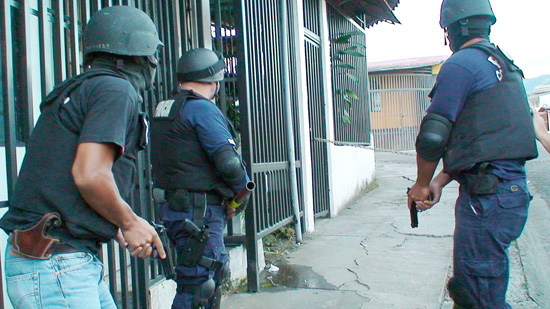
| Police conducting a raid
related to an illegal pharmacy operation prepare to force an entry at a
home in Gravilias de Desamparados Thursday morning. No resistance was
encountered in the home occupied by a man identified by the last name
of Bennett, agents said. |
 Ministerio de Gobernación,
Policía y Seguridad
Pública/Humberto Ballestero
|
| U.S.
man here headed illegal virtual pharmacy, police say |
|
|
By Elise Sonray
of the A.M. Costa Rica staff Costa Rican drug police arrested a U.S. man Thursday morning on the allegation that he was directing a virtual pharmacy from here. Clients from the States ordered restricted drugs online and were sent envelopes from Costa Rica, according to officials. Agents arrested five other persons, police officials said. Officials said they discovered two Miami, Florida, bank accounts linked to the operation in Florida totaling $10 million. Police raided six locations in Costa Rica, uncovering at least $13,000, they said. It was the first case of this kind in Costa Rica, said the Ministerio de Gobernación, Policía y Seguridad Pública. The Policía de Control de Drogas uncovered 11 shipments since officers began investigating the operation in April, they said. Costa Rica has long been home to online pharmacies. But most require a prescription form a U.S.-licensed physician to dispense controlled drugs. Drugs being shipped by this organization included psychiatric and narcotic drugs and drugs illegal in both countries without a prescription. Officials seized 437 envelopes each containing about 40 pills, totaling a seizure of about 17,000 pills in transit, said police authorities. Hydrocodone, marketed as vicadin, a narcotic; codeine; Valium; mazindol, which stimulates the central nervous system and suppresses appetite, and alprazolam or Xanax, used to treat severe anxiety, were all found in the tested pills. The virtual pharmacy was using a Costa Rican mailing company to send products to the United States in bulk, according to officials. The mail service company revealed employee suspicions to the Policía de Control de Drogas and fully cooperated with the agency in the investigation, said officials. The shipping business had offices in San Pedro, Montes de Oca, and Escazú, according to officials. The U.S. citizen, identified by the last name of Bennett, is 41 years old and lives in Gravilias de Desamparados, said officers. Police designated him as the leader of the drug operation and said he chose medical distributors, took complaints from clients and distributed money among the firm's employees. Police found packets containing 500 pills in Bennett's house, they said. A call center was found near Bennett's house and two computers were seized, they said. In addition to the Gravilias de Desamparados locations, raids were conducted in Escazú, Tibás and Pavas. Police arrested a 63-year-old Italian man with the last names of Massonicic Manguso and a Costa Rican woman he was with who had the last names of Agüero Vargas. Police said she was 34. Officers confiscated a BMW car found in the couple's garage. Police arrested another couple, a 38-year-old woman, with the last names of Camps Avendaño and her |
 Ministerio de Gobernación,
Policía
The man identified by the last name of Bennett awaits booking
in this ministry photo. Officials have tried to protect his identity.y Seguridad Pública/Humberto Ballestero husband identified by the last names of Cedeño Montoya. A Pathfinder vehicle was seized from their property. The sixth suspect arrested had the last names of Torres Fonseca and was 28, agents said. Torres was the driver for the organization, they added. He drove Bennett to various locations and delivered shipments, they said Since April 2 drug agents intercepted 11 shipments going to the United States. Inside the shipments were individually packaged envelopes containing the pills destined for customers. The shipments were packaged with material to defeat x-ray inspections, said police. Drug agents said they received a tip from law enforcement officials in the United States as well as the employees of the mail service here. The Italian with the name Massonicic and the Costa Rican woman with the last name of Agüero were in charge of a branch office in Guatemala City, said agents. The Ministerio de Salud also has expressed interest in this case because the drugs involved also are restricted here. The Internet has many virtual pharmacies, and many trace back to Chinese or other Asian operations despite being labeled "Canadian." Security ministry officials promised to have more information on this operation Friday. |
| The hectic Christmas time gives way to the quiet vacations |
||||
This is supposed to be a "Manic’s Christmas Carol," but it could apply to Ticos, especially Josefinos. Ticos do seem to love Christmas and all its trimmings. Last weekend was the Festival of Lights in San Jose — but even before that everything that didn’t move seemed to have Christmas lights on it. Since Josefinos began decorating the stores in September, the Festival had to go some to surpass the lights already twinkling. The Light Festival was indeed stunning, and far and away surpassed any decoration to date. I, of course, particularly liked the float with a huge blue butterfly flapping its wings and touching some of the beautiful flowers of Costa Rica, also on the float. I would have preferred, though, that the butterfly had been in a city setting and was giving its attention to city scenes. There was no way I was going to brave the crowds (and the brief rain) to enjoy the parade, but I did watch much of it on TV. I was impressed with the creativity that went into some of the floats. It reminded me of the sometimes incredible fireworks that are displayed at other times of the year. Gee, gunpowder and electricity, both used for such beautiful, yet, frivolous pastimes. But in spite of the gaiety and music and stuff, I am going to be very happy when Christmas week finally arrives and everyone once again heads for the beach. Then I shall go into the city and enjoy walking along the uncrowded streets — which will be not only easily maneuvered, but for the most part, will take me past stores that are, if not closed, pretty empty of shoppers. I am not anti people. I am just anti people frantically in search of Christmas gifts. Actually, to avoid the hustle and bustle of today’s |
|
|||
 |
|
 |
|
|
|
|
| You need to see Costa Rican tourism information HERE! |
| A.M. Costa Rica fourth news page |
|||||||||
| Home |
Tourism |
Calendar |
Classifieds |
Entertainment |
Real
estate |
Rentals |
Sports |
About us |
|
|
|
|||||||||
 |
| European holiday Each year a loyal reader, Vlasta Žara in Zagreb, Croatia, sends along a photo of Christmas in her town. This is her contribution this year. 'Feliz Navidad and all the best for the year 2008! Best regards from a long-distance reader,' she said. It is obvious that the residents there take Christmas seriously. And A.M. Costa Rica wishes her and our other foreign readers a Merry Christmas and/or a happy holiday. The newspaper is read daily in 90 countries. |
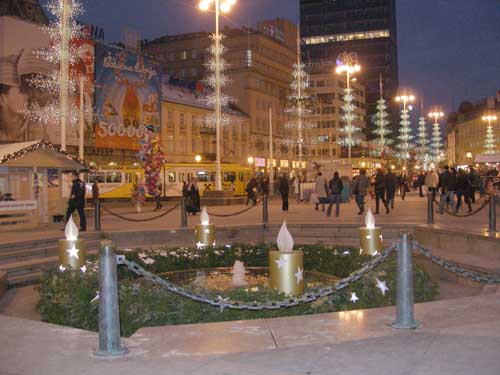 Photo by Vlasta Žara
|
| New
book seeks to report Jefferson's views on incitement |
|
|
By the A.M. Costa Rica wire services
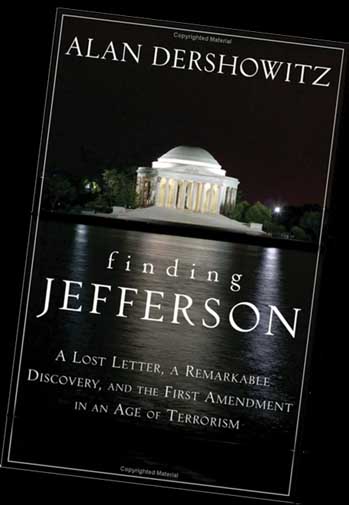
In the aftermath of the Sept. 11, 2001, terrorist attacks on the United States, Americans have been engaged in an intense debate over how to balance the government's need to protect citizens from terrorist violence against the constitutionally guaranteed right to free speech — including hateful speech — that they also enjoy. A newly discovered letter written two centuries ago by founding father Thomas Jefferson shows that this debate is as old as the Republic itself. Jefferson's letter and its relevance are the subjects of a new book by Alan Dershowitz, a Harvard University law professor For most of his professional life, Dershowitz has been interested in the First Amendment to the U.S. Constitution, and has written several books over nearly 50 years exploring the foundations of free speech set forth in that legislation. The story of Dershowitz's new book "Finding Jefferson: A Lost Letter, A Remarkable Discovery, and the First Amendment in an Age of Terrorism," really began only in 2006. While browsing in a favorite rare books shop in New York City, he was shown a time-worn, hand-written letter dated July 3, 1801, the night before the 25th anniversary of the Declaration of Independence. Jefferson had recently been installed as president after a very contentious election. "And he sits down and writes a letter all about the very issues I'd been thinking about all my life!" crows Dershowitz. "If I were more of a person who believed in fate, I would say, 'My God, he wrote it to me!'" That discovery ultimately led to the new book. "I just wanted everybody in the world to read this letter." President Jefferson had written that single-page letter in response to a published sermon by Stanley Griswold, a popular preacher of the day. Griswold had said that if a clergyman made a sermon that inspired followers to commit crimes, the minister should be punished. "Jefferson said 'no,'" paraphrases Dershowitz, "and that people have a right to express these views. What we should do is wait until the first crime is committed — the first physical act — and punish that.'" In his missive, Jefferson wrote that "we have nothing to fear from the demoralizing reasonings of some, if others are left free to demonstrate their errors" and that "these are safer correctives than the conscience of a judge." In other words, if ideas and opinions are allowed to compete freely in the public sphere, everyday people can judge for themselves what to believe and how to act. "That was a very radical view at the time," said Dershowitz, who claims that Jefferson was a true democrat. "He thought if you allowed any kind of censorship it would be the conscience of elite judges that would decide what we could say and when we could say it, rather than individuals themselves making that decision." Dershowitz sometimes challenges the founder's arguments in "Finding Jefferson." For example, he notes that the "free marketplace of ideas" that Jefferson praises doesn't always operate for the best. As examples, he cites the free |
 elections in Nazi Germany in 1932 that put Adolph Hitler in power. Jefferson was no anarchist. While he believed people should be allowed to express any opinion (even an opinion that a crime should be committed), "the state stands ready," in his words, "to punish the first criminal act produced by the false reasoning." On that point Dershowitz sounds a cautious note. "What if we can't wait for the crime to be committed? What if the crime is a mass act of terrorism, 9/11 or worse, or chemical, biological or nuclear terrorism? Do we permit a religious leader to inspire or incite his followers to commit acts of terrorism that we may not be able to tolerate? Hard questions." These are difficult questions Dershowitz is not certain how to answer definitively himself. He believes Jefferson would have been more willing to acknowledge the dangers citizens face in the current era, but that the founder would still say that, on balance, "it's better to have open, free dialogue than having the government deciding what you can hear or can't hear." Dershowitz himself praises Denmark's leaders who, in 2005, resisted calls for censorship of the press from Muslims who were offended by newspaper cartoons depicting the Muslim prophet, Mohammed, in what they deemed a disrespectful light. "Once you start creating exceptions, everybody demands an exception in their own interest," he said. "Suddenly, there is nothing left." Alan Dershowitz's new book is a useful reminder, too, that Thomas Jefferson's thoughts on the subject remain as relevant and provocative today as when he first expressed them over two centuries ago. |
|
|||||||||||||||||
| News from
the BBC up to the minute |
BBC sports news up to the minute | ||||||||||||||||
| BBC news and sports feeds are disabled on archived pages. |
|||||||||||||||||
| A.M. Costa Rica Sports news local and from the wires |
 |
|
|
|
|
|
|
|
|
|
|
||||||
|
||||
|
|
|
|
|
|
|
|
|
|
|
|
| What we published this week: | Monday | Tuesday | Wednesday | Thursday | Friday | Earlier |
|
|