|
Your daily English-language news
source
|
at the speed of
|
|
|
|
|
|
|
|
|
|
|
|
|
|
||||||||||
|
|
||||||||||
|
Beach Resort/Hotel, Nicoya Peninsula Visit our WEB at www.brightbay.info
for details then book a room for $55/Night for a couple at the most convenient
significant Resort to San José on the Nicoya Peninsula.
|
Listen
to the sounds of the small creek!
Tropical home, 5 bedrooms & 2 baths, with nice, large exterior
tiled corridors all around. Fruit garden of 1,730 meters. Corner lot. Basketball
court and children’s playground w/slide included. Sprinkler system. Two
phone lines. Cable available. Large separate laundry room. Walking distance
to center & transportation. By owner, $168,000 make
offers! Partial financing available for 13 years at 7.5% annual
interest rate.
|
|
|
|
|
of the A.M. Costa Rica staff There are a number of Colombian refugees who want to resettle from Costa Rica to the United States because they claim they are not safe within these borders. A group of Colombian refugees had been protesting outside the Inter-American Court of Human Rights in Los Yoses for nearly two months. The group wants out of Costa Rica because they say they are targets of people who have traveled from Colombia to kill them, according to Giovanni Monge, public information assistant at the U.N. High Commissioner for Refugees’ office here. Monday a group of resettlement seekers entered the gate of the human rights court and occupied the garden area outside the front doors, which were shut to bar their entrance into the building, according to Arturo Monge a spokesman for the human rights court. “The group does not even have a case before the court,” said Monge, “I am not sure what they want us to do. Members of the court have had meetings with some of the group and told them the court has no power in this case.” The court is a body of the Organization of American States. Refugees need to communicate with the U.N. High Commissioner for Refugees to apply for resettlement. The Colombians probably chose the court building to stage protests because it is more prominent than the small office the U.N. commission occupies, Monge said. Of the entering of the gates, the court spokesman speculated it was a publicity stunt considering the rush was accompanied by photographers and reporters. Also there were around 30 people involved which is more than the eight or 12 people who usually picketed, suggesting the event was planned. Children were involved in Monday’s forced entry as opposed to the other weeks of the protest when only adults participated, Monge said. The group held ground within the court for almost a half hour, Monge said, then police came and the Colombians left. “Before Monday the protest was peaceful, now [the protesters] are menaces,” the court spokesman said. The protesters have not been outside the court since the incident. In January the U.N. High Commissioner for Refugees’ Office here opened
a new division to cope with the issue of resettlement for refugees. The
spokesman there also is named Monge.
|
“Until recently Costa Rica had a
good international reputation for human rights and protection of refugees,”
Giovanni Monge said. He is public information assistant for the commission,
“But since last year many Colombians have issued complaints regarding their
safety here.”
The new division of the commission was opened in response to the influx of refugee complaints, Giovanni Monge said. Now the commission is working with third party countries to allow for the replacement of legitimate cases of threatened refugees in Costa Rica. A case is legitimate when the family or person is being persecuted or when the health of a person is at stake, Giovanni Monge said. Poor economics is not a reason a refugee would be allowed to leave Costa Rica for the United States, he added. “We examine carefully every situation,” the refugee commission spokesperson said, “Many people say they are being persecuted in Costa Rica, but really they want to go the United States for obvious reasons. “With the particular group at the court many officials know they are problematic, because many of them say they are unsafe, but for most of those refugees there is no evidence that is the case,” Giovanni Monge said. The U.N. commission has not determined a significant threat coming from Colombian guerillas or paramilitaries operating within Costa Rica to take revenge on refugees, but they have seen a small number of cases where resettlement for refugees would be warranted, Giovanni Monge said. One case of resettlement was when the United States accepted a Colombian family from Costa Rica because the son was healthier in a different climate, Giovanni Monge said. In all cases, the decision is up to the country in which the refugee wants to resettle, and that is decided on an individual bases, the spokesperson for the commission said. There are a few cases before the U.N. refugee commission that would suggest concern for the safety of the applicant, Giovanni Monge would not elaborate on the type of security threat. The rise in resettlement seekers claiming persecution began last year, which seems to coincide with a downturn in the Costa Rican economy, Giovanni Monge said. There are around 13,000 refugees in Costa Rica of which around 7,000 are Colombians. In 2002 Costa Rica accepted 2,299 refugees from Colombia and 56 from various other nations, according to statistics given by the U.N. High Commissioner for Refugees. |
|
|
|
|
of the A.M. Costa Rica staff Costa Rica’s recent frosty trade relations with the European Union could come to a resolution next week when the 20 European Commission members meet in Brussels. Costa Rica last week got more time because the union failed to reach a unanimous decision on whether to remove the country and Colombia from its Generalized System of Preferences. It is not yet clear when and if change will occur, but a meeting is scheduled to take place some time next week in Brussels, where the issue will be discussed further. British commission member, Chris Patten, will present a resolution to the meeting. But a consensus seems to be growing among union and Costa Rican diplomats here that something positive will come from that meeting for Costa Rica. At stake is whether the country will continue to enjoy zero tariffs on many agricultural exports or will have to pay more to sell goods in Europe. Some 45,000 Costa Ricans work in affected industries. Andrew Standley, head of the commission here, said that some press reports were more euphoric than was justified. He said that it is still not yet clear which way the decision will go. Standley pointed to the statements of Roberto Tovar, Costa Rica’s foreign minister, who in the aftermath of the union’s decision said that more talks are imminent and that there remains a lot of work to do. These comments are similar to the ones made recently by Georgina Butler, British ambassador to Costa Rica. Like Ms. Butler, Standley said that a unanimous decision would have to be reached between the union’s member states for a change to be made. Helmut Zöckel, German ambassador to Costa Rica, did not want to discuss his country’s stance, but did say, “I would not object to that,” when asked whether Germany, Holland and Spain were backing Costa Rica. He said that any decision would affect Germany, and that the country is hoping for an amicable solution. “There is still hope for Costa Rica,” he said. Asked about the divide among member states, Zöckel said, “I think it’s very close.” He added that a qualified majority would be needed to initiate change. The possibilities at the meeting in Brussels are for an agreement on change, or a postponement on the implementation of Costa Rica’s removal from the system so that more talks can take place, according to Oriel Willock, second secretary at the British Embassy. |
Zöckel also said that no one
is really able to give a definite answer as to which way things will go.
Recently, British Ambassador Butler indicated that she thought it unlikely
Costa Rica would succeed.
However, it has since emerged from sources in the Costa Rican Foreign Ministry that Britain supports Costa Rica. The source also hinted that Denmark, Germany, Holland and Sweden also back the country. “[There are] some signs that [the situation] is on its way to resolution,” the source said. The qualified majority required to initiate change is 62 out of 87 votes. The number of votes a member state has is dependent on the size of its population. Britain, France, Germany and Italy together have almost half the votes (40), closely followed by Spain (8) and Holland (5). Sweden has 4 while Denmark has three. The remaining 27 votes are shared between the other seven member states. Britain, France and Italy have all refused to officially publicize their stances. A French Embassy official would not comment Tuesday and said only that officials had no more to add until after the meeting scheduled for next week in Brussels. Similarly, British Embassy officials would not comment in recent interviews on Britain’s position. British Ambassador Butler did however extend her country’s sympathy to Costa Rica’s situation. Italian Embassy officials were not available for comment Wednesday. The trade system, as it is now, dictates that once a favored country reaches its pre-determined level, a normal import duty will be applied. The decision in question here applies to the system’s “Sector 5” products, which are fruits, nuts and ornamental plants. The European Commission’s Standley said the threshold depends on the country’s level of development. If a country exceeds the threshold for three years, it loses the benefit, he said. Thresholds were part of the original agreement, pointed out British official Willock during a recent telephone interview. Costa Rica’s relevant figures for 1997, 1998 and 1999 exceed this threshold in the total value of such imports to union countries. Central American and Andean region countries benefit from a special regulation that provides a lower duty than the one normally awarded by the system (zero percent) in exchange for their continued tough stance on the production and trafficking of drugs — something which Costa Rica was only recently included in. This was the subject of a complaint by some World Trade Organization members recently, said the European Commission’s Standley. Meanwhile, the European Union plans to look into the possibility of a free trade agreement with Central American countries sometime next year. |
| Valentine golf challenge
raises money for school By the A.M. Costa Rica staff A golf tournament at the Audubon-acclaimed Hacienda Pinilla golf course has been organized to raise money for a local high school. The 3rd annual Have a Heart Tournament, aptly named because it is played Feb. 14, Valentine’s Day, was organized by the Amigos de Colegio de Villareal. Last year the event raised more than $4,500 for the local high school, which supports more than 600 students, Suzye Lawson, co-chairwoman of the foundation, said. The charity was able to expand the classrooms and cafeteria and plant trees for the school, Mrs. Lawson said. This year the objective is to build a fence to stop cows from trampling the sprinkler system, she added. The event is expected to attract between 80 and 100 golfers to compete on a course that has been singled out by the Audubon Society as a site in harmony with the nature of the area, according to Lawson. The entry fee is $95 for each golfer. The tournament is styled so that people of any skill level can participate, Lawson said. Included in the entry fee are small gifts, a luncheon and drinks tickets for the awards ceremony. Tee-off is at 8 a.m. at the Hacienda Pinilla golf course in Playa Langosta. A registration party will be held at the Villa Alegre B & B, also in Playa Langosta, Feb. 13 at 7 p.m. Playa Langosta is near Playa Tamarindo on the Pacific coast. For more information call Suzye Lawson at 653-0270 or Irene O’Malley at 653-0049. Venezuela’s unrest not
By the A.M. Costa Rica wire services CARACAS, Venezuela — Opponents of President Hugo Chavez have lifted most of the general strike that shut down the South American nation's commercial sector for two months. But, the political unrest in that country is far from over. Opposition leaders say they have eased the strike in order to prevent businesses from going bankrupt. A strike in the oil sector continues, with production only about a third of what it was before the strike began. In addition, opposition protest marches and rallies have become daily events in Caracas. In his speeches, the fiery Chavez says his opponents are losing in their attempt to undermine him. He says the same people who failed to oust him in a coup attempt last April are now trying to destabilize the Venezuelan economy in order to force him from power. Chavez refers to his enemies as "coup plotters" and "oligarchs." The failed coup has bolstered Chavez by providing material evidence that at least some of his opponents are disposed to use non-democratic means to remove him. Many Venezuelans remain on the sidelines, watching the gap between Chavez and his opponents deepen, while their country sinks further into recession. Raul, an out of work tour guide, is frustrated by the continuing strife. "I voted for Chavez, but I am against some of his politics that I do not like," he said. "But even worse is the opposition parties who did all this strike. Now, I am out of work because of these people." Ricardo Sucre is a political science professor who, like Raul, criticizes both sides. He says the opposition strategy has failed in its main objective, but that it has not failed completely. He says the strike failed to drive Chavez from power and may, in fact, have bought him more time. He says the strike has succeeded in one aspect, however, that of gaining the world's attention. He says Chavez is very sensitive to world opinion. Sucre says Chavez sparked this crisis by winning a democratic election and then trying to rule without regard to the normal controls imposed by a democratic system. Governor’s secretary
By the A.M. Costa Rica wire services BOGOTA, Colombia — Authorities in the eastern region say gunmen have shot and killed the private secretary to the regional governor. Officials in the province of Arauca say the unidentified assailants fired at Rosario Camejo as she left her home Tuesday on her way to the office of Governor Oscar Munoz. Authorities closed roads and waterways into nearby Venezuela as part of the search for the assailants. Arauca is one of the country's most embattled regions, where leftist rebels, rightist paramilitaries and the government are battling for control of the state's oil-rich plains. RCN radio reports the government has rejected a U.N. proposal for a regional dialogue with the armed groups. Rebels recently abducted two foreign journalists in Arauca. The two, British reporter Ruth Morris and American photographer Scott Dalton, were released unharmed Saturday after 11 days in captivity. Seventy U.S. Special Forces troops are in Arauca to train Colombian troops in protecting an oil pipeline frequently targeted in rebel bombings. Cuban group to stop
By the A.M. Costa Rica wire services MIAMI, Fla. — The head of the Cuban exile group Brothers to the Rescue says the group will stop its flights searching for Cubans at sea trying to reach the United States. Jose Basulto said Tuesday that the group can no longer afford to operate after 12 years. He said the search and rescue operations have become unnecessary with smuggling and changes in U.S. immigration policy. In 1996, Cuban fighter planes shot down two of the group's planes, killing all four people aboard. Cuba said the planes were in Cuban airspace. Basulto was aboard a third plane that escaped. The U.S. Coast Guard began in the mid-1990s to repatriate Cubans found at sea, and Basulto also said he does not want to assist the United States in that effort. Canadian gets more
By the A.M. Costa Rica staff A naturalized Canadian citizen Wednesday received 10 years more in a Costa Rican jail for supplying drugs to children. Hanny Fahny, 47, a native Egyptian, was sentenced to 22 years and 8 months in prison in August 2001 for the corruption of youths and supplying drugs to minors. Wednesday’s conviction comes as a result of another child victim coming forward and the Courts convicting Fahny on another count of supplying children with drugs, according to Casa Alianza which reported the verdict. Investigators arrested Fahny after several complaints filed by Casa Alianza, the child advocacy group here, in June 1999. Casa Alianza in a release said that the Canadian threw large parties with other foreign nationals in his residence in Lotes Perú de Escazú. At the parties, the adults would provide drugs to the invited children — mostly from the poor neighborhoods and who would receive about US$ 15 each — and then sexually abuse and photograph them, said the organization. Prosecutor Rodrigo Obando of the Office of the Prosecutor for Sex Crimes in San Jose presented the new evidence for Wednesday’s conviction of supplying illegal drugs to a minor, added the organization. Casa Alianza, in another case, said the body of an indigenous 11-year-old homeless boy turned up in a sack in Guatemala City Wednesday morning. He had been shot through the head at close range and there were signs he had been severely beaten, said a group official. |
He took wrong bus
and died as robber By the A.M. Costa Rica staff A man with a shotgun stuck up an Alajeula-bound bus on the General Cañas highway about 10 p.m. Tuesday. Buses on this route have been targeted by thieves with growing frequency. But the other buses did not have aboard an investigator from the Judicial Investigating Organization. The agent had his sidearm and shot the robber dead, according to information released Wednesday. The agent was identified by the last name of Quesada. He was off-duty and works in the Heredia office, investigators said. The luckless robber was identified by the last name of Manine. He was 23 years old with a history of arrests for robbery, agents said. Iraq debate tonight
By the A.M. Costa Rica staff The Universidad Nacional in Heredia will host a "War against Iraq" debate tonight. Participating in the debate will be representatives from the U.S. Embassy; representatives from the Israeli Embassy; representatives of the Palestinian community; Manuel Sandoval, a historian from the Partido Revolucionario de los Trabajadores; and Rogelio Cedeño, a sociologist at the Universidad Nacional. The event has been organized by the Asociación de Estudiantes de Sociología and the Juventud Socialista at the Universidad Nacional. It will begin at 5.30 p.m. in the Sala de Ex-Rectores, Biblioteca Omar Dengo. Suspect identified
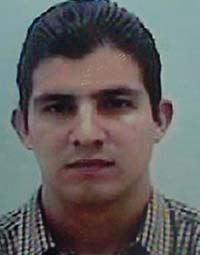
By the A.M. Costa Rica staff Investigators have identified a suspect in the murder of David Kane,
a U.S. citizen. However, they are not saying very much about the man.
The suspect is Harold Steven Hernández Quirós. Kane died in his home Jan. 4 from a bullet to the head. He lived in La Granja, San Pedro. A friend said that the suspect was easily identified by police because Kane was speaking to him on the telephone a few minutes before his death and mentioned the name of the man who was present in the house. The Judicial Investigation Organization did not release the photo until last Friday. The man is believed to be a fugitive. The friend said that the man sometimes did work around the house and also did the same for the man who owned the house before Kane. Kane was a five-year resident here, and was well-known as a close observer
of the Costa Rican scene. There is no clear motive for the killing although
whoever did it removed items from the house, stole Kane’s sports utility
vehicle and set it afire in the Alajuela countryside.
|
|
• Martha Alvarado • e-mail: marthaeliasib@hotmail.com •383-5594 and 294-2346 Small groups, too! |
|
|
|||
|
A Costa Rican immigration official told a well-known businessman to get out and stay out upon his departure from Costa Rica Wednesday. The man is suspected of being a nazi war criminal. The man, Harry Mannil, a native Estonian, had been identified by the U.S. Department of Justice and
throughout Nazi Europe, said the center. Jews were arbitrarily detained and assasinated. Marco Badilla, director general de Migración y Extranjaría in Costa Rica, told Mannil personally to never again return here. If he tries, he will be sent back to wherever he comes from, according to a press release issued a short time later by the Ministerio de Gobernación, Policía y Seguridad Pública. Badilla said Mannil is a threat to national security, public order and the quality of life here, according to the release. |
The United States shared information
with Costa Rican authorities saying that Mannil was a high-ranking member
of the violent Estonian police unit, according to the release.
Mannil has been known to deny the allegations claiming he was simply involved in administrative tasks, the release said. Mannil, 82, is a resident of Venezuela and has been a frequent visitor to Costa Rica. He was here on 14 occassions in 2002 on tourist visas, according to the release. Because he probably came here on business, he likely violated the terms of the tourist visa. The Simon Wiesenthal Center issued a press release Wednesday, hours after the expulsion, praising Costa Rica. Mannil had tried in the past to gain residency status in Costa Rica, according to the press release. He held rentista status but the designation lapsed because he was not here often enough. Mannil is now barred from entering two countries. The United States is the other. Dr. Efraim Zuroff, The Simon Wiesenthal Center’s chief Nazi hunter, said in the release he would like to see Mannil brought to justice in Estonia. He claimed the Estonian government was not doing enough to prosecute Nazi atrocities there. |
||
|
|
|
|
Villalobos investors who want to file civil and criminal charges against the government will have no trouble doing so against lower-level employees in the Poder Judicial. However, the president, top judges and deputies in the Asemblea Nacional are off limits. A check of the Costa Rican Constitution shows that President Abel Pacheco cannot be charged with a crime unless he is first impeached by the assembly. The Constitution also covers other elected officials with immunity. Lesser figures in the Poder Judicial, such as fiscals or prosecutors, do not have such immunity, according to Gerardo Trejos, a former vice minister, deputy and author with Hubert May of the legal work "Constitución y Democracia Costarricense." He is considered an expert. Nevertheless, investors face another problem. As with many constitutional democracies, the president of Costa Rica has the power to pardon those convicted of a crime. Some investors who are frustrated with the lack of obvious developments in the investigation of Luis Enrique Villalobos Camacho want to file charges against those officials involved in the probe. One organization of investors plans to hire José Miguel Villalobos Umaña, a former minister, to press the action. That group is the United Concerned Citizens & Residents. (For more information call 296-3509.) Other investors said several months ago that they wanted to sue Pacheco for slander because he used a biblical phrase about fools in reference to investors. Lately more and more investors have expressed the view that the Villalobos operation was the victim of a government conspiracy supported by jealous bankers. |
The operation borrowed money from
a mostly North American clientele and paid interest up to 3 percent per
month, frequently in cash, at the Mall San Pedro location. Villalobos may
have up to $1 billion of investor money on his books.
Some investors and some investigators suggest that Villalobos was running a ponzi scheme in which he paid such high interest with his clients own money in an effort to attract more investors. One barrier to quick resolution of the case is the fact that Luis Enrique Villalobos vanished Oct. 14 and is being sought as a fugitive on money- laundering and fraud allegations. However, the lawyer Villalobos said that he thinks the investors’ case can be resolved even without the presence of the fugitive Villalobos. On another nearly forgotten case, a local lawyer said that investors there should file claims to try to get some of their money back. He is Gregory Kearney Lawson. He said that Louis Milanes, operator of Savings Unlimited, left behind significant assets when he fled the country in late November. He said investors in Savings Unlimited need to take steps to obtain their fair share of the assets. Milanes also paid high interest on investments, sometimes as high as 4 percent a month. He claimed he was putting investor money into casino development. The case against Milanes is hampered because he is a fugitive and because his office was thoroughly cleaned of documents and evidence when he left. Investors, many also Villalobos investors, may have lost up to $260 million. Investigators in the Villalobos case have many documents taken in a raid July 4. |
|
|
|
Louis Milanes |
Luis Enrique Villalobos Camacho |
|
This newspaper seeks the prompt return of two men who ran high-interest investment operations that have gone out of business. Luis Enrique Villalobos Camacho, 62, was associated with Ofinter S.A., a money exchange house, and with his own private investment business that had about $1 billion in other people’s money on the books. Villalobos closed his business Oct. 14 and vanished. Louis Milanes operated Savings Unlimited and several casinos in San José. He left the country with other members of his firm the weekend of Nov. 23. He may have as much as $260 million in his possession. Both operations catered to North Americans. |
Villalobos had about 6,300 customers. Milanes
had about 2,400.
Villalobos and Milanes are the subjects of international arrest warrants. Associates of both men have been jailed. A.M. Costa Rica has posted a $500 reward for information leading to the detention of either man with the hopes that others will make similar pledges. The newspaper believes that investors only will see some of their money when the two men are in custody. Milanes has few supporters in San José. On the other hand, as the letters frequently on this page show, Villalobos still has supporters who believe that he will reappear and settle his debts. They believe he is in hiding because of a predatory Costa Rican government. |
| What we published this week: | Monday | Tuesday | Wednesday | Thursday | Friday | Earlier |
|
|